

Daud Olatunji
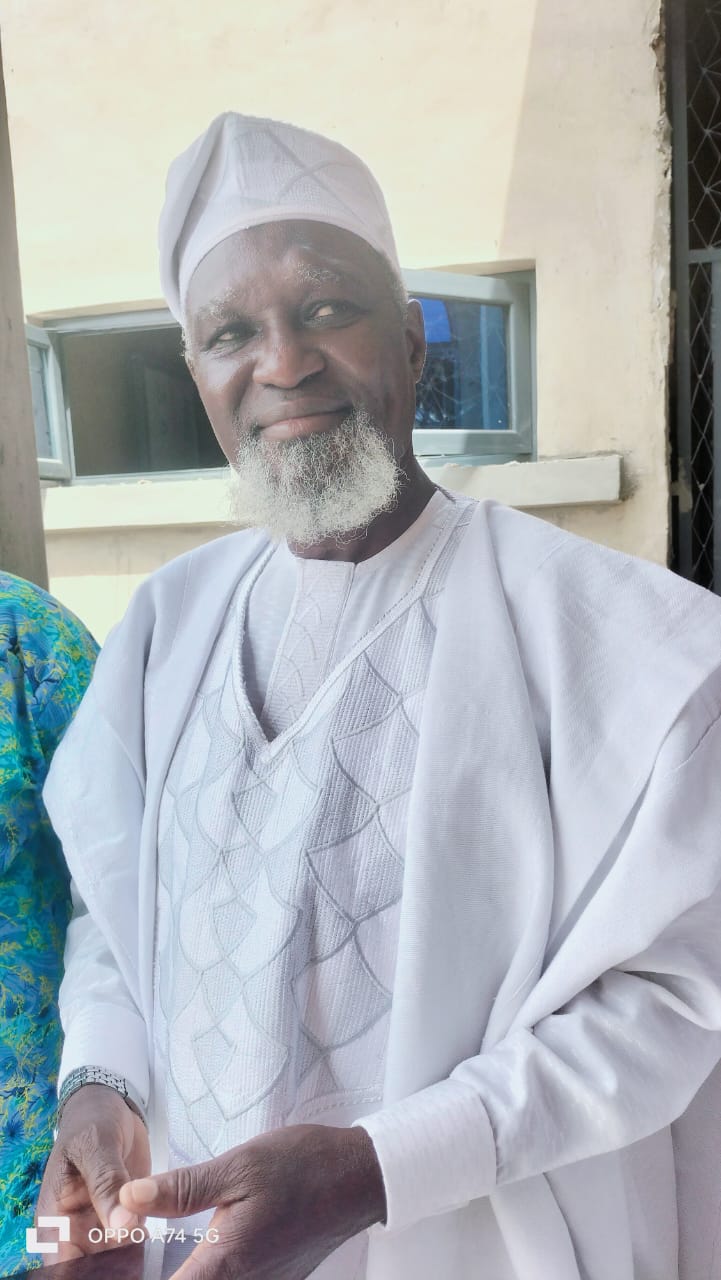
The Chief Imam of the University of Abuja and Chief Missionary of Dawah Front, Prof. Taofeek AbdulAzeez, on Friday faulted the Federal Government’s policies, saying the prevailing hardship in the country suggests that leaders are governing without the fear of God or a sense of accountability.
AbdulAzeez stated this in an exclusive interview with PLATFORM TIMES shortly after the inaugural Jumat prayer at the Qudus Abd Lateef Central Mosque, located at Power Line, Gbokoniyi, Ojere Road, Abeokuta.
The Islamic scholar, while congratulating Muslims on witnessing another Ramadan, said the holy month goes beyond abstaining from food and drink, stressing that fasting must translate into genuine piety and moral transformation.
“Ramadan is not just about hunger and thirst. Fasting has a purpose, and that purpose is to attain taqwa (God-consciousness). That taqwa is meant to facilitate guidance from the Qur’an,” he said.
Quoting Qur’an 2:185, he described Ramadan as “the month of the Qur’an,” urging Muslims to deepen their spiritual engagement.
“Contact with the Qur’an is when you merely recite it in Salat or perform tilawah. But what we need is connection — listening to what Allah is saying and allowing it to guide our daily conduct,” he added.
Turning to governance, AbdulAzeez said public policies should ease citizens’ burdens rather than worsen their living conditions.
“The way government is operating, it appears as if there is no belief in life after death. If leaders truly believe they will give account before God, they will not deliberately make citizens suffer,” he said.
He maintained that policies that inflict hardship on the populace raise questions about whose interests are being served.
“Policies are not meant to make citizens suffer. Any policy that compounds hardship cannot be genuinely home-grown. It becomes a script dictated from outside. If we are truly independent, leaders should be accountable to God, not to external forces that push policies causing pain for the people,” he stated.
The cleric urged those in authority to govern with compassion and the fear of God, warning that leadership is a trust that will be accounted for.
AbdulAzeez also challenged religious leaders to reflect on their roles in addressing moral decline, especially during a period when both Muslims and Christians are observing sacred seasons.
“If fasting is meant to instil fear of Allah and crimes do not reduce during fasting, then we must question ourselves as religious leaders. What are we teaching? What examples are we showing?” he queried.
He lamented that some clerics prioritise patronage and financial benefits over truth and moral guidance.
“When religious leaders are more interested in money and patronage and fail to speak truth to power, it shows a lack of belief in accountability. We will all account for our deeds,” he warned.
AbdulAzeez further criticised the growing trend of religious leaders attacking one another on social media and public platforms.
“When we go on air or social media only to abuse and ridicule ourselves, what do citizens learn? If religious leaders are upright, followers are likely to follow suit, except for a few bad eggs,” he said.
He urged his colleagues to use the Ramadan period to promote righteousness, encourage good conduct among citizens and boldly advise government officials in the interest of justice and societal wellbeing.
“We must believe in accountability, speak truth to power and use this season to promote good and discourage evil in society,” he said.

 '
' '
'Do you want to share a story with us? Do you want to advertise with us? Do you need publicity for a product, service, or event? Contact us on WhatsApp +2348183319097 Email: platformtimes@gmail.com
We are committed to impactful investigative journalism for human interest and social justice. Your donation will help us tell more stories. Kindly donate any amount HERE
