

Grace Adeleke
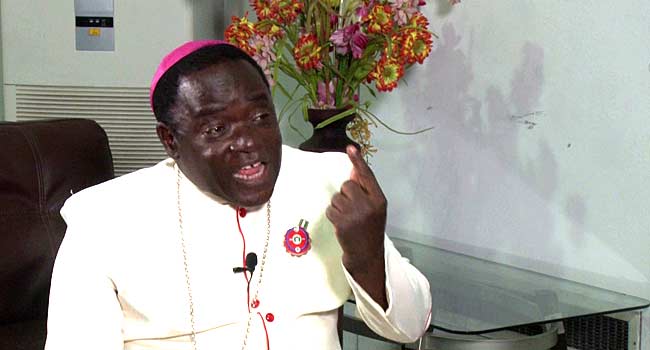
The Catholic Bishop of Sokoto Diocese, Bishop Matthew Kukah, has urged Nigerians to take responsibility for confronting injustice by understanding and asserting the rights guaranteed to them under the law.
Kukah spoke on Monday in Abuja at a North-West regional conference on women and security, where he said the country’s persistent inequality and injustice were not solely due to a lack of constitutional provisions but largely because many citizens were unaware of, or unable to access, existing opportunities.
The conference coincided with the close-out ceremony of a project titled “Strengthening Inclusive Peacebuilding and Access to Justice in the North-West,” implemented by Global Rights and Partners West Africa Nigeria with support from the United Kingdom’s Foreign, Commonwealth & Development Office.
Kukah said while Nigeria faces deep-rooted governance and social challenges, citizens must not absolve themselves of responsibility.
“Progress takes time, and even nations we admire are still struggling with the question of justice,” he said, drawing parallels with older democracies such as the United States of America and the United Kingdom.
“Nigerians must avoid being overly harsh on themselves while remaining committed to improvement.”
The cleric noted that religion has historically been deployed both as a tool of oppression and liberation, stressing that citizens should not wait for religious, political or traditional leaders before demanding what is rightfully theirs.
“This country belongs to all of us. We must develop a greater sense of urgency about what is right,” he said, adding that justice must go beyond rhetoric and be reflected in fairness, dignity and equal access to opportunities.
In her remarks, the UK Deputy High Commissioner to Nigeria, Mrs Gill Lever, said the UK, through its Integrated Security Fund, was supporting community-centred and gender-responsive peace and security initiatives in Katsina, Kebbi, Kano and Sokoto states.
Lever said the North-West continues to grapple with intercommunal tensions, banditry, limited access to justice and entrenched sociocultural norms that disproportionately affect women and girls.
She said evidence from the programme showed that when women and marginalised groups participate meaningfully in peace and justice processes, communities become safer and more cohesive.
Highlighting outcomes of the project, she said Global Rights supported the establishment of gender-balanced Community Dialogue Committees with 40 per cent women’s participation, including the historic turbanning of women into traditional leadership structures in Sokoto State.
She added that the initiative strengthened survivor-centred referral pathways and expanded gender-based violence prevention programmes in schools, enhancing protection for women and vulnerable households.
Lever further said Partners West Africa Nigeria reinforced inclusive peacebuilding by improving community-police relations and expanding the Police Duty Solicitor Scheme, through which over 323 detainees regained their freedom through lawful channels.
The Country Manager of Global Rights, Olubunmi Aweda, said although the project could not completely eliminate insecurity in Kano, Sokoto and Kaduna states, it strengthened systems and safeguards while promoting women’s leadership and youth engagement.
“Inclusive peacebuilding is not theoretical; it is practical. It can be measured. It can be structured. It can be replicated,” she said.
The conference brought together stakeholders across the North-West to review gains made in strengthening access to justice and promoting inclusive peace processes amid rising insecurity in the region.
 '
' '
'Do you want to share a story with us? Do you want to advertise with us? Do you need publicity for a product, service, or event? Contact us on WhatsApp +2348183319097 Email: platformtimes@gmail.com
We are committed to impactful investigative journalism for human interest and social justice. Your donation will help us tell more stories. Kindly donate any amount HERE
