

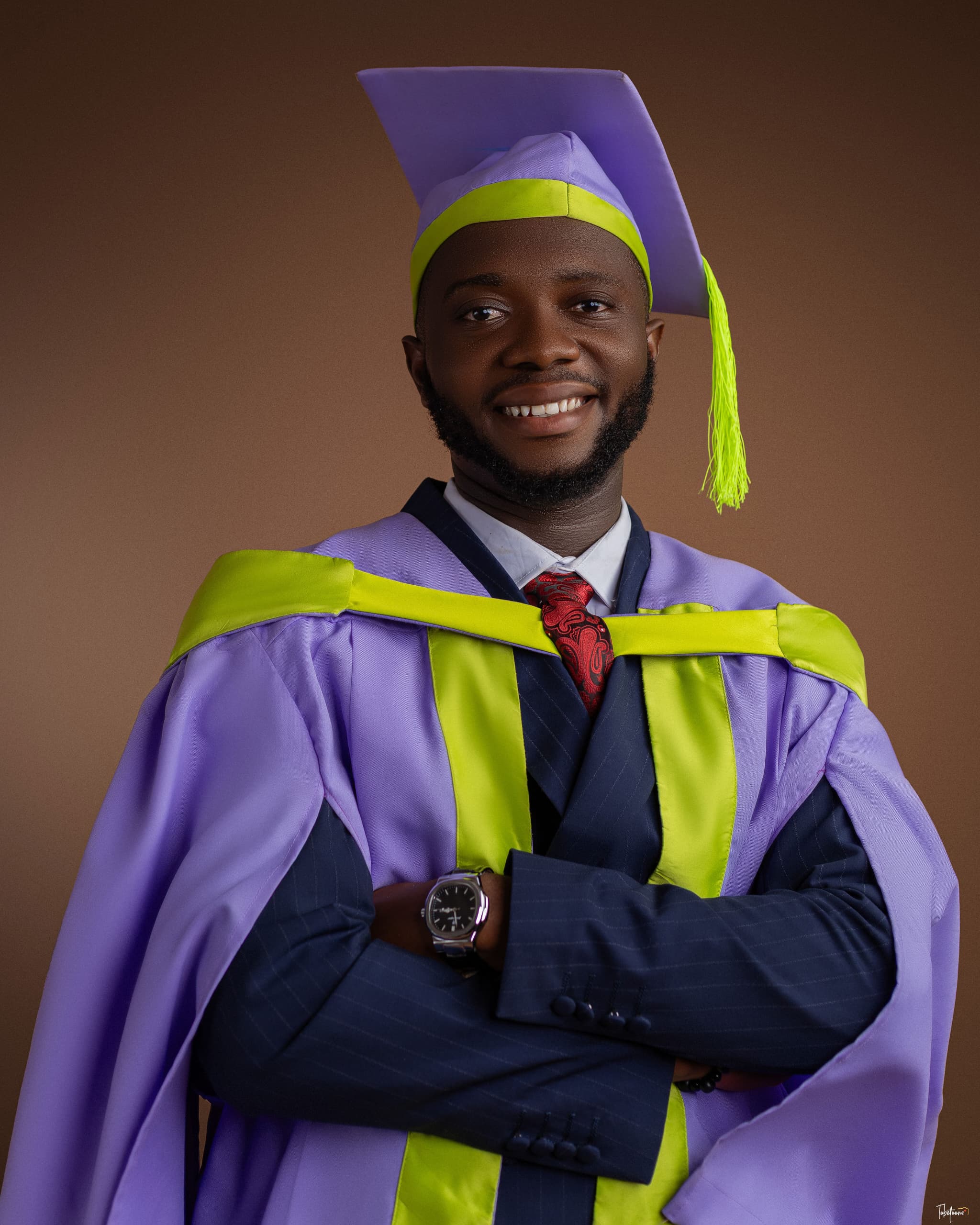
Oladeji Adedamola Adedayo did not begin his university journey with Physiology as his first choice. After missing the cut-off mark for Medicine and Surgery with a UTME score of 218, he opted to remain within the College of Medicine at Ekiti State University, where he studied Physiology.
What looked like a setback eventually became a defining turning point. Graduating with a First Class and a CGPA of 4.53/5.00, Oladeji, attributes his success to consistency, smart study strategies, mentorship, leadership experience and strong faith.
In this interview with KOREDE BADMUS, he shares how he turned an unplanned path into academic excellence.
Can you introduce yourself and your journey in Physiology at EKSU?
My name is Oladeji Adedamola Adedayo. I graduated with a First Class in Physiology from Ekiti State University with a CGPA of 4.53/5.00. My journey was challenging but rewarding. I did not settle for average performance, and that pushed me to remain consistent throughout. Along the way, I received guidance from lecturers, seniors and colleagues who shaped my academic discipline.
What led you to study Physiology?
It was not my original plan. I wanted Medicine and Surgery, but I scored 218 in UTME and could not meet the cut-off. Rather than staying at home, I chose Physiology to remain close to my medical ambition. That decision eventually became one of the most important turning points in my life.
Did you aim for a First Class from the beginning?
Yes and no. I initially doubted myself because of my UTME result, but mentorship changed my mindset. A lecturer once told me she expected me to graduate with a First Class or at least a Second Class Upper. My first-year CGPA of 4.21 gave me confidence that it was achievable, so I built on that momentum.
What study habits helped you maintain excellence?
Repetition and active recall were key. I started reading early and revised multiple times before exams. I avoided passive reading and focused on understanding and recalling information. Most importantly, I remained consistent across all eight semesters.
What was your most difficult academic period?
My 200 level second semester was the toughest. I took 13 courses and had to adjust from computer-based exams to written formats involving MCQs, SAQs and essays. I studied strategically and also learned from seniors about lecturers’ expectations. That semester, I still achieved a 4.77 GPA, which boosted my confidence.
Did you ever doubt yourself? How did you handle it?
Yes, especially before exams. There were moments of uncertainty, but I relied on encouragement from family and focused on what I could control—studying. My faith also kept me grounded, believing that if God helped me before, He would do it again.
How did leadership in ASF affect your academics?
It helped a lot. I started in the Prayer and Academic subgroup of the Anglican Students’ Fellowship. Being accountable to others pushed me to stay disciplined. Serving later as Publicity Secretary and President improved my time management, confidence and public speaking, without affecting my academics negatively.
How did you balance academics, leadership and spiritual life?
It was about prioritisation and planning. I made sure I attended lectures, fulfilled leadership duties and remained active spiritually. I focused on being where I needed to be at the right time. It wasn’t always perfect, but discipline made it manageable.
What mistakes do students commonly make?
Inconsistency and distraction. Many students perform well at some point but lose focus later. Academic excellence is not about a moment—it is about sustained discipline over time.
What advice do you have for students aiming for First Class?
Start early and stay consistent. Break your goals into daily and semester targets. Build systems, not just ambition. Excellence is not accidental; it is built through habits, discipline and focus from the first year.
Now that you have graduated, what are your future plans?
I intend to further my studies in Medicine and Surgery while also exploring research opportunities. I am also interested in developing skills in scientific writing, data analysis and molecular biology to strengthen my academic and professional path.
Final message to students?
University success is built on consistency, discipline and resilience. Focus on building the right lifestyle, not just chasing results. Your habits today determine your future outcomes.
 '
' '
'Do you want to share a story with us? Do you want to advertise with us? Do you need publicity for a product, service, or event? Contact us on WhatsApp +2348183319097 Email: platformtimes@gmail.com
We are committed to impactful investigative journalism for human interest and social justice. Your donation will help us tell more stories. Kindly donate any amount HERE
