

…Calls For Bold Action, Rejects Passive Engagement
Daud Olatunji
The Resident Electoral Commissioner of the Independent National Electoral Commission in Ondo State, Mutiu Olaleke Agboke, has charged Nigerian youths to convert their ideas into impactful innovations capable of driving sustainable governance and national development.

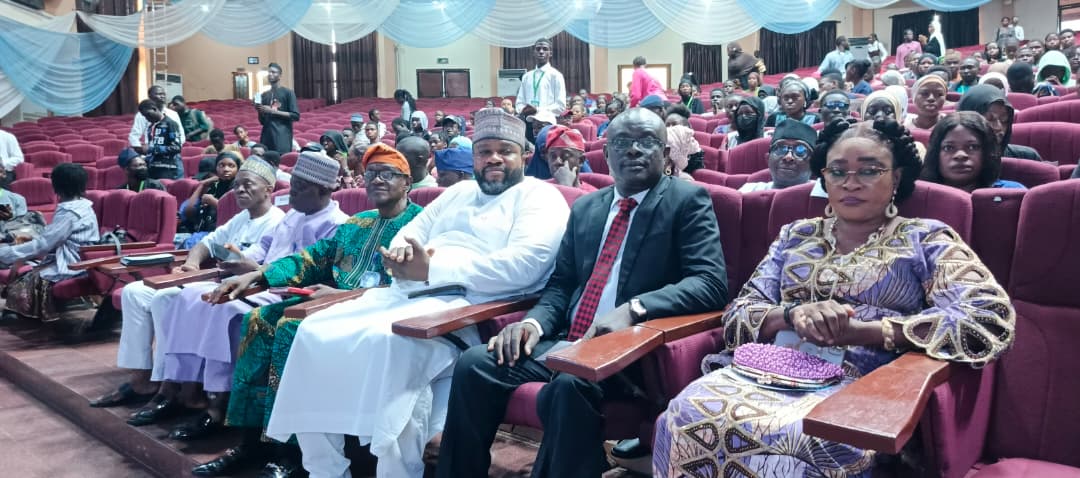
Agboke gave the charge on Friday, while presenting a paper titled “Ideas to Impact: Harnessing Youth-Driven Innovations for Sustainable Governance and National Development” at a leadership and empowerment summit organised by the Students’ Union of the University of Ilorin.
He warned that Nigeria’s growing youth population could either become a catalyst for transformation or a trigger for instability if not properly harnessed.
“Nigeria’s demographic reality presents a defining moment,” he said.
“This generation has the potential to serve as a powerful engine of innovation and economic transformation, but if left without purposeful engagement, it could become a source of systemic instability.”
Highlighting the country’s demographic structure, Agboke noted that about 60 per cent of Nigerians are under the age of 25, describing it as a “demographic dividend” that remains largely underutilised.
“Youth unemployment stands at over 33 per cent,” he said.
“This, combined with underemployment and brain drain, reflects our failure to convert demographic advantage into development outcomes.”
He stressed that innovation remains the most viable pathway to reversing the trend, declaring that ideas without impact are meaningless.
“Any idea conceived without significant and impactful influence is as useless as the most useless entity in human activities,” he said.
“A well-thought-out idea must drive young people toward innovations that better the lives of others and the nation.”
Agboke noted that Nigerian youths are already making inroads in governance through civic technology and digital advocacy, particularly in promoting transparency and accountability.
“Young Nigerians are at the forefront of civic innovation,” he said.
“They are building platforms that make government data accessible, track public projects and demand accountability from elected officials.”
He further linked youth advocacy to recent electoral reforms, including the introduction of the Bimodal Voter Accreditation System and the INEC Results Viewing Portal.
“These innovations reflect the cumulative impact of youth-driven advocacy for transparent electoral systems,” he said, while acknowledging lingering challenges in the electoral process.
Citing the 2020 #EndSARS protests, Agboke said the movement underscored the power of youth-led digital mobilisation.
“What began as online protests evolved into a massive, decentralised movement that demonstrated the capacity of Nigerian youths to organise and demand change,” he noted.
However, he cautioned against violent agitation, urging student leaders to adopt constructive and strategic engagement.
“Student leaders must engage with authorities without resorting to violence or destruction,” he said. “There are subtle and effective ways to demand change and achieve results.”
The INEC official identified major barriers confronting youth innovation, including poor access to finance, weak infrastructure, an outdated education system and regulatory constraints.
“Over 74 per cent of young entrepreneurs identify lack of funding as their primary constraint,” he said.
“High interest rates, limited access to credit and policy inconsistencies continue to stifle innovation.”
He criticised the nation’s education system for prioritising rote learning over critical thinking, calling for a shift towards practical, solution-driven learning.
“Our universities must evolve from degree-awarding institutions to innovation ecosystems,” he said. “Students should be empowered to translate ideas into practical solutions.”
Agboke also raised concerns over the increasing wave of emigration among skilled youths, warning that the trend poses a serious threat to Nigeria’s development.
“When our most talented young people leave, they take with them the ideas and energy needed to build the nation,” he said.
Despite the challenges, he expressed optimism that Nigeria could achieve transformation through deliberate investment in youth capacity.
“When young people are provided with education, funding, mentorship and participatory opportunities, they become powerful catalysts for national transformation,” he said.
He urged governments to establish innovation funds, improve digital infrastructure and implement youth-friendly policies, while calling on universities to prioritise entrepreneurship and research.
Addressing the students, Agboke challenged them to take ownership of the nation’s future.
“The question is not whether Nigerian youths can transform the nation,” he said. “They are already doing so daily. The question is whether our institutions will support or hinder them.”
He added, “Be innovative. Be courageous. Be audacious. Nigeria is waiting for you.”
 '
' '
'Do you want to share a story with us? Do you want to advertise with us? Do you need publicity for a product, service, or event? Contact us on WhatsApp +2348183319097 Email: platformtimes@gmail.com
We are committed to impactful investigative journalism for human interest and social justice. Your donation will help us tell more stories. Kindly donate any amount HERE
