

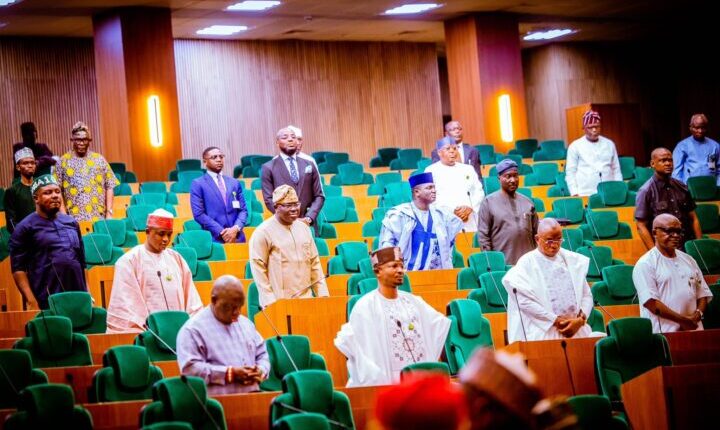
The House of Representatives on Thursday passed a bill seeking to establish state police, a move considered a major step towards decentralising Nigeria’s policing structure in response to worsening insecurity across the country.
The decision followed a vote by 289 lawmakers in favour of the proposal during plenary presided over by the Speaker, Tajudeen Abbas. Only one member voted against the bill, while the Speaker abstained.
The passage, however, was not without controversy as some lawmakers protested the late circulation of the draft.
Raising a point of order, a member representing Kaduna State, Bashir Zubairu, said the document was made available to members only hours before deliberation, making thorough scrutiny difficult.
“Mr Speaker, this document was only made available to lawmakers in the chambers, and we are yet to go through it. We cannot do justice to it because we have not gone through it,” he said.
Zubairu was, however, ruled out of order, allowing proceedings to continue despite audible interruptions from other lawmakers shouting “Point of Order.”
Before the voting commenced, Abbas disclosed that the electronic voting system was faulty, forcing the House to adopt a manual voting process based on attendance.
The bill seeks to amend Section 214 of the 1999 Constitution to establish a dual policing system comprising federal and state police formations. Under the proposal, the National Assembly will retain the power to determine the structure and operational standards of both systems.
It stipulates that no state police outfit can begin operations without a law enacted by the relevant State House of Assembly and certification that it meets national guidelines.
The proposal further provides that the federal police will continue to operate in any state until its police service becomes fully functional.
To prevent abuse, the bill limits federal intervention in state policing, allowing it only in cases of breakdown of law and order, upon a governor’s request, or where a state police command becomes ineffective due to administrative or financial challenges.
On appointments, the bill proposes that the Inspector-General of Police be appointed by the President on the advice of the Nigeria Police Council, subject to confirmation by the National Assembly.
Similarly, state governors are empowered to appoint Commissioners of Police for their respective states on the advice of the council, subject to confirmation by state assemblies.
While governors may issue directives on public safety, the bill allows commissioners to challenge any order deemed unlawful by referring such matters to the Nigeria Police Council for final resolution.
The legislation also amends Section 84 of the Constitution to update references to policing institutions.
The development comes amid renewed calls for state policing following a surge in banditry, kidnapping and killings in several parts of the country.
However, the bill must still secure concurrence from the Senate, approval from at least two-thirds of state Houses of Assembly, and presidential assent before it can become law.
 '
' '
'Do you want to share a story with us? Do you want to advertise with us? Do you need publicity for a product, service, or event? Contact us on WhatsApp +2348183319097 Email: platformtimes@gmail.com
We are committed to impactful investigative journalism for human interest and social justice. Your donation will help us tell more stories. Kindly donate any amount HERE
