

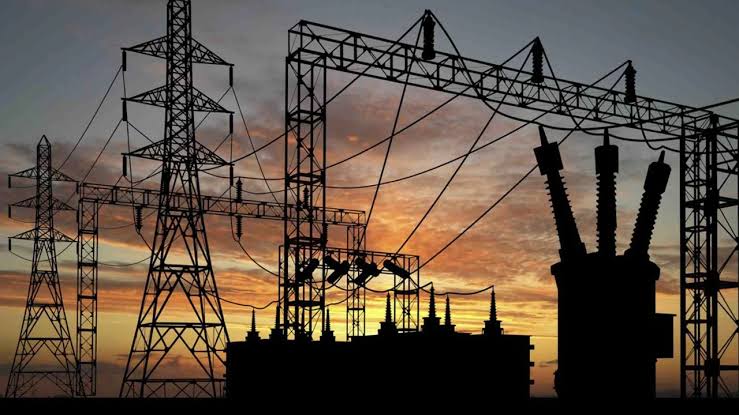
Average 3,124MW Stranded Monthly Amid Weak Infrastructure
TCN Insists Grid Can Transmit Far More Power
Stakeholders Call For Urgent Reforms To End Recurring Losse
Daud Olatunji
Nigeria’s electricity sector recorded another paradox in the first half of 2026 as power generation companies lost an estimated ₦110.56 billion to stranded electricity, despite millions of households and businesses grappling with chronic power shortages.
Findings by PLATFORM TIMES showed that an average of 3,124.5 megawatts of electricity generated between January and June could not be transmitted or utilised, exposing persistent weaknesses in the country’s electricity transmission and distribution network.
The development has renewed concerns over the efficiency of Nigeria’s power value chain, where electricity producers continue to generate power that cannot reach consumers due to infrastructure constraints, operational bottlenecks and disputes among operators.
Industry data showed that the stranded electricity translated into a cumulative revenue loss of ₦110.56 billion for Electricity Generation Companies (GenCos) within six months.
A breakdown of the figures revealed that 2,985MW of electricity generated in January was not evacuated, resulting in a revenue loss of ₦18.10 billion.
The situation worsened in February as stranded generation increased to 3,274MW, costing the companies another ₦17.93 billion.
March recorded the highest volume of unused electricity during the period, with 3,650MW stranded and an estimated ₦22.13 billion in lost revenue.
In April, 3,193MW could not be transmitted, leading to losses of ₦18.74 billion, while 2,710MW stranded in May translated to ₦16.43 billion.
Although stranded capacity declined slightly in May, it rose again in June to 2,935MW, costing operators another ₦17.22 billion.
The losses come at a time when Nigerians continue to endure frequent blackouts, forcing households and businesses to rely heavily on expensive alternative power sources.
Power generation companies have repeatedly argued that inadequate transmission capacity and poor electricity evacuation continue to discourage investments in generation despite the country’s huge electricity demand.
But the Transmission Company of Nigeria has dismissed claims that the national grid is responsible for the stranded electricity, insisting that generation shortfalls—not transmission limitations—remain the sector’s biggest challenge.
The company was responding to allegations by the Association of Power Generation Companies, which claimed that more than 2,500MW of electricity is stranded daily because the national grid can only transmit about 4,500MW, despite installed generation capacity exceeding 15,500MW.
TCN described the claim as inconsistent with the Nigerian Electricity Regulatory Commission’s First Quarter 2026 report, saying official data paints a different picture.
According to the company, the NERC report showed that Generation Companies declared an average available generation capacity of only 4,457.96MW during the period—almost the same figure GenCos claimed represented the grid’s transmission limit.
TCN also noted that the regulator placed the combined installed capacity of the country’s 28 grid-connected power plants at 13,625MW, lower than the over 15,500MW cited by the generators.
The transmission company maintained that its verified wheeling capacity currently stands at 8,700MW, following investments in substations, transformers and transmission lines across the country.
It added that the national grid had already demonstrated its capability by transmitting a record peak generation of 5,801.84MW on March 4, 2025, alongside a record daily energy delivery of 128,370.75 megawatt-hours.
TCN further argued that the major obstacle to improved electricity supply remains poor plant availability.
Citing NERC data, the company said the industry’s Plant Availability Factor stood at just 32.72 per cent in the first quarter of 2026, indicating that more than two-thirds of installed generation capacity was unavailable due to gas shortages, maintenance outages and mechanical faults.
Reacting to the development, President of the Nigeria Consumer Protection Network, Kunle Olubiyo, said stranded electricity has remained a recurring problem since the privatisation of Nigeria’s power sector in 2013.
He said the industry had yet to resolve who should bear the financial burden arising from stranded generation, warning that the recurring losses could worsen unless structural challenges across the electricity value chain are addressed.
According to him, investments in generation alone would not solve Nigeria’s electricity crisis unless the transmission network is strengthened and electricity distribution companies improve their capacity to receive and distribute available power.
“The situation will persist with grid constraints when generation is readily available and the other parties are not ready to pick the load,” Olubiyo said.
Energy analysts say the latest figures highlight the deep structural imbalance in Nigeria’s electricity sector, where billions of naira worth of electricity are wasted even as consumers remain trapped in persistent power shortages.
They argue that without coordinated investments in transmission infrastructure, improved gas supply, stronger distribution networks and better market coordination, stranded electricity will continue to drain operators’ revenues while depriving Nigerians of much-needed electricity.
 '
' '
'Do you want to share a story with us? Do you want to advertise with us? Do you need publicity for a product, service, or event? Contact us on WhatsApp +2348183319097 Email: platformtimes@gmail.com
We are committed to impactful investigative journalism for human interest and social justice. Your donation will help us tell more stories. Kindly donate any amount HERE
