

Suliat Lawal
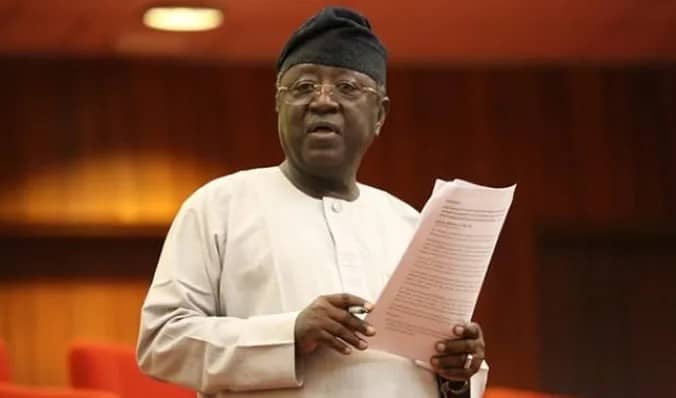
Former Plateau State Governor, Jonah Jang, has blamed prolonged leadership failures, unresolved disputes over land and citizenship, and entrenched grievances for the recurring violence that has ravaged communities across the state for more than two decades.
Jang, who spoke in his newly released autobiography, From Airman to Politics: My Life, said the Plateau crisis was neither sudden nor inevitable, arguing that successive governments failed to confront the underlying political, social and historical grievances before they degenerated into violent conflicts.
According to him, the crisis had its roots in longstanding disputes over identity, land, political participation, justice and the definition of who qualifies as a citizen of Plateau State.
He said the failure to resolve those questions created a cycle of resentment that eventually manifested in violent attacks, displacement and destruction of property.
“When I look back on the roots of the crisis that engulfed Plateau State, I see a tragedy that was both historical and man-made. It was a storm that had been brewing for decades, yet it was allowed to erupt because of a series of failures in leadership and governance,” Jang said.
The former governor made the remarks in his book unveiled in Jos on August 1.
Plateau has experienced repeated episodes of communal and ethno-religious violence since the early 2000s, with hundreds of people reportedly killed and communities displaced in successive attacks.
Jang argued that the violence could not be addressed permanently through security operations alone, stressing that the underlying grievances must be confronted.
“The Plateau crisis is about identity, land, justice and belonging,” he said.
He explained that tensions existed long before the outbreak of large-scale violence, alleging that grievances were allowed to accumulate because complaints were ignored and perceived injustices remained unresolved.
“Long before the bombs, machetes and the mass burials, there were subtle signs: grievances left unaddressed, tensions ignored, rights denied and injustice institutionalised,” he added.
Jang identified the contentious distinction between indigenes and citizens as one of the issues that had deepened divisions in the state.
He said disputes over who could own land, contest elections and enjoy full recognition as a member of a community had remained unresolved for years.
“The question of indigene versus citizenship haunted our state. Who had the right to land? Who had the right to contest elections? Who had the right to be called a son or daughter of Plateau?
“These questions festered in silence until they erupted into bloodshed,” he said.
The former governor, who also served as military governor of Benue and Gongola states, criticised administrations that came after his tenure for failing to take what he described as sufficiently decisive measures to address the roots of the conflict.
He maintained that a sustainable solution required governments and communities to move beyond responses based principally on the deployment of security personnel.
Jang said the state needed a comprehensive peace-building process involving reconciliation, reconstruction and a fresh conversation about citizenship and the equitable distribution of land, political power and economic opportunities.
“What Plateau needs and still needs is not just security but healing as well. Not just reconstruction, but reconciliation as well,” he said.
He called for a return to the fundamental questions surrounding citizenship and coexistence in the state.
“We must return to the drawing board and ask: What does it mean to be a Plateau citizen? How do we share land, power and opportunity in a way that respects history and embraces equality?”
Jang said the failure to confront those questions during previous periods of violence had contributed to the persistence of the crisis.
The former governor’s position suggests that lasting peace in Plateau may require a shift from predominantly reactive security measures to a broader strategy that tackles land disputes, political exclusion, citizenship questions, reconciliation and rebuilding of trust among communities.
However, resolving those issues would require sustained engagement among the state government, traditional institutions, community leaders, religious groups, civil society organisations and affected populations, alongside effective security and justice systems.
 '
' '
'Do you want to share a story with us? Do you want to advertise with us? Do you need publicity for a product, service, or event? Contact us on WhatsApp +2348183319097 Email: platformtimes@gmail.com
We are committed to impactful investigative journalism for human interest and social justice. Your donation will help us tell more stories. Kindly donate any amount HERE
