

Suliat Lawal
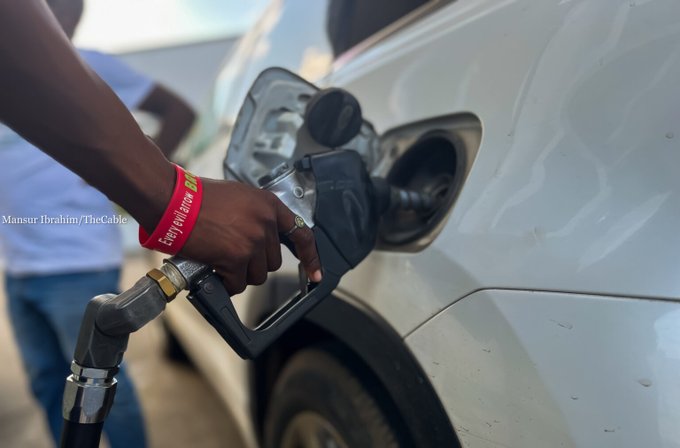
Petrol consumers across Nigeria are facing renewed pressure as filling stations continue to increase pump prices, with the cost of Premium Motor Spirit rising as high as N1,347 per litre in Abuja.
The latest increases have triggered concerns among motorists and other consumers over the growing volatility in the downstream petroleum market, with marketers adjusting their prices several times within a single week.
Checks in Abuja on Sunday showed that several major filling stations had increased their pump prices by between N60 and N75 per litre, following a fresh upward adjustment in the gantry price of petrol by the Dangote Refinery and other depot operators.
At an MRS filling station in Abuja, the price rose from N1,250 to N1,310 per litre. The product had sold for N1,230 a week earlier.
Similarly, AYM Shafa and AA Rano increased their pump prices from N1,270 to N1,320 per litre, representing a N70 rise from the N1,250 charged a week ago.
Adova Plc, also known as AP, raised its price to N1,347 per litre from N1,275. The product had sold for N1,255 per litre a week earlier.
The latest increases came barely 24 hours after the Dangote Refinery raised its gantry price from N1,200 to N1,265 per litre.
The refinery had reportedly supplied marketers at N1,185 per litre a week earlier.
The rapid adjustments have left motorists complaining that they can no longer predict how much they will spend on petrol from one day to another.
A motorist, Joachim Musa, who spoke at the AYM Shafa station in Karu, said the frequent price changes were making it increasingly difficult for consumers to plan their daily expenses.
“I was here yesterday and the price was N1,270 and today it is N1,320 per litre. Last week it was N1,250. It is impossible to know how much petrol costs until you arrive at the station,” he said.
Musa urged the Federal Government to take steps to bring greater stability to the downstream petroleum sector.
Another motorist, Shuaibu Muhammad, questioned the level of regulatory oversight in the sector, saying consumers appeared to have been left at the mercy of filling station operators.
He said the government should do more to protect consumers from what he described as unnecessary price increases.
The Independent Petroleum Marketers Association of Nigeria said the frequent adjustments were largely a consequence of changes in the price at which marketers obtain petrol.
IPMAN’s Public Relations Officer, Chief Chinedu Ukadike, said marketers had been contending with repeated gantry price adjustments over the past week.
“Every time Dangote increases his price, our price will also rise,” he said, explaining that independent marketers could not continue selling below the replacement cost of their products.
According to him, the volatility was creating difficulties for both marketers and consumers because the cost of replacing products could change substantially within a short period.
Ukadike attributed fluctuations in petrol prices to several factors, including international crude oil prices, foreign exchange movements and geopolitical developments affecting global oil supplies.
He warned that the impact of petrol price instability would extend beyond motorists because petroleum products play a major role in determining transportation costs and the prices of goods and services.
Dangote transport initiative raises hope
The IPMAN spokesman, however, expressed optimism that the Dangote Refinery’s free transportation initiative for marketers could eventually help moderate pump prices by reducing distribution costs.
He said some trucks operating under the initiative had yet to reach their destinations because of poor road conditions, while additional marketers were still enrolling in the programme.
He also welcomed the inclusion of Imo and Anambra states in the initiative, describing the two states as important gateway markets in the South-East.
According to him, wider access to locally refined petrol could increase competition among suppliers and reduce the pressure on marketers who currently incur significant transportation costs and tie down funds in depots.
Ukadike also questioned the continued importation of petrol by some major oil marketers despite the growing capacity of domestic refineries.
He acknowledged that imports could play a role in promoting deregulation and competition but questioned the economic justification for importing petrol at prices higher than locally refined products.
“When the products that are being imported are higher than the ones Dangote is giving us, what is the essence of importing it, putting pressure on our dollar?” he asked.
He called for stronger government support for domestic refining, particularly through improved access to crude oil for local refineries.
According to him, increased domestic refining capacity would reduce Nigeria’s dependence on imported petroleum products and could eventually position the country to export refined products.
 '
' '
'Do you want to share a story with us? Do you want to advertise with us? Do you need publicity for a product, service, or event? Contact us on WhatsApp +2348183319097 Email: platformtimes@gmail.com
We are committed to impactful investigative journalism for human interest and social justice. Your donation will help us tell more stories. Kindly donate any amount HERE
