

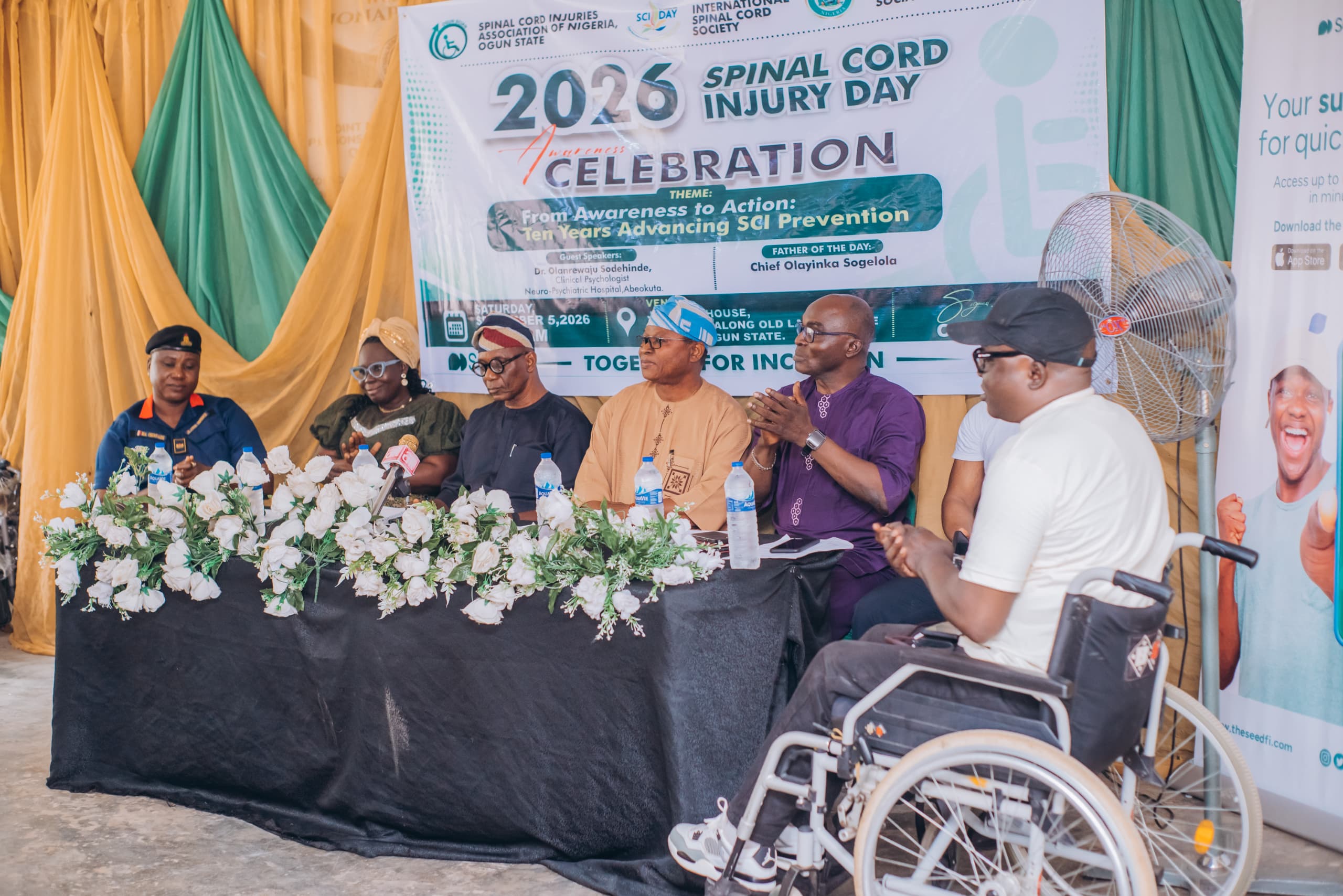
….Demand better rehabilitation, emergency response, accessible healthcare, economic opportunities
Daud Olatunji
Stakeholders in the disability sector have called for urgent action to prevent spinal cord injuries and improve access to healthcare, rehabilitation, employment and social support for survivors.
They made the call on Saturday at the commemoration of the 2026 Spinal Cord Injury International Awareness Day held at the JONAPWD House, Oke-Mosan, Abeokuta, Ogun State.
The programme, themed “From Awareness to Action: A Decade of Progress and the Journey Ahead,” brought together spinal cord injury survivors, persons with disabilities, caregivers, government representatives, healthcare professionals, traditional leaders, advocates and other stakeholders.
The stakeholders said raising awareness about spinal cord injury would have little impact unless it translated into concrete measures capable of preventing injuries and improving the quality of life of survivors.
A representative of the Ogun State Ministry of Women Affairs and Social Development urged persons with disabilities to continue to advocate for their rights and demand greater inclusion in society.
She said people living with spinal cord injuries should not be treated with pity but recognised as citizens capable of contributing meaningfully to society when given the necessary support and opportunities.
The representative assured the disability community of the government’s commitment to addressing issues affecting persons with disabilities, while urging them to continue engaging relevant authorities.
Also speaking, the NSCDC Desk Officer for Persons with Disabilities stressed the need for stronger preventive measures, particularly in the areas of road safety, accident prevention and emergency response.
The officer said the progress made in raising awareness over the past decade must now be matched with practical interventions to reduce spinal cord injuries and improve the lives of those already affected.
The speaker identified proper first aid, appropriate handling of trauma victims, effective rehabilitation programmes, accessible facilities and social inclusion as critical areas requiring greater attention.
The officer also commended survivors, caregivers, healthcare workers, advocates and disability organisations for their resilience and continued efforts to promote awareness.
Physical, psychological challenges
A medical presentation by Dr Olanriwadu Shotei Ndeye, titled “Navigating Spinal Cord Injury: Responses, Resilience and Way Forward,” highlighted the complex consequences of spinal cord injuries.
Ndeye explained that spinal cord injuries could result from trauma, disease or degeneration and may lead to temporary or permanent changes in movement, sensation and other bodily functions.
The doctor identified road traffic crashes, motorcycle and automobile accidents, falls, gunshot injuries and stab wounds among the causes of spinal cord injuries.
Beyond the physical consequences, the presentation drew attention to the psychological and social difficulties that survivors may face.
These, according to the speaker, include anxiety, depression, frustration, rejection, abandonment, loss of confidence, sleep difficulties, hopelessness and uncertainty about the future.
Ndeye therefore stressed that treatment should go beyond medical intervention to include psychological support, rehabilitation, family assistance, social integration and opportunities for economic empowerment.
Survivors who spoke at the event recounted challenges associated with accessing healthcare, mobility, employment, finances and social support after sustaining spinal cord injuries.
Their testimonies, however, also highlighted resilience and determination to rebuild their lives despite the difficulties associated with their conditions.
The survivors stressed the importance of creating an environment where people living with spinal cord injuries could access appropriate healthcare, mobility support, education, employment and other opportunities without discrimination.
The event emphasised that sustaining a spinal cord injury should not automatically deprive an individual of the opportunity to contribute to society.
Participants called for stronger collaboration among government agencies, healthcare providers, disability organisations, families, caregivers, private organisations and communities.
They demanded improved rehabilitation services, accessible healthcare facilities, better emergency response systems, stronger road safety measures and disability-friendly public infrastructure.
They also called for greater economic opportunities and social inclusion for people living with spinal cord injuries.
The stakeholders commended the role of the Joint National Association of Persons with Disabilities in bringing together various disability groups and providing a platform for advocacy on issues affecting persons with disabilities.
The programme ended with a renewed call for stakeholders to move beyond awareness campaigns and implement practical measures capable of preventing spinal cord injuries and supporting survivors.
The central message of the commemoration was that awareness may start the conversation, but sustained action is required to create meaningful change.

 '
' '
'Do you want to share a story with us? Do you want to advertise with us? Do you need publicity for a product, service, or event? Contact us on WhatsApp +2348183319097 Email: platformtimes@gmail.com
We are committed to impactful investigative journalism for human interest and social justice. Your donation will help us tell more stories. Kindly donate any amount HERE
