

Mujeeb Akindoyin
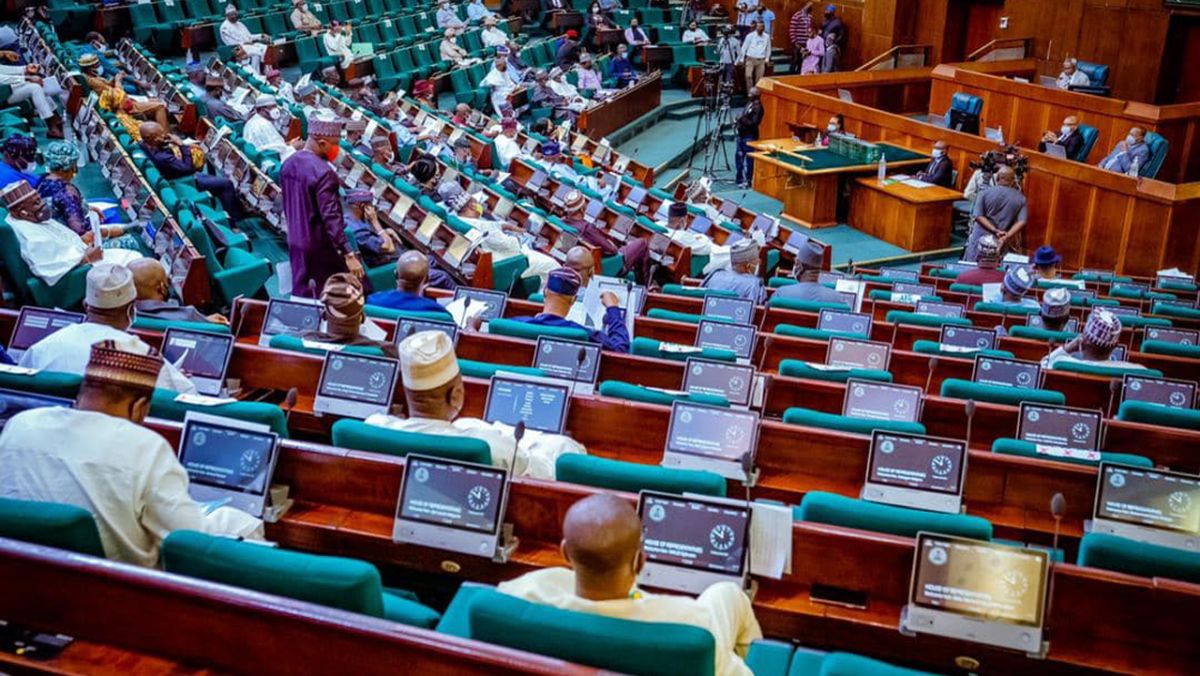
The House of Representatives has commenced an investigation into the prolonged exclusion of thousands of law graduates of the National Open University of Nigeria from admission into the Nigerian Law School for professional training and Call to Bar.
The investigation followed a petition by more than 5,000 affected graduates under the aegis of the Backlog of Law Graduates of the National Open University of Nigeria, who appealed to the National Assembly to intervene in the dispute between the university and the regulatory authorities.
The House Committee on Public Petitions invited the management of NOUN and the Nigerian Law School, under the Council of Legal Education, to appear before it and explain the circumstances surrounding the graduates’ exclusion.
However, neither institution appeared at the investigative hearing held on Wednesday, September 16, 2026.
While NOUN wrote to explain the absence of its Vice-Chancellor, the Nigerian Law School, in a letter signed by its Director-General, Dr Olugbemisola Odusote, said its officials were unavailable because of an official assignment.
The Law School, however, expressed its willingness to appear before the committee on another date.
The petitioners told the committee that they had completed their Bachelor of Laws programmes and should not be made to suffer the consequences of disagreements between government institutions.
Speaking with journalists after the hearing, the Public Relations Officer of the affected graduates’ association, Chibueze Obochi, said the graduates had exhausted other avenues of resolving the matter before seeking the intervention of the National Assembly.
Obochi argued that the affected graduates were not parties to whatever disagreements existed between NOUN, the Council of Legal Education and the Nigerian Law School.
“We should not be made victims of inter-agency rivalries. We were not part of any agreements or disagreements between NOUN and CLE and Nigerian Law School.
“We are Nigerian citizens and we are innocent of whatever must have transpired,” he said.
He also cited Section 18(1) of the 1999 Constitution, as amended, which provides for equal educational opportunities, arguing that the graduates should not be denied the opportunity to proceed with their professional training because of institutional disputes.
A major point of contention is a list of 1,883 NOUN law graduates submitted to the relevant authorities in 2019.
According to Obochi, the phrase “graduates produced so far” used in connection with the list could not reasonably be interpreted to mean that the 1,883 names constituted all the law graduates the university would eventually produce.
“Every lawyer, even a layman, understands the express statement when you say ‘so far’. That means it opens a window to some persons left behind,” he said.
The petitioners also challenged the argument that students affected by the suspension of NOUN’s law programme should not be considered because the university was advised to stop admitting students in 2015.
Obochi said those already admitted before the suspension had legitimate academic records and should be allowed to complete their studies.
“When you stop admission, it does not mean that you have chased away those who are already studying,” he said.
He added that the affected graduates possessed matriculation numbers and other documents showing when they were admitted into the university.
“We are of the opinion that justice and fairness shall prevail over this matter. And what was done to our seniors should also be extended to us,” Obochi said.
NOUN, in its submission to the House committee, traced the dispute to 2015 when an accreditation team from the National Universities Commission, led by Prof Nsongurua Udombana, visited the university as part of the accreditation process for its LLB programme.
The university said that while it was awaiting the outcome of the accreditation exercise, the Council of Legal Education published its position rejecting the admission of NOUN law graduates into the Nigerian Law School.
According to NOUN, it subsequently suspended further admission into its LLB programme in 2015 and had not admitted fresh students into the programme since then.
The university said the decision was taken to prevent the number of affected students from increasing while regulatory issues concerning the programme were being resolved.
Between 2015 and 2019, NOUN said it held discussions with the CLE and other stakeholders in an effort to resolve the eligibility of its graduates for admission into the Nigerian Law School.
In 2019, the university formally appealed to the CLE for the admission of its law graduates and submitted a list containing 1,883 graduates.
NOUN later discovered that 90 graduates had inadvertently been omitted from the list, bringing the actual number at that stage to 1,973.
The university said the Body of Benchers subsequently considered the matter in 2020 and approved a Special Remedial Programme for NOUN law graduates rather than direct admission into Bar Part II, which is the route applicable to graduates of other Nigerian universities.
NOUN said it subsequently submitted another batch of 2,226 law graduates who had completed their studies between 2019 and May 2022 for consideration for admission into the Nigerian Law School.
According to the university, the CLE rejected the subsequent submission.
NOUN said the reasons given included an alleged understanding that the 2019 list represented the total number of NOUN law graduates and an allegation that the university had continued admitting students into its LLB programme after 2015.
The university rejected the allegation that it continued admitting students after the suspension.
It maintained that the graduates contained in the subsequent submission were students who had been admitted before the 2015 suspension but completed their programmes at different times.
The conflicting positions have consequently left thousands of graduates caught between the regulatory interpretation of the status of the programme and their claim that they were legitimately admitted students who completed their academic requirements.
Law School seeks fresh hearing date
The Nigerian Law School, which also failed to attend the September 16 hearing, acknowledged the committee’s invitation in a letter signed by its Director-General, Dr Olugbemisola Odusote.
The institution said it could not attend because of an official assignment requiring the participation of relevant officials.
It apologised for its inability to attend and requested that another date be communicated to it.
The Law School also assured the committee that it was prepared to cooperate with the investigation and appear at a rescheduled hearing.
The petition was laid before the House on July 21, 2026, by the Chairman of the House Committee on Media and Publicity, Hon Akin Rotimi.
Rotimi subsequently expressed his commitment to ensuring that the grievances of the affected graduates were addressed.
He stressed the need for a fair and lasting resolution, particularly for graduates who had completed their academic programmes but remained uncertain about their eligibility for professional legal training.
The law graduates are now looking to the House investigation to resolve the regulatory dispute and determine a pathway that will address the status of those affected.
At the centre of the controversy is therefore not only the fate of the more than 5,000 graduates but also the interpretation of the regulatory status of NOUN’s former LLB programme, the scope of the 2019 graduate list and the status of students admitted before the 2015 suspension
 '
' '
'Do you want to share a story with us? Do you want to advertise with us? Do you need publicity for a product, service, or event? Contact us on WhatsApp +2348183319097 Email: platformtimes@gmail.com
We are committed to impactful investigative journalism for human interest and social justice. Your donation will help us tell more stories. Kindly donate any amount HERE
