

Toyyibat Qasim
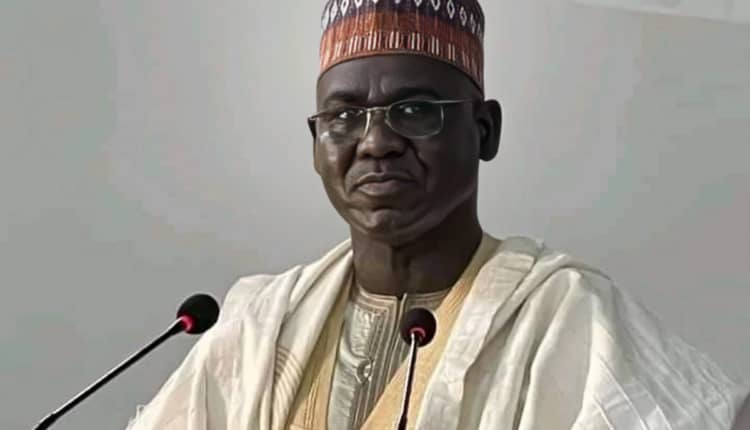
Former Chief of Army Staff, Lt.-Gen. Tukur Buratai (retd.), has denied handling any part of the controversial $1bn arms procurement fund, insisting that the money was controlled by the Ministry of Defence and did not pass through the accounts of the Nigerian Army or other military services.
Buratai made the clarification on Monday in Abuja while speaking at a conference organised by the Defence Correspondents Association of Nigeria, describing allegations that the fund was diverted for political purposes as “political and malicious”.
The retired general said the National Economic Council approved the $1bn for defence procurement, but the Ministry of Defence was responsible for managing the funds and overseeing the procurement process.
He said military service chiefs had continued to face public criticism over the controversy despite, according to him, not being directly responsible for managing the money.
“Not a single dollar of that fund passed through my hands or through the accounts of the Nigerian Army, Navy, or Air Force,” Buratai said.
The former army chief traced the controversy to the 2019 general election, when opposition figures allegedly accused the Federal Government of diverting the money to finance political activities.
He said the Federal Government denied the allegations at the time, but the controversy persisted, damaging the reputations of military chiefs without sufficient clarification from the ministry responsible for the funds.
Buratai argued that accountability should rest with the institution that managed the money, urging the Ministry of Defence to disclose how the fund was disbursed and the contracts awarded, subject to legitimate national security restrictions.
“The ministry then, on its own, had not publicly explained how funds were disbursed or contracts awarded. Accountability must be properly located,” he said.
He added, “The $1bn arms procurement controversy festered because the institution that managed the funds, the Ministry of Defence, remained silent while Service Chiefs absorbed criticism.
“When the media asks where the money went, the answer should come from the ministry that spent it, not from military officers who never touched it.”
The retired general also proposed the establishment of a Defence Procurement Transparency Portal to provide information on defence contracts, contractors and delivery timelines.
According to him, the initiative would strengthen accountability in military spending and help restore public confidence in the procurement of defence equipment.
His comments come amid persistent concerns over transparency in Nigeria’s defence expenditure, particularly as the country continues to battle insurgency, terrorism, banditry and other security threats.
Beyond the arms procurement controversy, Buratai called for improved accountability in the handling of allegations of misconduct by military personnel.
He urged the Armed Forces to publish quarterly accountability bulletins detailing the outcomes of court-martial proceedings involving alleged human rights violations and other misconduct during military operations.
He said such disclosures should respect the rights of accused personnel while ensuring that sensitive operational information was not made public.
On allegations of human rights abuses by security personnel, the former army chief maintained that credible complaints should be investigated and prosecuted where evidence establishes wrongdoing.
“The military is not above the law,” he said, advocating transparent and credible disciplinary mechanisms capable of addressing misconduct at all levels.
Buratai also called on the Armed Forces and the Ministry of Defence to improve communication with journalists to promote accurate reporting of military operations and deepen public understanding of security activities.
Meanwhile, the Minister of Information and National Orientation, Mohammed Idris, has said Nigeria’s security challenges cannot be resolved through military force alone.
Idris, who was represented at the conference by the Director-General of the Voice of Nigeria, Jibrin Ndace, said effective security operations required reliable intelligence, modern technology, coordination among security agencies and cooperation with local communities.
He said President Bola Tinubu’s administration was pursuing the modernisation of the Armed Forces, intelligence-led operations, improved surveillance and stronger coordination among security and intelligence agencies.
The minister also disclosed that Tinubu directed the preparation of a comprehensive National Threat Assessment and a rolling five-year Strategic Defence Operations Plan in August 2026 to improve security planning and resource deployment.
According to him, the President approved salary increases of between 30 and 80 per cent for Armed Forces personnel, effective September 2026, in recognition of their sacrifices.
Idris stressed that security policies must produce tangible improvements in the lives of Nigerians, including safer communities and roads, protection for farmers and businesses, and secure access to education.
Addressing the media’s role in national security, the minister urged journalists to verify information before publication, warning that unsubstantiated reports and rumours could cause panic or undermine military operations.
He, however, cautioned against using responsible journalism as an excuse to shield the government or security agencies from scrutiny.
“Journalists must keep asking difficult questions and hold institutions accountable, while respecting legitimate operational sensitivities,” he said.
 '
' '
'Do you want to share a story with us? Do you want to advertise with us? Do you need publicity for a product, service, or event? Contact us on WhatsApp +2348183319097 Email: platformtimes@gmail.com
We are committed to impactful investigative journalism for human interest and social justice. Your donation will help us tell more stories. Kindly donate any amount HERE
 '
'