

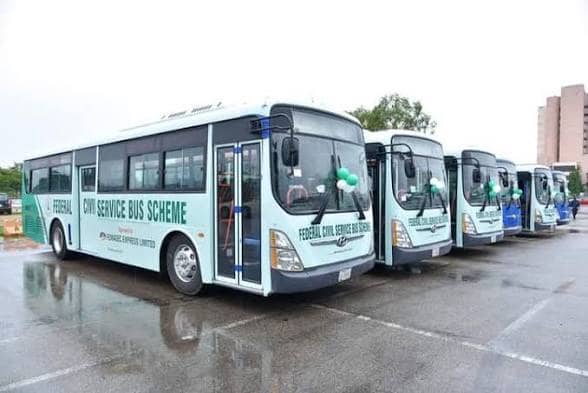
…FG Plans 180 Additional Refuelling Stations To Expand Access Nationwide
….High Conversion Costs, Inadequate Refuelling Stations Threaten Wider Adoption
.
Daud Olatunji
The Federal Government’s Compressed Natural Gas (CNG) and Electric Vehicle Initiative has attracted about $2.5bn in private investment, with more than 120,000 vehicles converted to run on alternative fuel, the Minister of Information and National Orientation, Mohammed Idris, has said.
Idris disclosed this on Monday during a media chat with senior editors and journalists, adding that the programme had also received approximately N250bn in government funding and commitments.
According to the minister, more than 400 certified conversion centres and over 90 CNG refuelling stations have been established nationwide, while an additional 180 stations are under development.
The figures highlight the scale of the government’s push to reduce dependence on petrol and ease transportation costs following President Bola Tinubu’s removal of the petrol subsidy in May 2023, a policy that triggered higher transport fares and intensified the financial pressure on households.
However, despite the reported investment and expansion of infrastructure, the initiative continues to face significant challenges, particularly the high cost of converting petrol-powered vehicles and inadequate refuelling facilities in some locations.
Converting a vehicle to run on CNG reportedly costs between N750,000 and N2.5m, depending on the vehicle type and engine specifications.
The upfront expense remains a major obstacle for commercial drivers and other motorists who are already struggling with rising operating costs, limiting the ability of many Nigerians to benefit from the promised savings on fuel.
Motorists who have switched to CNG have also reported difficulties, including insufficient refuelling infrastructure, long queues and lost working hours, raising concerns about whether the programme can deliver widespread relief without faster infrastructure expansion.
The minister, however, said the initiative was creating jobs and opening up business opportunities in communities hosting conversion centres and refuelling facilities.
Idris said the programme formed part of the Federal Government’s broader economic reform agenda aimed at reducing transportation expenses, stimulating private investment and diversifying the economy.
Beyond the CNG initiative, the minister used the media engagement to highlight what he described as improvements in Nigeria’s economic indicators, including a decline in inflation, rising external reserves and projected economic growth.
He said inflation had dropped from about 27 per cent in January 2025 to around 15 per cent, while the country’s external reserves exceeded $54bn in September, the highest level in almost two decades.
According to him, the economy is projected to grow by more than four per cent in 2026, while Nigeria’s current account surplus increased to $12bn in the first half of the year, compared with $8.6bn recorded in the corresponding period of 2025.
Idris attributed the developments to the administration’s economic policies, arguing that the reforms were helping to stabilise the economy, rebuild investor confidence and establish conditions for sustained growth.
“The macroeconomic numbers have turned the corner, and I would ask that we always look at what they mean beyond the headlines,” he said.
He nevertheless acknowledged that many Nigerian households were still contending with the high cost of living, stressing that the government’s priority was to ensure that improvements in economic indicators translated into tangible benefits for citizens.
“Our commitment is to ensure that stronger economic indicators translate into more jobs, more productive businesses, more affordable essential services and greater purchasing power for Nigerian families,” the minister said.
On infrastructure, Idris said the administration’s four legacy projects covered approximately 3,000 kilometres across the six geopolitical zones, alongside other projects in road, rail, ports, power, healthcare and education.
He also cited a recently approved highway project valued at about N1.5tn in Niger State, which he said would improve connectivity along a major agricultural and commercial corridor.
On agriculture, the minister said the government was prioritising food security through mechanisation, access to farm inputs, irrigation and agricultural financing to boost domestic production, improve farmers’ earnings and reduce food prices.
He further disclosed that the Federal Government had commissioned two additional cancer treatment centres, bringing the total number commissioned to five, as part of plans to establish 10 centres nationwide.
In the education sector, Idris said the Nigerian Education Loan Fund had supported more than 1.6 million students, disbursing over N192bn in tuition fees and N180bn in upkeep allowances.
He added that the Three Million Technical Talent programme was expanding opportunities for young Nigerians to acquire digital skills in software development, data science, cybersecurity and emerging technologies.
The minister also identified domestic refining, solid minerals, industrial production and innovation as key areas through which the administration hoped to diversify the economy and create sustainable employment.
Despite the reported investments and expanding infrastructure, the long-term success of the CNG initiative will depend partly on whether motorists can afford vehicle conversions, access refuelling stations conveniently and achieve meaningful savings in their daily transportation costs.
 '
' '
'Do you want to share a story with us? Do you want to advertise with us? Do you need publicity for a product, service, or event? Contact us on WhatsApp +2348183319097 Email: platformtimes@gmail.com
We are committed to impactful investigative journalism for human interest and social justice. Your donation will help us tell more stories. Kindly donate any amount HERE
 '
'