

Daud Olatunji
The Ogun State Chapter of the Nigerian Institute of Town Planners (NITP) has said that Artificial Intelligence (AI) can improve urban planning but cannot replace the professional expertise and human judgment required to design sustainable communities.
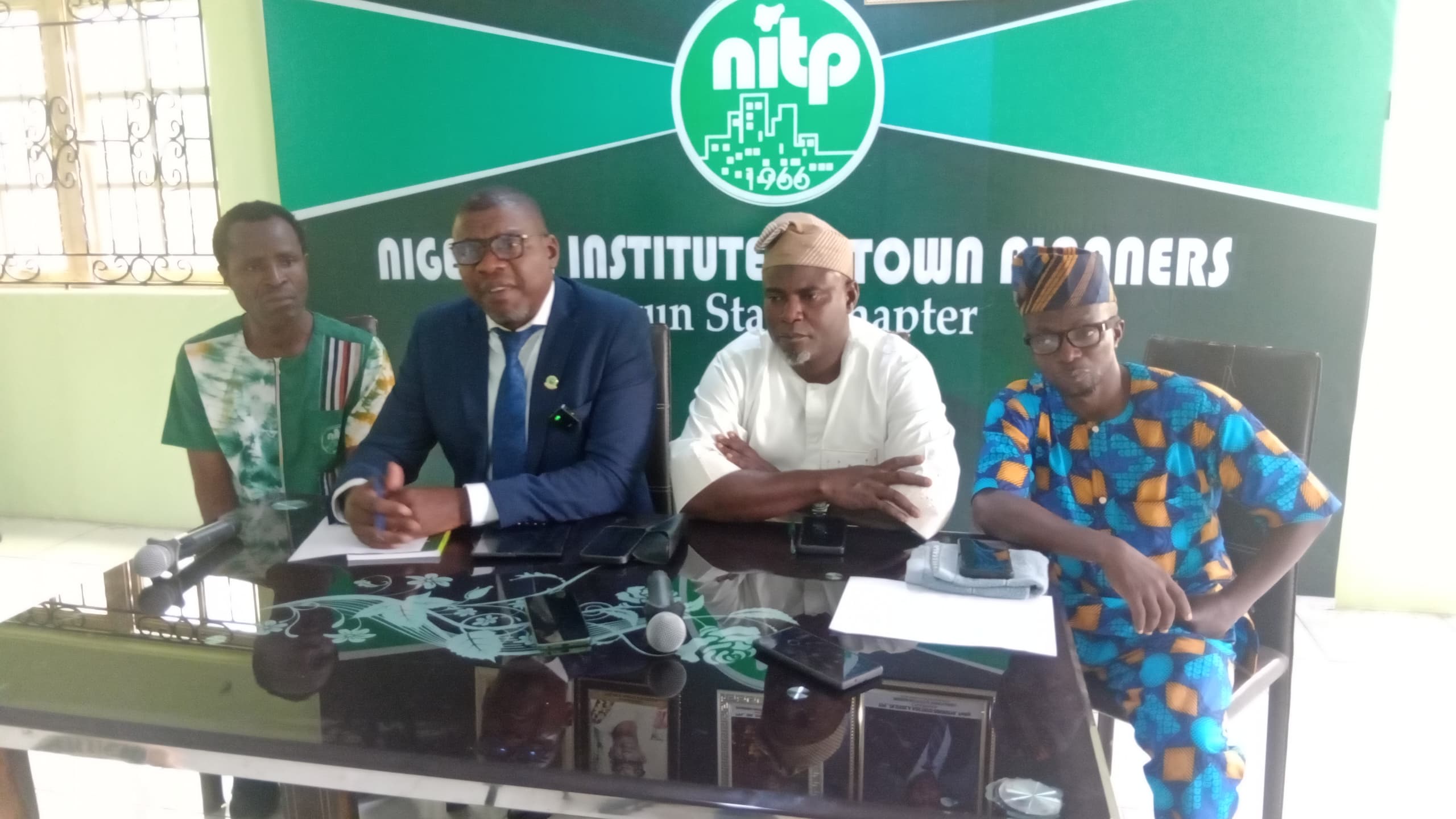
The state chairman of the institute, Mr Olusola Odukoya, stated this on Tuesday in Abeokuta during a press conference to mark the 40th anniversary of the institute and outline its vision for the next four decades.
Odukoya explained that although AI offered opportunities to improve planning processes, its effectiveness depended on the availability of accurate, location-specific data and the ability of professionals to interpret the peculiar needs of different communities.
He noted that effective urban planning required a thorough understanding of the cultural practices, environmental conditions, topography and other characteristics of the areas being developed.
According to him, these factors make the involvement of qualified town planners indispensable, regardless of advances in technology.
“AI is a very versatile tool that can be imbibed into the profession. It helps define a lot, but AI does not have the entire data.
“There are times we need our own professionals to think and look inwards because planning for different places requires different measures. Everywhere is not the same,” he said.
The NITP chairman explained that while AI could provide a useful foundation for planning decisions, town planners would need to supply it with relevant local data to produce more effective and context-specific development plans.
He stressed that the institute was prepared to embrace technological innovation without surrendering the responsibility for planning decisions to artificial intelligence.
“At the foundation level, we will need it, but we will feed it our own data, and it will help us make our planning more robust.
“We will use this innovation to make planning more robust, but it will not be AI that will be planning for us,” Odukoya said.
He identified young town planners as critical to the future of the profession, urging them to build on the achievements of their predecessors while adapting to emerging technologies and changing urban development needs.
Odukoya said the institute’s 40th anniversary was not merely an opportunity to celebrate its past achievements but also a moment to prepare the next generation of professionals for the responsibilities of shaping the built environment.
“It is our young planners of today that this legacy is being handed over to, and they will design the future of the environment,” he added.
The anniversary comes amid growing interest in the application of digital technologies to urban development, including the use of data-driven tools to support infrastructure planning, land-use management and environmental assessment.
However, Odukoya’s position underscores the importance of combining technological innovation with professional judgment and local knowledge to address the distinct planning challenges facing communities.
 '
' '
'Do you want to share a story with us? Do you want to advertise with us? Do you need publicity for a product, service, or event? Contact us on WhatsApp +2348183319097 Email: platformtimes@gmail.com
We are committed to impactful investigative journalism for human interest and social justice. Your donation will help us tell more stories. Kindly donate any amount HERE
 '
'