

….Abia, Anambra, Kano, Nasarawa Among States With Elevated Contamination Levels
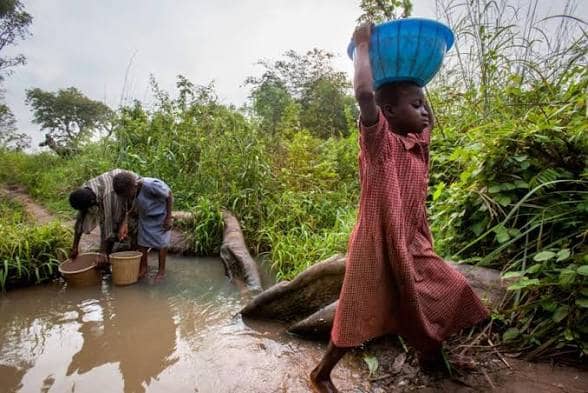
…Experts Warn Clear-Looking Water May Conceal Dangerous Pollutants Consumed For Years
…More Than One-Third Of States, FCT Lack Published Contamination Data
Daud Olatunji
A new scientific study has raised fresh concerns over the safety of drinking water in Nigeria, revealing that about 85 per cent of the water sampling sites examined recorded arsenic concentrations above the World Health Organisation’s recommended limit.
The findings have heightened concerns about the potential health risks facing millions of Nigerians who depend on boreholes, wells, rivers and lakes for their daily water needs, often without access to reliable information about the quality of the water they consume.
The study, published in the Journal of Applied Sciences and Environmental Management on September 21, 2026, also exposed significant gaps in the country’s water quality surveillance system, with more than one-third of Nigeria’s states and the Federal Capital Territory having no published data on arsenic contamination.
Researchers warned that the absence of comprehensive testing and publicly accessible water quality records makes it difficult to establish the true scale of the problem or determine the number of Nigerians potentially exposed to contaminated drinking water.
One of the most alarming findings was recorded in Ebonyi State, where borehole water reportedly contained arsenic at a concentration of 4.645 milligrams per litre, approximately 465 times higher than the WHO’s recommended limit of 0.01 milligrams per litre.
Other states where elevated arsenic concentrations were reported included Abia, Anambra, Kano and Nasarawa.
The findings have renewed calls for urgent government intervention, comprehensive water testing and stronger environmental health monitoring to protect residents who may unknowingly consume contaminated water for years.
However, the researchers cautioned that their findings should not be interpreted as proof that 85 per cent of all water sources across Nigeria are contaminated, explaining that the review was based on available scientific studies rather than a nationwide sampling exercise.
According to a statement jointly released by the researchers on Thursday, the team reviewed 40 studies conducted across Nigeria, with 35 studies involving 945 water samples included in the final analysis.
The researchers said some of the studies examined locations already suspected of pollution, meaning the findings could not be used to establish the national prevalence of arsenic contamination.
Despite the limitation, they warned that the lack of reliable data across several parts of the country means Nigeria cannot confidently determine whether its drinking water is safe from the toxic substance.
The study’s corresponding author, Excel Obumneme Amaefule, said the findings highlighted a serious gap in the country’s ability to identify and respond to potential water contamination.
He stressed that the researchers were not declaring a nationwide water contamination crisis but warning that the country lacked sufficient evidence to rule one out.
“We’re not claiming a national crisis. We’re saying Nigeria can’t rule one out, because across much of the country nobody has tested, and nowhere is anyone comparing water results with health data,” Amaefule said.
The absence of systematic testing, he explained, makes it difficult to identify communities at risk, establish the extent of exposure and determine whether contaminated water is contributing to health problems among residents.
The researchers also expressed concern that environmental monitoring results were not being adequately linked to health records, limiting the ability of public health authorities to investigate possible connections between long-term arsenic exposure and disease.
The concentration reported in Ebonyi State stands out as one of the study’s most concerning findings.
At 4.645 milligrams per litre, the recorded level was approximately 465 times the WHO guideline of 0.01 milligrams per litre for arsenic in drinking water.
The WHO’s guideline is intended to limit health risks associated with prolonged exposure to the toxic substance.
The researchers also identified elevated concentrations in Abia, Anambra, Kano and Nasarawa, although the available findings do not establish that all water sources in those states are contaminated.
The review examined water from different sources, including boreholes, wells, rivers and lakes, underscoring the need for comprehensive assessments that go beyond individual locations or particular types of water infrastructure.
The findings are particularly significant in communities where households rely on privately owned boreholes and traditional wells and may have limited access to regular water quality testing.
Unlike water contaminated with substances that produce noticeable changes in colour, taste or smell, arsenic can remain undetected in water consumed daily.
This means that households may continue using potentially contaminated water without realising that it contains a hazardous substance.
The researchers’ findings, however, do not establish how many households are affected or how many Nigerians have developed illnesses as a result of arsenic exposure.
Concerns over arsenic contamination are particularly serious because prolonged exposure to inorganic arsenic through drinking water has been associated with several adverse health conditions.
The WHO has linked long-term exposure to skin abnormalities and an increased risk of skin, bladder and lung cancers.
Prolonged exposure has also been associated with cardiovascular diseases and diabetes.
Dr Babajide Milton Macaulay called for urgent attention to the potential public health implications of arsenic pollution, warning that even concentrations that appear numerically small can pose significant health concerns depending on the level and duration of exposure.
He argued that the danger should not be underestimated, particularly in communities where residents may consume water from the same sources over extended periods without testing.
“The reason arsenic pollution should be treated as a public health emergency is because ingestion, even at numerically low concentrations, could result to significant health concerns.
“Today, many Nigerians are privately managing chronic illnesses, who knows, if it was triggered by the water they’ve been drinking?!” he said.
However, the study did not establish that arsenic contamination was responsible for any specific illnesses among Nigerians, and the researchers called for more comprehensive environmental and health data to investigate possible links.
The concern, therefore, is not that every unexplained illness is caused by contaminated water, but that inadequate testing could leave potential environmental health risks undetected.
Romoke Shakirat Ojo, who highlighted the study’s use of geospatial analysis, called on government agencies to make reliable water quality data publicly available.
She said accessible and accurate information would help researchers identify potential contamination hotspots, improve scientific investigations and support the development of effective drinking water policies.
The use of geospatial analysis in the review also highlighted the importance of identifying where contamination has been reported and determining which areas require further investigation.
Without comprehensive and publicly available records, researchers and public health officials may struggle to identify communities that need urgent testing or determine whether contamination extends beyond previously investigated locations.
Chioma Dike, a registered nurse and public health nurse, also warned that the absence of visible changes in water quality could make arsenic exposure particularly difficult for households to detect.
She said residents who depend on the same boreholes and wells for years could be exposed without knowing the potential risks.
“Water may look perfectly safe while arsenic exposure continues silently. Many families may drink from the same boreholes and wells for years without knowing what is in them,” she said.
Her warning highlights the importance of laboratory testing rather than relying on the appearance, taste or smell of water to determine whether it is safe for consumption.
To address the identified gaps, the researchers recommended expanding water quality testing to states where no published arsenic contamination data are available.
They also called for water quality assessments to be incorporated into approval processes for mining and industrial activities, particularly where such operations could affect nearby water sources.
Mining and industrial activities can be relevant to arsenic monitoring because the substance may enter water through natural geological processes or human activities that disturb arsenic-bearing materials.
The researchers further recommended establishing a national surveillance system that would link environmental measurements with health records.
Such a system, they argued, would help authorities monitor contamination trends, identify potentially affected communities and investigate possible relationships between environmental exposure and disease.
The recommendations also point to the need for stronger coordination among environmental agencies, public health institutions and organisations responsible for water supply and sanitation.
A comprehensive surveillance framework could help move the country from isolated investigations towards routine monitoring capable of identifying emerging risks before they become widespread public health concerns.
The revelation that more than one-third of Nigeria’s states and the FCT have no published arsenic contamination data raises questions about the country’s ability to assess the safety of drinking water across different regions.
The absence of published data does not necessarily mean that arsenic is present in every untested location. Equally, it cannot be interpreted as evidence that the water in those areas is safe.
Rather, the gap leaves authorities without sufficient information to make reliable assessments of potential exposure.
The researchers warned that the available evidence was insufficient to establish the nationwide distribution of arsenic contamination, making expanded testing essential to understanding the problem.
The findings also underline the importance of making water quality information accessible to the public, particularly in communities where residents rely on independent water sources.
For households, access to reliable test results could help inform decisions about the suitability of water sources for drinking and cooking. For policymakers, comprehensive data could guide the allocation of resources towards locations where testing identifies significant risks.
The researchers’ recommendations, therefore, extend beyond identifying contaminated water to establishing a system capable of continuously monitoring water quality and responding to potential threats.
The study has not established that 85 per cent of Nigeria’s entire water supply is unsafe, nor has it quantified the number of people exposed to arsenic.
Its central warning is that a substantial proportion of the sampling sites covered by the reviewed studies recorded arsenic concentrations above the WHO guideline, while large parts of the country remain inadequately documented.
For Nigerians who depend on boreholes, wells and other local water sources, the findings reinforce the importance of reliable water quality testing.
Water that appears clear and tastes normal cannot, by itself, be considered proof that it is free from arsenic or other chemical contaminants.
The researchers said closing the country’s testing and data gaps would be essential to determining the true extent of contamination and developing an effective response.
Ultimately, the study presents a challenge for authorities responsible for environmental protection, water supply and public health: Nigeria cannot adequately protect its population from a potential drinking water hazard without knowing where the contamination exists, how severe it is and which communities may be exposed.
 '
' '
'Do you want to share a story with us? Do you want to advertise with us? Do you need publicity for a product, service, or event? Contact us on WhatsApp +2348183319097 Email: platformtimes@gmail.com
We are committed to impactful investigative journalism for human interest and social justice. Your donation will help us tell more stories. Kindly donate any amount HERE
 '
'