

Daud Olatunji
The Federal Government and the Ogun State Government have urged medical practitioners to embrace artificial intelligence (AI), telemedicine and preventive healthcare, warning that the future of medicine depends on technological innovation, professional accountability and the personal wellbeing of doctors.
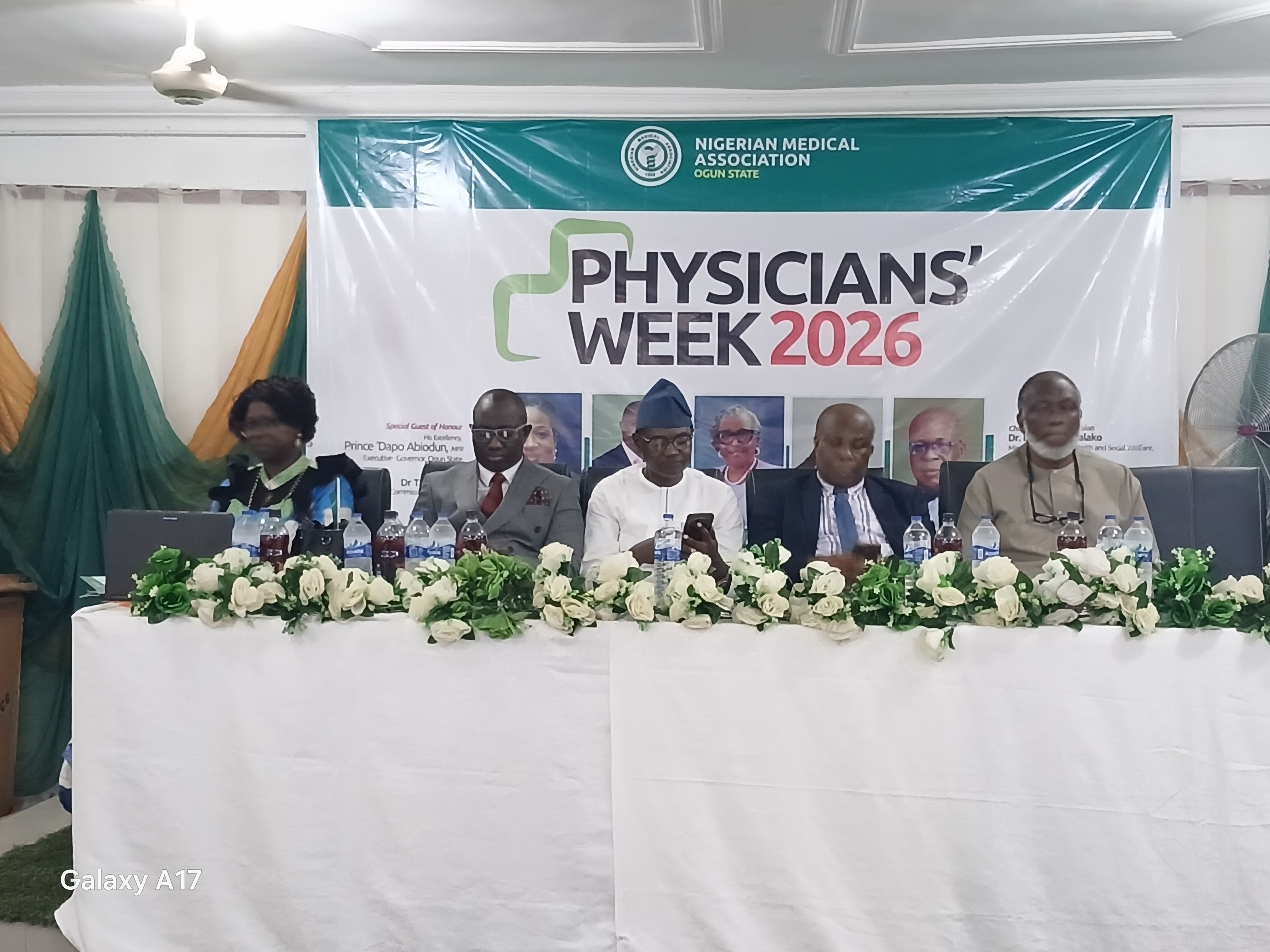
The Minister of State for Health and Social Welfare, Dr Iziaq Salako, and the Ogun State Commissioner for Health, Dr Tomi Coker, made the call on Thursday in Abeokuta during the 2026 Physicians’ Week organised by the Nigerian Medical Association, Ogun State chapter.
The event, themed “Securing the Future of Medicine in Nigeria,” brought together medical practitioners and other stakeholders to discuss how technology, professional development and improved healthcare practices could strengthen the country’s health system.
Coker challenged doctors to integrate artificial intelligence into their professional practice, describing the technology as an increasingly indispensable tool for improving healthcare delivery.
“The future of medicine is here already, and we have to embrace technology. AI should be like your pen,” the commissioner said.
She explained that telemedicine could expand access to medical consultations by allowing doctors to attend to patients remotely, reducing unnecessary physical movement and easing the process of accessing healthcare services.
However, Coker stressed that technological advancement alone would not guarantee a sustainable medical profession, insisting that doctors must first take responsibility for their personal wellbeing.
“To secure the future of medicine, we have to first secure ourselves. Look into your mental, physical and financial wellbeing,” she said.
The commissioner also identified mentoring younger medical practitioners as essential to sustaining professional standards and preparing the next generation of doctors for emerging challenges.
Her remarks underscored the need for Nigeria’s healthcare system to combine digital transformation with a healthier medical workforce and deliberate investment in professional development.
Salako, who was represented by the Acting Provost of the Federal Neuro-Psychiatric Hospital, Aro, Abeokuta, Dr Sunday Amosu, urged medical practitioners to embrace technological advancement and continuous professional development while taking their personal health seriously.
He emphasised that doctors must pay greater attention to mental health and preventive healthcare to reduce the burden of diseases and improve public health outcomes.
The minister urged medical practitioners to undergo regular medical examinations, maintain healthy lifestyles and seek professional medical advice instead of assuming that their medical knowledge alone was sufficient to protect them from illness.
He also encouraged Nigerians to adopt balanced diets and consume more vegetables and fruits as part of efforts to prevent non-communicable diseases.
According to him, eating fruits and vegetables of different colours can provide essential nutrients needed to maintain good health.
Salako further urged doctors to lead by example by practising the healthy habits they recommend to their patients.
He maintained that healthcare professionals must safeguard their own wellbeing to remain effective in delivering quality medical services.
The minister’s message placed preventive healthcare alongside technological innovation as a critical component of efforts to improve healthcare delivery.
Earlier, the Ogun State Chairman of the NMA, Dr Sunday Enimola, warned against treating technology as a substitute for medical practitioners, insisting that digital innovation must strengthen the role of doctors rather than diminish it.
Enimola said the future of medicine required deliberate planning, collective responsibility and a commitment to defending professional standards amid rapid changes in medical practice.
“Technology should never replace the doctor; it should empower the doctor. It should be a tool in the hands of the doctor,” he said.
The NMA chairman noted that medicine was entering an era increasingly shaped by artificial intelligence, telemedicine, electronic health records, digital diagnostics and robotic surgery.
He warned that Nigeria must not be left behind as these technologies reshape healthcare delivery globally.
However, he stressed that adopting digital health solutions must go hand in hand with ethical standards, patient privacy, cybersecurity, regulatory compliance and equitable access to healthcare.
Enimola said responsibility for securing the future of medicine should not rest on doctors alone, adding that government and other stakeholders must also play their respective roles.
His remarks highlighted concerns that the benefits of technological advancement could be undermined if patient information, professional ethics and equitable access were not adequately protected.
In his lecture, titled “Securing the Future of Medicine in Nigeria,” guest speaker Dr Raymond Osho identified honesty of purpose and accountability as essential requirements for developing the country’s healthcare sector.
Osho argued that securing the future of medicine involved more than constructing hospitals and other healthcare facilities, stressing that government and medical professionals must demonstrate accountability in the discharge of their responsibilities.

 '
 '
Do you want to share a story with us? Do you want to advertise with us? Do you need publicity for a product, service, or event? Contact us on WhatsApp +2348183319097 Email: platformtimes@gmail.com
We are committed to impactful investigative journalism for human interest and social justice. Your donation will help us tell more stories. Kindly donate any amount HERE
 '
