

Toyyibat Qasim
A professor of Olabisi Onabanjo University, Opeyemi Shoaga, has called on governments, parents, community leaders, philanthropists and other stakeholders to intensify efforts to keep children in school and address the growing challenge of out-of-school children in Nigeria.
Shoaga said access to quality education remained a critical tool for breaking the cycle of poverty and overcoming the social and economic limitations confronting disadvantaged children.
The university don made the call while delivering a lecture on the menace of out-of-school children, their causes and possible remedies at the second annual public lecture of the Promoting Education for Indigent Children Foundation in Abeokuta, Ogun State.
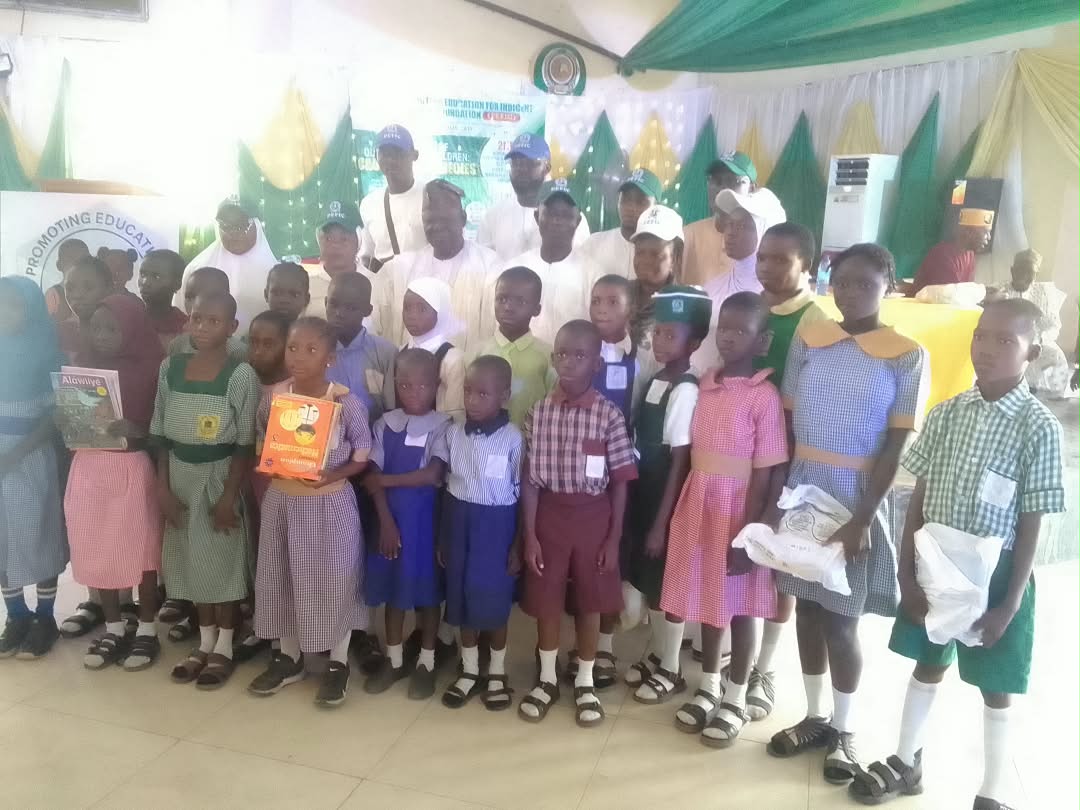
The event, held at the Abeokuta Club on Thursday, also featured the distribution of textbooks and other learning materials to 20 indigent children by the foundation.
Speaking on the theme, “Menace of Out-of-School Children: Causes and Remedies,” Shoaga stressed the need for collective action to ensure that every child had access to education, irrespective of the financial circumstances of their parents.
She said, “Access to education is a leverage for every child. It keeps them out of poverty; it keeps them out of every form of limitation.”
The professor noted that education could provide children from disadvantaged backgrounds with opportunities to improve their lives and contribute meaningfully to society.
She urged governments at all levels, individuals, communities and relevant stakeholders to work together to ensure that no child was left behind because of poverty or a lack of educational opportunities.
Shoaga’s appeal comes amid persistent concerns about children who are unable to access formal education, with stakeholders continuing to call for interventions that address the financial and social barriers preventing school enrolment and retention.
Speaking with journalists at the event, the convener and chairman of PEFIC’s Management Committee, Alhaji Oridota Lateef, said the foundation was established to bridge the educational gap between children whose parents could afford instructional materials and those whose families struggled to meet such basic needs.
Lateef explained that the foundation focused on supporting indigent children within the limits of its available resources while also raising awareness among government officials and other stakeholders about the need to provide assistance to disadvantaged pupils.
He said the organisation relied on the connections, goodwill and collective efforts of its team members to mobilise resources for children whose parents could not afford the materials needed for quality education.
According to him, the distribution of textbooks and other learning materials was part of the foundation’s efforts to reduce the burden on struggling families and improve the beneficiaries’ access to learning.
Lateef also urged the beneficiaries to remember other less-privileged children when they grew up and became financially capable of helping others.
He encouraged them to see the assistance as an opportunity to pursue their education and, in the future, extend similar support to children facing difficulties.
Also speaking, the Special Adviser to the Ogun State Governor on Education, Dr Kiadese Lukmon, who represented the Commissioner for Education, Prof. Arigbabu, commended the foundation for supporting indigent pupils with textbooks and other educational materials.
Lukmon said access to textbooks could enhance pupils’ academic performance and contribute to improving the quality of education in Ogun State and Nigeria at large.
He called on philanthropists and other well-meaning Nigerians to emulate the foundation by investing in educational support initiatives, particularly those targeting children from financially disadvantaged backgrounds.
The special adviser further advised the beneficiaries and their parents to ensure that the donated materials were properly utilised to complement classroom teaching and improve academic achievement.
He expressed optimism that the foundation would continue to expand its activities and reach more children, including those who were out of school and required assistance to gain access to formal education.
The intervention by PEFIC highlighted the role of non-governmental organisations and community-driven initiatives in supporting government efforts to widen access to education, particularly for children whose families face financial constraints.
However, stakeholders at the event stressed that sustained collaboration among government, communities, parents, private organisations and philanthropists remained essential to ensuring that disadvantaged children could enrol in school, remain there and receive quality education.
 '
 '
Do you want to share a story with us? Do you want to advertise with us? Do you need publicity for a product, service, or event? Contact us on WhatsApp +2348183319097 Email: platformtimes@gmail.com
We are committed to impactful investigative journalism for human interest and social justice. Your donation will help us tell more stories. Kindly donate any amount HERE
 '
