

…Benue Saves ₦1.2bn Monthly As Kogi Removes 25,000 Fictitious Workers, Rivers flags 5,397 Unverified staff
Daud Olatunji
A fresh wave of payroll audits across six Nigerian states has exposed thousands of suspected ghost workers, fraudulent appointments, duplicate salary payments and other irregularities, raising concerns over the management of public funds and accountability in the public service.
The investigations, covering Katsina, Rivers, Benue, Zamfara, Kogi and Cross River states, revealed widespread discrepancies in government payroll systems, with some states uncovering fictitious employees collecting salaries for years and others identifying workers receiving multiple payments from public funds.
The discoveries have also exposed the financial consequences of weak personnel verification systems, with billions of naira reportedly lost or potentially diverted through questionable payroll arrangements.
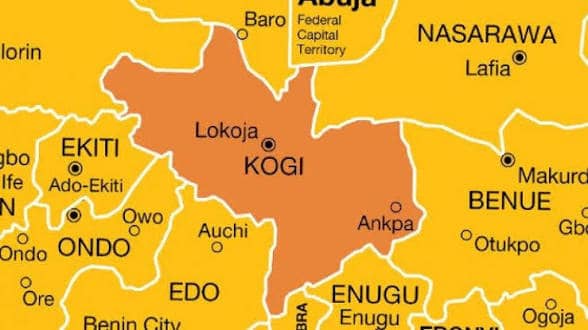
Among the most significant revelations, Kogi State reportedly removed more than 25,000 suspected ghost workers from its payroll, while Rivers State flagged 5,397
In Benue State, Governor Hyacinth Alia’s administration said it uncovered 2,500 ghost workers on the payroll of the state’s 23 local government areas, saving the government more than ₦1.2bn in a single month.
Similarly, Zamfara State identified 2,363 suspected ghost workers allegedly collecting ₦193.6m monthly, while Katsina uncovered 3,488 payroll irregularities across its 34 local government councils and Local Education Authorities.
Cross River State also reported thousands of questionable personnel records, including suspected ghost workers, duplicate entries and invalid Bank Verification Numbers.
The findings have renewed concerns about the extent of payroll fraud in Nigeria’s public sector and the involvement of officials who allegedly facilitate the insertion of fictitious names into government payroll systems.
In Katsina, the state government uncovered 3,488 payroll irregularities involving personnel in the 34 local government councils and Local Education Authorities.
The findings followed a screening exercise announced in September 2025, which covered 50,172 personnel.
The chairman of the biometric screening committee, Abdullahi Gagare, disclosed that 46,380 personnel were successfully verified, while the committee identified several irregularities, including fake certificates, falsified dates of birth, underage employment, absenteeism, illegal promotions and alleged fraudulent appointments.
The exercise also uncovered cases of workers allegedly collecting salaries from both state and federal government establishments.
According to the committee, ₦4.6m was recovered from affected workers, while six other employees were discovered to have continued receiving salaries while on leave of absence.
The committee also accused the Education Secretary of Zango Local Education Authority of presenting 24 suspected ghost workers for verification.
Gagare said the implementation of the committee’s recommendations could generate monthly savings of ₦453.3m, amounting to approximately ₦5.4bn annually.
Governor Dikko Umaru Radda had separately disclosed that local government councils had already saved about ₦500m, with the figure expected to rise to ₦5.7bn.
However, the outcome of a separate audit of the state civil service payroll had yet to be made public as of the time of the report.
The Katsina State Auditor-General’s 2023 report had put the workforce of the state government and two tertiary institutions at 20,266, with combined monthly salary payments of approximately ₦2.484bn.
In Rivers State, a biometric verification exercise authorised by Governor Siminalayi Fubara across the 23 local government areas also exposed thousands of questionable personnel records.
According to the Office of the Head of Service, the state civil service nominal roll previously contained approximately 43,000 employees.
However, biometric screening confirmed only 37,703 as genuine, leaving 5,397 names unverified or potentially fraudulent.
The pension payroll also recorded significant discrepancies, as only 19,186 of the 25,000 pensioners listed were verified, leaving 5,814 outstanding cases.
At the local government level, 2,004 of the 2,600 pensioners on the register were verified, leaving another 596 unverified.
The findings have raised further questions about the integrity of the state’s personnel database and the amount of public funds potentially spent on questionable salary and pension payments.
In Benue State, the administration of Governor Hyacinth Alia said it uncovered 2,500 ghost workers on the payroll of the 23 local government areas in 2023.
The governor, through his Chief Press Secretary, Tersoo Kula, disclosed that the discovery followed an examination of the payroll system amid complaints over delays in the payment of salaries to teachers and local government employees.
Alia said the administration removed the suspected fictitious workers, alleging that the payroll had been manipulated before his government assumed office.
According to him, the exercise saved the state more than ₦1.2bn in one month.
He said, “The state government has saved ₦1.2bn from fetching out 2,500 ghost workers and many more things are being uncovered.”
The governor explained that the monthly wage bill for teachers had also reduced significantly following the removal of the questionable names.
Attempts to obtain an update from relevant government officials, including the Commissioner for Finance and Economic Planning, Michael Oglegba, were unsuccessful.
In Zamfara State, a payroll verification exercise uncovered 2,363 suspected ghost workers allegedly collecting ₦193.6m monthly, translating to more than ₦2.32bn annually.
The findings were contained in a report submitted to Governor Dauda Lawal in February 2025 by a verification committee established in August 2024.
The committee, chaired by the Head of Service, Ahmad Liman, was mandated to reconcile the state’s nominal roll with its payroll, conduct physical verification of personnel and establish electronic records for government employees.
Apart from the 2,363 suspected ghost workers, the committee identified 1,082 employees who were due for retirement but allegedly continued receiving ₦80.5m monthly.
It also discovered 220 minors on the payroll, while 207 workers were not cleared or recommended for suspension, involving another ₦16.37m monthly.
The report further identified 12 workers listed on the payroll but missing from the personnel database, as well as five employees allegedly placed on irregular secondment.
Other discrepancies included 395 contract staff, 261 workers absent from the nominal roll, 213 employees on study leave and 67 on secondment.
The committee also identified 75 workers whose appointment dates suggested they were minors at the time they were employed.
Governor Lawal’s spokesman, Sulaiman Bala Idris, said the exercise had saved the state more than ₦200m monthly.
The verification also uncovered disturbing irregularities in the health and education sectors.
Liman disclosed that one general hospital claimed to have 22 doctors on its payroll, but physical verification established that only two were genuine.
He also cited cases of alleged salary inflation, including a secondary school teacher whose entitlement was ₦140,000 but was reportedly receiving ₦700,000 monthly.
A doctor entitled to ₦700,000 was also allegedly receiving more than ₦1m.
Despite the discoveries, the state has continued to face complaints over salary payments and the exclusion of some genuine workers from the payroll.
In October 2025, more than 3,000 civil servants, mostly teachers and health workers from the state’s 14 local government areas, protested their exclusion from the payroll, claiming they had not received salaries since February.
Their spokesman, Mohammed Shamsu, said the affected workers had completed verification but remained unpaid.
Following interventions by the Nigeria Labour Congress and the Trade Union Congress, the government established a re-verification committee.
However, officials said more than 1,300 affected workers failed to appear for the exercise, warning that they risked being classified as ghost workers.
Labour leaders, however, argued that some genuine workers in remote communities might have been unable to travel to Gusau or lacked the required documentation.
Kogi removes 25,000 suspected ghost workers
In Kogi State, successive personnel verification exercises between 2016 and 2026 reportedly uncovered more than 25,000 suspected ghost workers, reducing the state’s workforce from 88,973 to approximately 63,870.
The exercise, conducted under former Governor Yahaya Bello, covered the state civil service, local government employees and teachers.
The administration removed thousands of unverified personnel from the payroll, while the incumbent governor, Ahmed Usman Ododo, has indicated plans to recruit new workers to fill vacancies created by the exercise.
However, officials said more than 1,300 affected workers failed to appear for the exercise, warning that they risked being classified as ghost workers.
Cross River flags thousands of questionable records
Cross River State has also recorded significant payroll irregularities, with successive verification exercises exposing thousands of questionable personnel records.
The state reportedly flagged more than 2,800 questionable payroll records within 18 months and uncovered 645 cases of double salary payments in October 2026 alone.
In June 2026, the Commissioner for Local Government Affairs, Chief Victor-Felix Idem, disclosed that more than 2,000 questionable records had been identified, including invalid BVNs, duplicate entries and suspected ghost workers.
He alleged that a single BVN had been used to collect salaries on behalf of multiple individuals.
A subsequent breakdown listed 1,200 questionable BVNs in local government councils, 526 in primary healthcare centres, 643 among political appointees and 2,000 in the State Universal Basic Education Board.
However, the figures appeared to contain possible overlaps.
The latest verification exercise showed that 61,167 workers and pensioners had been profiled as of October 13, 2026.
Of the number, 52,330 had been validated, while 8,837 cases remained outstanding.
The outstanding cases comprised 6,920 personnel yet to commence verification and 1,917 undergoing the exercise. Another 469 cases required reconciliation.
Governor Bassey Otu had raised concerns over the state’s workforce in June 2023, alleging that he was informed that more than 40 per cent of employees had retired while the payroll continued to increase.
He subsequently directed the Department of State Services to conduct an audit and produce a biometric-backed nominal roll.
However, the government has yet to publish a comprehensive account of the financial implications of the latest discoveries, including the total amount lost, recovered or saved.
The state’s monthly wage bill reportedly ranged between ₦2.3bn and ₦3bn in 2023, including approximately ₦800m for more than 5,000 political appointees.
In 2025, the former chairman of the Local Government Service Commission, Darlington Eyo, disclosed that a verification exercise had uncovered 800 ghost workers who were subsequently removed.
The clean-up has also generated disputes with organised labour.
The Nigeria Union of Teachers, through its chairman, Gregory Olayi, complained that some genuine teachers who had completed verification remained unpaid.
The government also cancelled more than 4,000 local government recruitments in 2026, retaining only 821 appointments on the grounds that most of the recruitments had allegedly not been approved.
It later reversed the decision and reinstated 3,000 affected workers.
Meanwhile, the Local Government Service Commission and the National Union of Local Government Employees objected to another verification exercise ordered by the Head of Service in a letter dated November 2, 2026.
Despite the scale of the discoveries, the state has yet to provide a comprehensive breakdown of its payroll losses, recoveries and prosecutions arising from the exercises.
Repeated discoveries, limited accountability
The revelations in the six states have also renewed questions about the effectiveness of previous payroll verification exercises and the prosecution of those responsible for allegedly defrauding public finances.
In Zamfara, for instance, the discovery of thousands of suspected ghost workers is not new.
A 2012 verification exercise under former Governor Abdulaziz Yari reportedly uncovered 7,000 ghost workers out of 28,183 personnel examined.
In 2019, the administration of former Governor Bello Matawalle reportedly discovered another 5,000 suspected ghost workers and suspended five directors in the Ministry of Finance over alleged appointment racketeering.
A 119-year-old employee was also reportedly discovered on the payroll among personnel due for retirement.
In 2020, the Health Services Management Board reportedly uncovered 80 ghost doctors and 39 ghost nurses allegedly collecting ₦20m monthly.
In January 2023, Matawalle also disclosed that the state was paying salaries for 280 doctors when only 81 were available.
Despite the repeated discoveries, the report indicated that no major prosecution had been publicly announced against those allegedly responsible for the payroll fraud.
Investigations into the alleged syndicate suggest that fictitious employee identities are created, bank accounts opened in their names and salaries processed through government payroll systems.
The proceeds are allegedly shared among officials responsible for personnel records, account holders and political patrons involved in securing fraudulent appointments.
The recurring discoveries have therefore raised concerns about the possible involvement of insiders in the manipulation of government payroll systems.
Beyond the financial implications, the exercises have also exposed the danger of indiscriminate verification procedures, particularly where genuine workers are wrongly classified as ghost employees.
Labour unions have repeatedly complained that teachers, health workers and local government employees have suffered delayed salaries or outright exclusion despite participating in verification exercises.
With billions of naira potentially lost to questionable payroll arrangements, the findings across the six states have placed renewed pressure on state governments to strengthen personnel databases, establish transparent verification procedures and ensure that individuals implicated in payroll fraud are brought to justice.
Source : THE LEADERSHIP


Do you want to share a story with us? Do you want to advertise with us? Do you need publicity for a product, service, or event? Contact us on WhatsApp +2348183319097 Email: platformtimes@gmail.com
We are committed to impactful investigative journalism for human interest and social justice. Your donation will help us tell more stories. Kindly donate any amount HERE