

Daud Olatunji
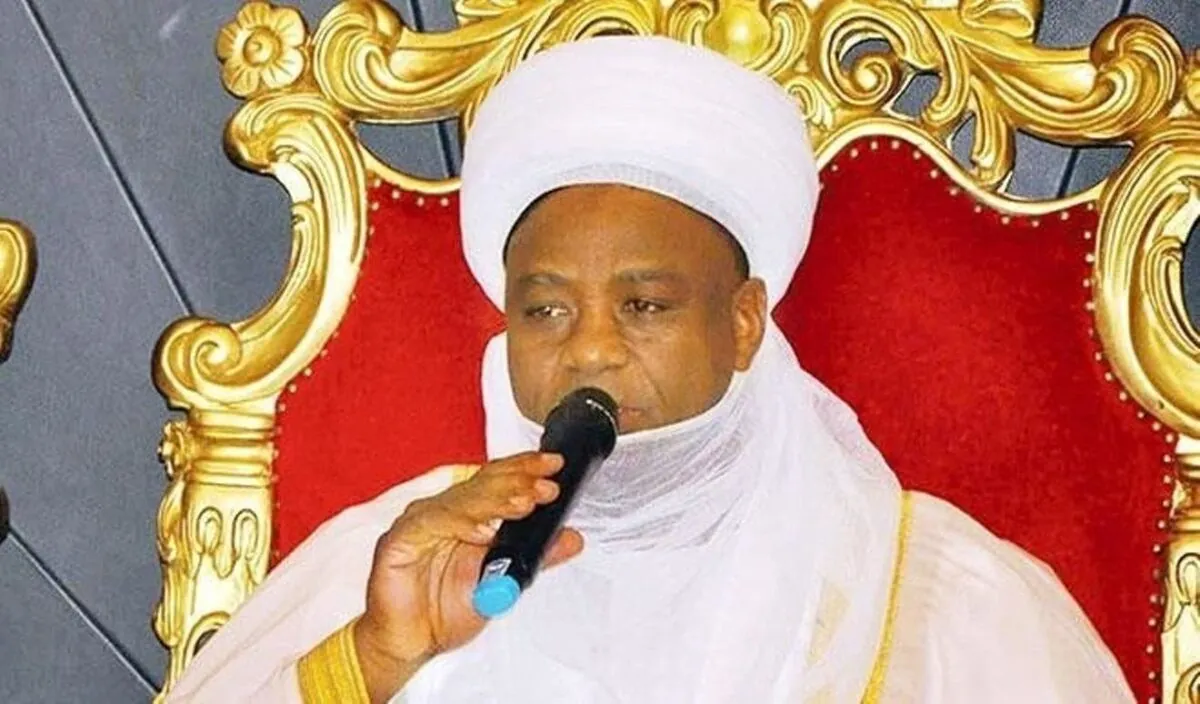
The Sultan of Sokoto, Alhaji Muhammad Sa’ad Abubakar III, has called on Nigerian Muslims to rise above ethnic, regional and social differences, warning that divisions along such lines could undermine the unity of the Muslim community and hinder national development.
The Sultan stressed that Muslims, irrespective of their ethnic backgrounds, family origins or social standing, belonged to one family under Islam and must not allow differences to weaken their common faith and collective responsibility.
He made the call on Sunday in Ibadan, Oyo State, while addressing participants at the 11th General Assembly of the Muslim Ummah of South-West Nigeria (MUSWEN), held at the M.O. Abdul Hall, University of Ibadan Central Mosque Auditorium.
The assembly, which attracted Islamic scholars, traditional rulers, government representatives and other prominent personalities, was held under the theme, “Insecurity in Nigeria: A Technology-Driven and Collective Approach for National Development.”
Abubakar, who is also the President-General of the Nigerian Supreme Council for Islamic Affairs, maintained that ethnic identity should never determine how Muslims relate with one another, insisting that their shared religious identity and commitment to Allah must take precedence over other affiliations.
“We are one big family. Ethnicity should never be a determining factor in identifying who is a Muslim and who is not. Almighty Allah created us as one human family and commanded us to worship Him alone and glorify His name,” he said.
Emphasising the importance of religious commitment, the Sultan urged Muslims to allow the teachings of Islam to shape their behaviour, relationships and contributions to society.
“It must be Islam first, Islam first, Islam first, and Islam last,” he declared.
He further stated that all human beings were equal before Allah, irrespective of their ethnic backgrounds, financial positions or social status, adding that righteousness and piety remained the true standards for measuring human worth.
“Before Allah, we are all equal. The best among us is the one who possesses the greatest degree of piety and righteousness,” the monarch said.
The Sultan also challenged Muslim leaders and organisations to remain committed to the service of Islam and humanity, cautioning against allowing ethnic and regional sentiments to undermine the collective progress of the Ummah.
Meanwhile, the Chairman of the MUSWEN Board of Trustees, Dr Abdul Rauf Olawale Babalakin, SAN, called for stronger cooperation among Muslim organisations across the South-West, describing unity, institutional development and a common sense of purpose as critical to the community’s growth.
Babalakin identified education, technology and sustainable funding as essential pillars for strengthening MUSWEN and expanding its capacity to address the needs of Muslims in the region.
He also urged Muslim organisations to reject extremism and embrace peaceful engagement, stressing that effective institutional structures were necessary for delivering meaningful programmes and contributing to national development.
Similarly, the immediate past MUSWEN President, Alhaji Rasaki Oladejo, highlighted the achievements of his six-year administration, saying efforts had been made to strengthen the organisation’s financial position, improve its property portfolio and establish sustainable structures for future programmes.
Oladejo listed property development, improved financial management, educational support and conflict resolution among the areas in which his administration recorded progress.
He disclosed that MUSWEN would award scholarships to 12 female medical students under the Sultan Abubakar Female Medical Student Scholarship Scheme.
According to him, the beneficiaries will be selected from the six South-West states, with two students expected to emerge from each state.
He also announced plans by the organisation to award 120 bursaries in 2027 as part of efforts to expand educational opportunities and support students.
In his acceptance address, the new MUSWEN President, Alhaji Rafiu Adisa Ebiti, pledged to consolidate the achievements of his predecessor and reposition the organisation to play a more significant role in education, healthcare, economic development and the empowerment of women and youths.
Ebiti said his administration would prioritise programmes capable of addressing the immediate and long-term needs of the Muslim community while promoting peaceful coexistence and national unity.
“We want a MUSWEN that is more responsive to the needs of the people, particularly in education, healthcare, economic empowerment and the development of our youths and women.
“Our responsibility is to build on the achievements of the past and make the organisation more effective,” he said.
On Nigeria’s worsening security challenges, the new president condemned banditry, kidnapping, terrorism and communal violence, calling for stronger intelligence-sharing mechanisms and closer collaboration between security agencies and local communities.
He argued that tackling insecurity required more than the efforts of government security institutions, insisting that community participation, accountability and timely intelligence were indispensable to achieving lasting peace.
Ebiti also advocated consideration of constitutionally grounded decentralised policing as part of broader efforts to address the country’s security challenges.
“Security cannot be left to government agencies alone. There must be effective cooperation between security institutions and local communities, supported by timely intelligence, accountability and a system that can respond adequately to the peculiar security needs of different areas,” he said.


Do you want to share a story with us? Do you want to advertise with us? Do you need publicity for a product, service, or event? Contact us on WhatsApp +2348183319097 Email: platformtimes@gmail.com
We are committed to impactful investigative journalism for human interest and social justice. Your donation will help us tell more stories. Kindly donate any amount HERE