

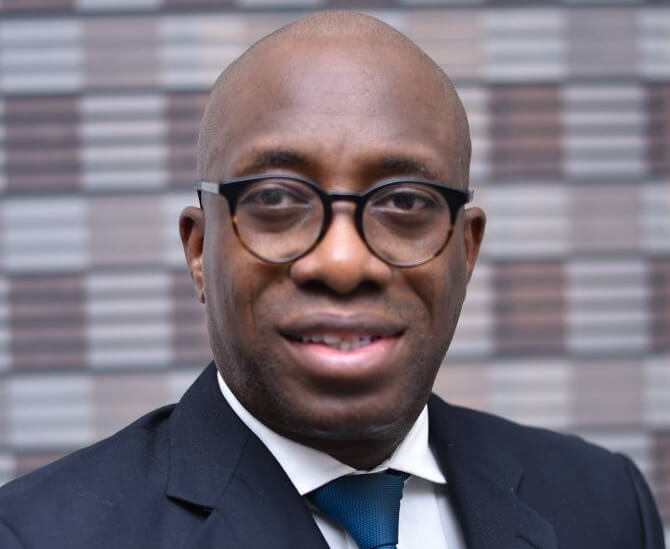
Daud Olatunji
A chieftain of the Peoples Democratic Party, Otunba Segun Showunmi, has urged the National Security Adviser, Mallam Nuhu Ribadu, to establish firm boundaries for political conduct and ensure that politicians and their supporters who threaten national security are held accountable, irrespective of their political status.
Showunmi, in an open letter addressed to Ribadu, warned that the growing use of inflammatory rhetoric, ethnic and religious insinuations, threats and provocative political communication could worsen Nigeria’s security challenges if left unchecked.
He called on the NSA to work with relevant security and law-enforcement agencies to develop clear guidelines for political communication, particularly as the country approaches the 2027 general elections.
The former governorship aspirant, who described the situation as requiring urgent intervention, cautioned that political competition and personal ambition must not be allowed to undermine national peace and stability.
He said Nigeria was already grappling with multiple security challenges and should not permit reckless political behaviour to create additional threats to the country’s fragile security environment.
“There is a difference between robust political engagement and conduct that deliberately or recklessly threatens public peace. There is a difference between criticising government and deliberately inciting citizens against one another.
There is a difference between exercising freedom of expression and using the enormous influence of public office, political platforms and social media to promote hostility, spread inflammatory narratives or undermine the fragile cohesion of our country,” he stated.
Showunmi expressed concern over what he described as the growing normalisation of provocative statements, ethnic and religious insinuations, intimidation and the manipulation of sensitive national issues for political advantage.
He argued that some politicians and their supporters appeared to believe that their political positions, connections and influence could shield them from the consequences of irresponsible public conduct.
The PDP chieftain insisted that such an assumption must be challenged, stressing that participation in democratic politics did not confer the right to incite violence, threaten citizens or encourage lawlessness.
National security cannot be held hostage to political ambition.
“The right to participate in democratic politics does not include the right to endanger the Republic. Political disagreements must never become a licence to incite violence, threaten citizens, encourage lawlessness or deliberately create conditions that could trigger communal tensions and wider instability,” he said.
He urged Ribadu to establish and publicly communicate clear standards for political conduct, warning that the country could not afford to allow partisan disagreements to degenerate into security emergencies.
As part of his recommendations, Showunmi called for the establishment of national boundaries governing political communication, insisting that politicians, political parties, campaign organisations, spokespersons and their supporters must be held responsible for statements capable of promoting violence, ethnic hostility, religious antagonism and intimidation.
He also demanded equal application of the law, regardless of the political standing or influence of individuals involved.
According to him, serving and former public office holders, party leaders, political financiers, campaign spokespersons, social media influencers and ordinary supporters must all be subjected to the same legal standards where credible evidence of criminal conduct exists.
“There must be no sacred cows, no political exemptions and no selective enforcement,” he declared.
Showunmi further advocated a coordinated rapid-response mechanism to tackle political misinformation and incitement, urging security institutions to develop effective procedures for documenting incidents, verifying information, correcting false narratives and communicating responsibly with the public.
He warned against the amplification of unverified allegations by public institutions, while calling for investigations into deliberately fabricated information intended to provoke violence.
The PDP chieftain also challenged political parties to take responsibility for the conduct of their members and supporters, arguing that party leadership should not enjoy the benefits of democratic participation while distancing itself from individuals acting under its banners.
He maintained that political parties must publicly discourage inflammatory conduct and ensure that their structures promote responsible political engagement.
On preventive security measures, Showunmi urged security agencies to introduce an early-intervention protocol that would enable them to respond to credible threats, organised intimidation and incitement before such activities escalate into violence.
He said security institutions should not wait until inflammatory political statements had triggered bloodshed before taking action.
Prevention is always better than crisis management,” he added.
The PDP chieftain further insisted that accountability must extend to individuals occupying influential political positions, arguing that no political office, personal relationship, financial influence or proximity to government should provide protection against legitimate investigation and prosecution.
However, Showunmi clarified that his intervention was not intended to encourage the suppression of opposition voices, criticism or legitimate political disagreements.
He said democracy must accommodate dissent, protests and competing political opinions, noting that freedom of expression remained an essential component of democratic governance.
He, however, warned that such freedoms should not be exploited to threaten the country’s existence and security.
According to him, the government must distinguish between legitimate political expression and conduct that crosses the threshold into criminality, insisting that any intervention must be guided by established legal standards, credible evidence, due process and respect for fundamental rights.
Showunmi also argued that national security should not be regarded as the exclusive responsibility of the military, police, intelligence agencies and other security operatives.
He said political actors also had a responsibility to protect the environment necessary for democratic governance, stressing that their words, actions and influence carried significant consequences.
“The security of Nigeria is not a partisan project. It is a collective national responsibility,” he said.
He appealed to Ribadu to send a clear message to politicians and their supporters that nobody’s political relevance or influence placed them above the law.
Showunmi warned that Nigeria must not wait for an avoidable national tragedy before demonstrating the seriousness of its security institutions.
“The time has come to draw the line, establish the boundaries and enforce the law impartially
Enough is enough. Nigeria must come first, and nobody’s political ambition is worth the peace, stability and security of our country,” he added.
The letter was also copied to President Bola Tinubu; the Minister of Defence, General Christopher Musa (retd.); the Special Adviser to the President on Homeland Security, Major General Adeyinka Famadewa (retd.); the Inspector-General of Police, Olatunji Disu; the Director-General of the Department of State Services, Oluwatosin Ajayi; and the Minister of State for Defence, Bello Matawalle.


Do you want to share a story with us? Do you want to advertise with us? Do you need publicity for a product, service, or event? Contact us on WhatsApp +2348183319097 Email: platformtimes@gmail.com
We are committed to impactful investigative journalism for human interest and social justice. Your donation will help us tell more stories. Kindly donate any amount HERE