

…156 inmates write NECO, 97 pursue university programmes
Firdaus Obiremi
No fewer than 253 inmates across custodial facilities in Ogun State are participating in external secondary and tertiary examinations, in what the Nigerian Correctional Service says is part of its efforts to transform custodial centres from places of punishment into institutions of rehabilitation and reformation.
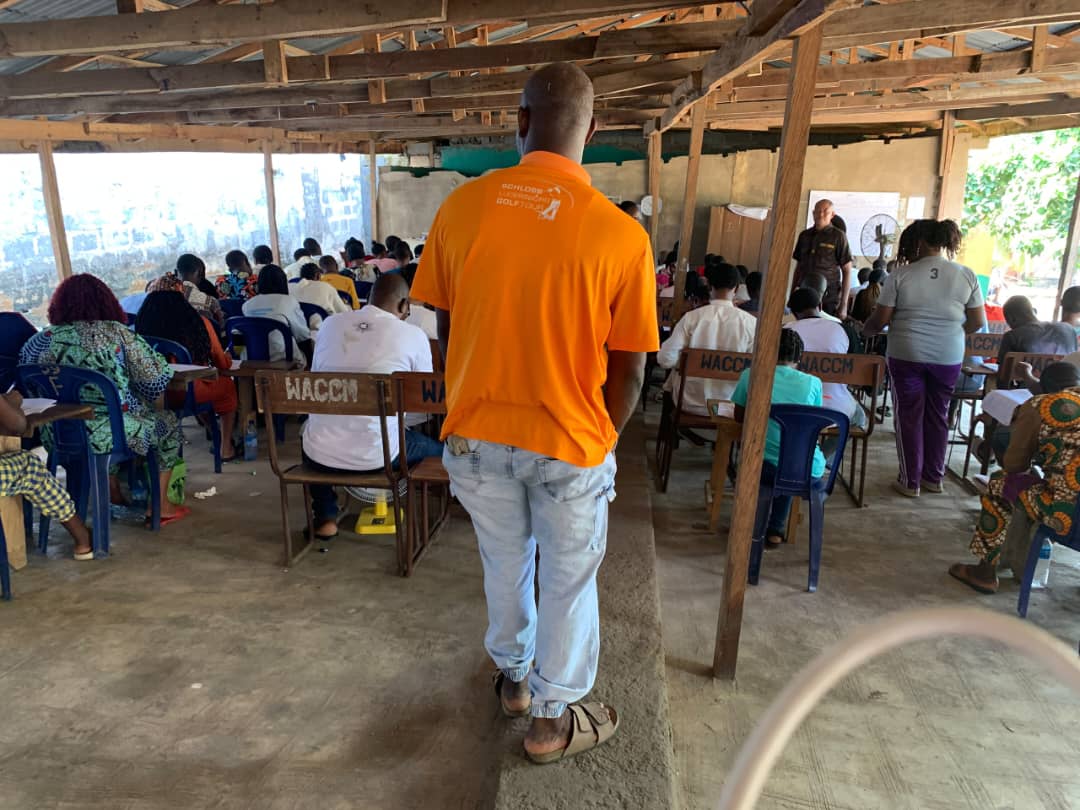
The inmates are currently sitting for the National Examinations Council Senior School Certificate Examination (NECO SSCE) External, popularly known as NECO GCE, and examinations of the National Open University of Nigeria.
The examinations, which are being conducted across various custodial facilities in the state, are expected to provide inmates with educational qualifications and opportunities to rebuild their lives after regaining freedom.
Speaking with journalists at the Old Abeokuta Custodial Centre, Ibara, on Wednesday, the Officer in Charge of Welfare and Education, Ogun State Command of the Nigerian Correctional Service, Superintendent of Corrections Awesu Abdul Hakeem, said 156 inmates were participating in the NECO examinations across five facilities.
Giving a breakdown, Hakeem, a registered social worker, said 81 candidates were writing the examination at the Old Abeokuta Custodial Centre, Ibara; 25 at Ijebu-Ode; 20 at the Borstal Training Institution, Adigbe; 16 at the New Abeokuta Custodial Centre, Oba; and 14 at the Ilaro Custodial Centre.
The candidates are registered for examinations across Arts, Science and Commercial subjects, including General Mathematics.
In addition to the NECO candidates, 62 inmates are currently participating in the National Open University of Nigeria’s electronic examinations at the Abeokuta Custodial Service Study Centre.
The development brings the number of inmates participating in the ongoing NECO and NOUN examinations to 218, while another 35 senior undergraduate and postgraduate inmates recently completed their pen-on-paper examinations.
The 35 candidates are in 300 and 400 levels and postgraduate programmes, bringing the overall number of inmates involved in the two examination programmes to 253.
Hakeem explained that the NOUN students were drawn from the Old and New Abeokuta custodial centres, the Borstal Training Institution and some recently released inmates who had continued their academic programmes outside custody.
He said the inmates were pursuing undergraduate degrees, Postgraduate Diplomas and Master’s degrees in disciplines including Computer Science, Economics, Entrepreneurship, Criminology and Security Studies, Conflict Resolution, and Christian and Islamic Religious Studies.
Describing the initiative as a departure from the traditional perception of prisons as places of punishment, Hakeem said the correctional service was committed to ensuring that inmates acquired functional education and skills before returning to society.
“All inmates in custody must undergo a functional educational programme so that when they go out, they become useful to themselves and society at large.”
The welfare and education officer attributed the growing participation of inmates in educational programmes to partnerships with the Ogun State Government, religious organisations, philanthropists and non-governmental organisations.
He disclosed that an NGO had donated a virtual classroom facility to enable external tutors to teach NECO and NOUN candidates remotely, while other donors had supported inmates by paying examination registration fees.
According to him, the command also operates an aftercare monitoring system to track the progress of former inmates after their release, although their identities are protected to prevent discrimination and stigmatisation.
Hakeem said the results recorded by beneficiaries of the programmes had been encouraging, urging the candidates to take advantage of the opportunity and avoid returning to criminal activities after their release.
Meanwhile, a teacher and examination supervisor, Mrs Adetutu Adekonojo, expressed surprise at the peaceful atmosphere and level of organisation at the Ibara custodial centre, saying the examination environment was comparable to those of conventional schools.
Adekonojo, who supervised the General Mathematics examination on Wednesday, said the candidates were treated like other students writing the national examination outside the custodial facilities.
She said, “Honestly, when I was told I was coming to a correctional centre, I wasn’t expecting it to be this peaceful.
“Seeing them, I don’t even see them as prisoners. I see them as normal candidates outside, because this is just the normal way to be if I were to be in any school setting outside.”
She explained that preparations for the examination began early, with candidates seated by 9:30 a.m. ahead of the 10 a.m. commencement of the General Mathematics Objective paper.
According to her, security checks, the arrangement of candidates and other examination procedures were conducted in line with standard NECO requirements.
The supervisor described the opportunity as an important intervention capable of preventing inmates from feeling disconnected from society while serving their sentences.
She said, “I believe it’s a way to enlighten them, broadening their knowledge, at least, and they must also feel part of the world and not condemned.
“We have students in schools who are sitting for this examination, so they are in prison and writing the same examination. It shows they have the same privilege as those who are not in custody.”
Adekonojo urged the inmates to sustain their interest in education after their release, adding that incarceration should not be regarded as the end of their dreams or opportunities.
She also called on members of the public to support the initiative, describing it as a practical way of giving people who had offended the law an opportunity to rebuild their lives.
The Command Public Relations Officer of the Ogun State Command of the NCoS, Chief Superintendent of Corrections Odukoya Owolola Olayinka, also stressed the importance of education and rehabilitation in modern correctional administration.
Olayinka said the service had moved beyond the traditional approach of keeping offenders behind bars to prioritising reformation, rehabilitation and successful reintegration into society.
“When you train the mind, you are able to build a better society,” he said, adding that the initiative was consistent with the strategic vision of the Controller-General of Corrections.
He disclosed that educational opportunities in Ogun custodial facilities had expanded over the years, with some centres serving as recognised study centres for external examinations and maintaining partnerships with institutions such as NOUN and Yewa Central College of Education.
According to him, the command considers literacy a fundamental requirement for every inmate, insisting that even those who enter custodial facilities without basic reading and writing skills are expected to acquire foundational education before their release.
Beyond formal education, Olayinka said the correctional facilities also provided vocational training in tailoring, carpentry, shoemaking, hairdressing and barbing, as well as computer literacy and theological studies.
He, however, identified societal discrimination against former inmates as a major challenge capable of undermining the rehabilitation process.
Describing stigmatisation as “a weapon of destruction”, the spokesperson appealed to Nigerians, employers and community leaders to give released inmates opportunities to start afresh.
“For every human being in life, there’s a second chance, and that chance should be treated with great value.
“If we have them here and we are not embracing them, we are returning them back to their old world, then we are not helping them,” he said.
Olayinka further disclosed that the command operated an Aftercare Unit responsible for supporting inmates after their release.
He said some beneficiaries were provided with starter packs and working materials based on the vocational skills acquired during incarceration, while designated officers monitored their progress after returning to society.
He added that the service was also encouraging individuals and organisations to provide shop spaces for released inmates to enable them to establish businesses and earn sustainable livelihoods.
“We have done our part as an institution, we have played our role. We want society to consolidate on that and put them in the direction that will help them for a better future,” Olayinka said.
The NECO SSCE External examination, which commenced on November 4, is scheduled to end on November 21, 2026.
The initiative highlights the growing role of education and vocational empowerment in correctional administration, with the service insisting that the ultimate objective is not merely to keep offenders in custody but to prepare them for productive lives after incarceration.


Do you want to share a story with us? Do you want to advertise with us? Do you need publicity for a product, service, or event? Contact us on WhatsApp +2348183319097 Email: platformtimes@gmail.com
We are committed to impactful investigative journalism for human interest and social justice. Your donation will help us tell more stories. Kindly donate any amount HERE

