

Ayomide Awe
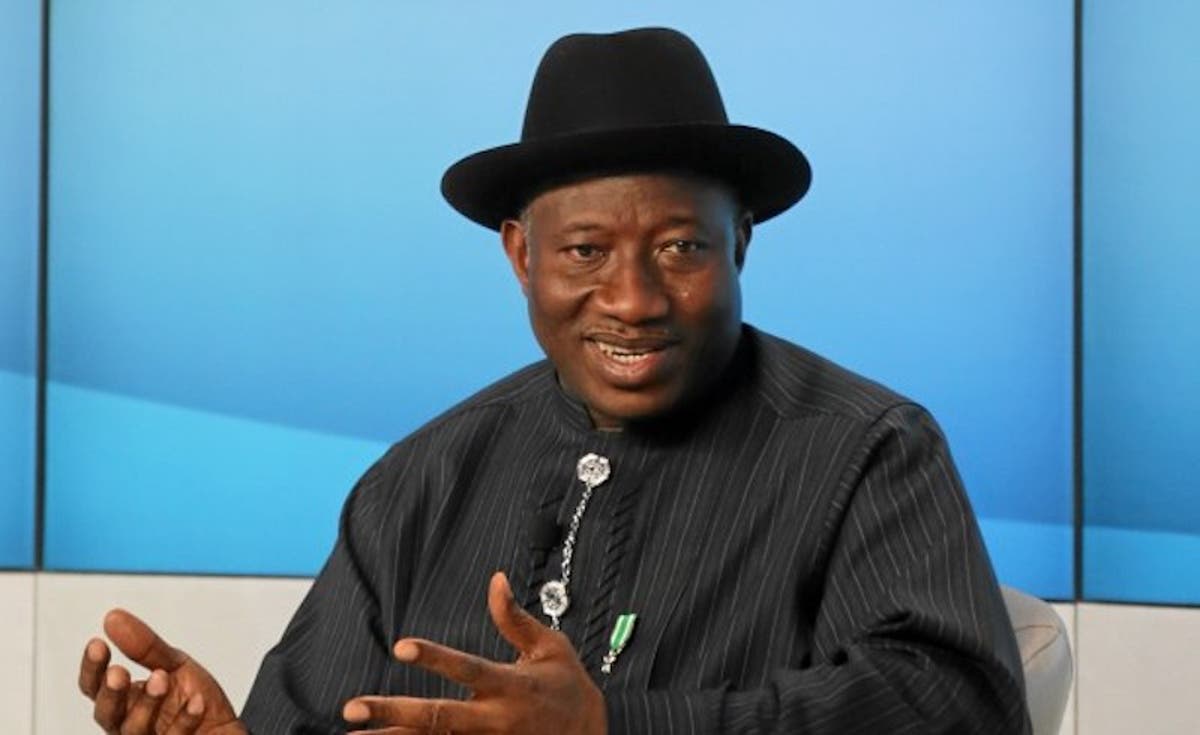
Former President Goodluck Jonathan has explained why he conceded defeat to late President Muhammadu Buhari in the 2015 presidential election without challenging the outcome, saying he considered the former military Head of State a statesman who genuinely loved Nigeria and would place the country’s interest above personal ambition.
Jonathan said his decision to accept defeat was informed by his confidence in Buhari’s commitment to national development, stressing that there was no justification for prolonging political confrontation after the election.
The former president’s position was made public on Thursday in Abuja by former Senate President, Anyim Pius Anyim, who represented him at the presentation of a three-volume authorised biography of Buhari, titled Muhammadu Buhari: The Authorised Biography, authored by Dr Udu Yakubu.
Speaking at the event, Anyim disclosed that Jonathan personally contacted him about two hours before the ceremony to inform him that he would be unable to attend physically.
According to Anyim, Jonathan had to rearrange his other engagements to ensure that he was adequately represented at the event.
He said the former president’s decision to concede defeat in 2015 remained a subject of public interest, particularly because it marked a historic moment in Nigeria’s democratic journey.
Anyim noted that while Buhari made history by defeating an incumbent president at the polls, Jonathan equally earned international recognition for voluntarily relinquishing power without resorting to political confrontation.
Explaining the thinking behind Jonathan’s decision, Anyim said the former president believed Buhari possessed the qualities required of a leader committed to Nigeria’s progress.
He quoted Jonathan as considering Buhari a statesman whose love for God and country made it unnecessary to engage in a prolonged struggle over the election outcome.
“It was easy for President Goodluck to say, ‘Look, this is a statesman that I know will love Nigeria.’ So there was no need for any form of contention. That is the story,” Anyim said.
He maintained that Jonathan’s concession was a demonstration of political maturity and an indication that national interest should take precedence over personal ambition and party loyalty.
Anyim also reflected on his personal relationship with Buhari, describing it as a close father-and-son relationship that endured despite their differences in political affiliation and ideological positions.
He said their relationship remained cordial even when he served in Jonathan’s administration while Buhari occupied the opposition political space.
The former Senate President’s remarks offered another perspective on the political circumstances surrounding the historic 2015 presidential election, which ended the 16-year dominance of the Peoples Democratic Party (PDP) at the federal level.
Jonathan, the presidential candidate of the PDP, had telephoned Buhari, the All Progressives Congress (APC) candidate, to concede defeat before the Independent National Electoral Commission announced the final results.
The gesture was widely regarded as a significant demonstration of democratic statesmanship, helping to ease post-election tension and reinforce Nigeria’s commitment to peaceful democratic succession.
Buhari subsequently became the first opposition candidate to defeat a sitting Nigerian president in a presidential election, bringing an end to the PDP’s uninterrupted hold on power since the return to civilian rule in 1999.


Do you want to share a story with us? Do you want to advertise with us? Do you need publicity for a product, service, or event? Contact us on WhatsApp +2348183319097 Email: platformtimes@gmail.com
We are committed to impactful investigative journalism for human interest and social justice. Your donation will help us tell more stories. Kindly donate any amount HERE