
..Ijebu North Tops Allocation Chart With ₦10.4bn, Ado-Odo/Ota Gets ₦9.67bn
…Residents Resort To Self-Help, Contribute Money To Fix Roads, Provide Basic Amenities
…Questions Trail Spending, Projects As 20 Councils Receive ₦128bn In 10 Months
Daud Olatunji
Despite receiving a combined ₦128.04bn in Federation Account Allocation Committee funds within 10 months, several communities in Ogun State are still confronted with deteriorating roads, struggling public health facilities and demands for basic amenities, raising questions about the impact of local government spending on grassroots development.
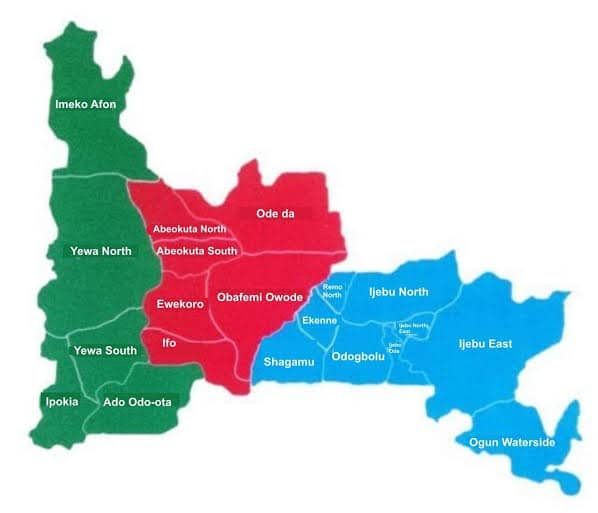
From January to October 2026, the state’s 20 local government areas received a total of ₦128,040,078,127.67 in FAAC allocations, with Ijebu North emerging as the highest beneficiary, collecting more than ₦10.4bn.
But while billions of naira flowed into the councils, reports from communities in Obafemi-Owode, Ifo and Abeokuta North have documented residents’ complaints about poor infrastructure, flooding and inadequate healthcare services.
In some communities, residents have reportedly resorted to self-help, contributing money to repair roads and provide facilities they say should be addressed through public resources.
The situation has brought renewed attention to the responsibilities of local government authorities and the extent to which the funds allocated to them are translating into visible improvements in the lives of residents.
An analysis of data obtained from the BudgIT portal by PLATFORM TIMES shows that Ado-Odo/Ota received ₦9.67bn, Remo North collected ₦8.68bn, while Ijebu East received ₦6.91bn during the 10-month period.
The three councils, alongside Ijebu North, accounted for a substantial share of the allocations to the 20 local governments.
The figures show that Ijebu North received ₦10,415,813,507.19, Ado-Odo/Ota got ₦9,674,028,044.46, while Remo North collected ₦8,678,160,244.04.
At the other end of the allocation table, Ewekoro received ₦4.70bn, while Ogun Waterside collected ₦4.72bn.
PLATFORM TIMES observed that none of Ogun State’s 20 local government areas received less than ₦4.7bn in FAAC allocations during the period under review.
The combined monthly average for the 20 councils stood at approximately ₦12.8bn.
However, the size of the allocations has raised a fundamental question about grassroots governance: how much of the money received is being translated into functional roads, accessible healthcare, potable water, improved public schools, sanitation and other essential services?
For rural communities, the condition of feeder roads can determine whether farmers can transport their produce to markets, whether residents can access hospitals during emergencies and whether children can get to school without difficulty.
Similarly, functional primary healthcare centres, qualified health personnel, essential medicines, electricity, clean water and proper sanitation remain critical to the wellbeing of communities.
The allocations have therefore intensified calls for local government chairmen to account for the money received and demonstrate the projects and services delivered with public funds.
Residents contribute money to repair roads
In Obafemi-Owode Local Government Area, residents of Oke-Afa community in Magboro have complained about persistent flooding and deteriorating roads, which they say have made movement difficult, particularly during the rainy season.
A report on the community disclosed that landlords and residents had resorted to contributing money to repair sections of their roads after repeated appeals for government intervention.
The report also documented how parts of the community’s roads became flooded following rainfall, leaving residents to contend with difficult movement.
The complaints have drawn attention to the ₦5,755,633,946.42 allocated to Obafemi-Owode between January and October 2026.
Although the allocation covers the entire local government and does not indicate the amount available for any particular road project, the residents’ experience raises questions about the council’s infrastructure priorities and the interventions reaching communities under its jurisdiction.
The development also highlights the burden placed on residents who contribute money towards public infrastructure while expecting their local government to provide basic amenities.
For communities with limited access to public services, such contributions can mean additional financial pressure on households already struggling with transportation costs, business expenses and other daily needs.
Agbado-Ijoko residents raise concerns over road condition
The situation is not limited to Obafemi-Owode.
In Ifo Local Government Area, the Agbado-Ijoko axis has also featured in reports about prolonged road deterioration and the hardship experienced by residents.
An investigation by the Foundation for Investigative Journalism, published in July 2026, reported that Ifo received at least ₦5.24bn in FAAC allocations between August 2025 and March 2026, while the Agbado-Ijoko Road remained in a deplorable condition.
The investigation quoted a resident who said there was no sign of work on the road despite an earlier announcement of rehabilitation.
It also documented residents’ complaints about the impact of the road’s condition on movement and daily activities.
The latest BudgIT figures analysed by PLATFORM TIMES show that Ifo received ₦6,393,234,940.64 between January and October 2026.
The two sets of figures cover different periods and should not be added together as though they represent the same allocation window.
However, the reports raise questions about the extent of infrastructure interventions in the area and the relationship between public revenue received and the quality of services available to residents.
Health centre struggles despite billions allocated to council
Beyond roads, the state of primary healthcare delivery has also raised concerns about the quality of basic services available to residents.
An investigation into the Ikereku Health Clinic in Abeokuta North Local Government Area revealed that the facility lacked essential equipment and adequate manpower, while operating without reliable electricity and water.
The report also documented an unhygienic environment and the difficulties health workers faced in attending to patients, particularly pregnant women.
In one of the accounts contained in the investigation, a woman, Abike Olaniyi, reportedly had to find her way to the clinic at night with the assistance of a neighbour and a phone flashlight when she went into labour.
The report highlighted the challenges confronting residents who depend on the facility for basic healthcare, particularly women requiring maternal services.
Abeokuta North received ₦6,306,233,523.01 in FAAC allocations between January and October 2026, according to the BudgIT data analysed by PLATFORM TIMES.
However, the allocation figure does not establish how much the council spent on healthcare or whether the Ikereku facility is funded and managed directly by the local government, the state government or another health authority.
That distinction is important because responsibility for primary healthcare delivery and the management of individual facilities may involve different levels of government and health institutions.
Nevertheless, the condition documented at the facility reinforces the need for the relevant authorities to explain their funding arrangements, interventions and plans for improving healthcare delivery at the grassroots.
Seven councils receive over ₦6bn each
Further examination of the BudgIT figures shows that seven other councils received between ₦6bn and ₦7bn during the 10-month period.
Ijebu East received ₦6,910,363,333.63, Shagamu collected ₦6,749,922,607.93, while Abeokuta South received ₦6,614,377,138.72.
Others were Ipokia with ₦6,463,848,499.71, Ifo with ₦6,393,234,940.64, Egbado North with ₦6,382,993,674.49 and Abeokuta North with ₦6,306,233,523.01.
The seven councils collectively received approximately ₦45.82bn.
Another eight local governments received between ₦5bn and ₦6bn.
They were Egbado South, which collected ₦5,947,118,424.13; Obafemi-Owode, ₦5,755,633,946.42; Ijebu-Ode, ₦5,737,627,290.52; Imeko-Afon, ₦5,580,260,310.58; Odeda, ₦5,420,562,350.47; Ikenne, ₦5,292,289,166.94; Ijebu North East, ₦5,182,319,547.02; and Odogbolu, ₦5,113,063,558.65.
Even the two lowest recipients, Ogun Waterside and Ewekoro, received more than ₦4.7bn each.
The breakdown shows that the allocations were spread across the 20 councils, although the amounts varied.
Breakdown of Ogun LGs’ FAAC allocations
The following is the breakdown of the allocations received by the 20 local government areas between January and October 2026, according to data obtained from BudgIT:
1. Ijebu North — ₦10,415,813,507.19
2. Ado-Odo/Ota — ₦9,674,028,044.46
3. Remo North — ₦8,678,160,244.04
4. Ijebu East — ₦6,910,363,333.63
5. Shagamu — ₦6,749,922,607.93
6. Abeokuta South — ₦6,614,377,138.72
7. Ipokia — ₦6,463,848,499.71
8. Ifo — ₦6,393,234,940.64
9. Egbado North — ₦6,382,993,674.49
10. Abeokuta North — ₦6,306,233,523.01
11. Egbado South — ₦5,947,118,424.13
12. Obafemi-Owode — ₦5,755,633,946.42
13. Ijebu-Ode — ₦5,737,627,290.52
14. Imeko-Afon — ₦5,580,260,310.58
15. Odeda — ₦5,420,562,350.47
16. Ikenne — ₦5,292,289,166.94
17. Ijebu North East — ₦5,182,319,547.02
18. Odogbolu — ₦5,113,063,558.65
19. Ogun Waterside — ₦4,718,638,684.73
20. Ewekoro — ₦4,703,589,334.39
Total: ₦128,040,078,127.67
Residents demand transparency, visible projects
For residents living in communities where roads become difficult to navigate after rainfall, public health facilities struggle with basic services and people contribute money to repair infrastructure, the debate over local government allocations is more than a discussion about financial figures.
It concerns the cost of transportation, access to healthcare, the safety of schoolchildren, the survival of small businesses and the availability of basic public services.
The documented complaints from Oke-Afa, Agbado-Ijoko and the Ikereku Health Clinic provide examples of the challenges reported in some communities. They do not establish that all 20 local governments are performing poorly, nor do the allocation figures prove that any council misappropriated public funds.
However, they raise legitimate questions about what the councils have received, how the money has been spent and what residents can identify as evidence of development.
PLATFORM TIMES gathered that residents want local government chairmen to publish details of their 2026 receipts and expenditure, including project locations, contractors, contract sums, completion status and the communities covered by their interventions.
They also want the councils to explain how residents can access information about projects and participate in determining development priorities.
The demand for transparency is particularly important in view of the volume of public funds received by the councils and the need for residents to assess whether government interventions are addressing their most pressing needs.
The chairmen are also expected to provide explanations for projects that have not been completed, identify financial or administrative constraints affecting service delivery and make public evidence of interventions carried out during the period.
The residebts of thebstate who spoke on this matrer said It is important to establish how much of the FAAC allocations was available for direct development projects after statutory obligations, personnel costs, overheads and other approved expenditures.
Some residens that spoke with PLATFORM TIMES said their expectation is that billions of naira flowing into their local governments should translate into safer roads, functional health facilities, accessible schools, clean water, improved sanitation and other services that make everyday life better.


Do you want to share a story with us? Do you want to advertise with us? Do you need publicity for a product, service, or event? Contact us on WhatsApp +2348183319097 Email: platformtimes@gmail.com
We are committed to impactful investigative journalism for human interest and social justice. Your donation will help us tell more stories. Kindly donate any amount HERE