

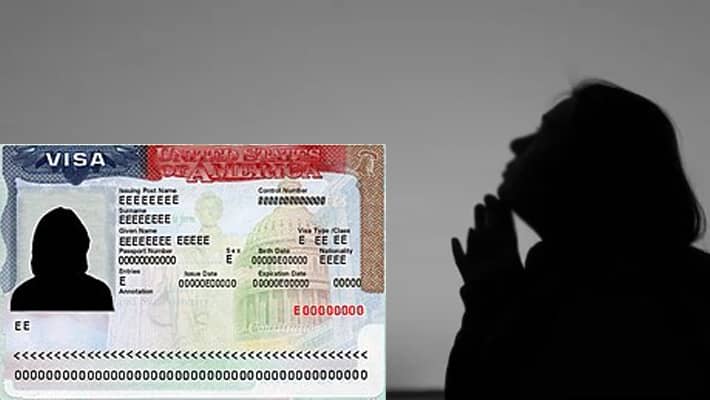
A 64-year-old American woman has accused officials at the United States Embassy in Nigeria of mocking her relationship with her 27-year-old Nigerian fiancé before denying his K-1 visa application.
The woman, who identified herself simply as Deborah, said the embassy issued her fiancé a 221(g) refusal form following his interview, indicating that additional administrative processing was required and that he did not meet the qualifications for the visa category at that stage.
Deborah spoke during a live call-in session hosted by U.S.-based immigration lawyer Jim Hacking, where she expressed frustration over what she described as humiliating treatment during the visa interview.
According to her, the interview had proceeded smoothly until the consular officer asked about her age and reacted with visible shock upon learning of the 37-year age difference between the couple.
“When it came to the age difference, he said my age, then she said, ‘Oh! She’s this age!’” Deborah recounted, adding that the officer allegedly repeated her age several times in what she believed was an attempt to unsettle her fiancé.
She further alleged that the consular officer temporarily stepped away from the interview, approached a colleague and laughed while discussing the case.
“And then she went back to her colleague. They were both White, and then they were laughing,” Deborah said, claiming her fiancé watched the exchange from the interview area.
Shortly after, he was handed a 221(g) refusal notice.
Deborah said her fiancé had arrived at the embassy with about 20 documents — including photographs, chat records and other correspondence — to demonstrate the authenticity of their nearly two-year relationship.
However, she claimed the documents were dismissed as unnecessary at that stage of the process.
The K-1 visa, also known as the fiancé visa, allows a foreign national engaged to a U.S. citizen to travel to the United States for marriage within 90 days of arrival.
Responding to her concerns, Hacking explained that consular officers often issue 221(g) refusals when they are not fully convinced about the legitimacy of a relationship or require further review.
He suggested that significant age gaps can sometimes trigger heightened scrutiny, though each case is assessed individually.
The lawyer advised Deborah to consider marrying her fiancé and filing a spousal petition instead, noting that a fiancé petition under the circumstances could face significant hurdles.
However, he warned that even a marriage-based petition could take up to two years to process.
“There’s no way to make him come sooner?” Deborah asked during the call, audibly distressed.
Hacking maintained that there was no available fast-track option in such cases.
Deborah said she had visited Nigeria twice and had hoped her fiancé would reciprocate the visits by spending time with her in the United States.
She described the visa denial as a devastating blow to their relationship, saying the couple had been looking forward to building a life together.
Efforts to obtain official comments from the U.S. mission in Nigeria on the specific allegations were unsuccessful as of the time of filing this report.
Visa denials under Section 221(g) of the U.S. Immigration and Nationality Act are common and typically indicate that an application requires additional administrative processing or documentation before a final decision is reached.
For now, Deborah said she is weighing her next steps as she and her fiancé confront what she described as the most challenging moment in their relationship.
 '
' '
'Do you want to share a story with us? Do you want to advertise with us? Do you need publicity for a product, service, or event? Contact us on WhatsApp +2348183319097 Email: platformtimes@gmail.com
We are committed to impactful investigative journalism for human interest and social justice. Your donation will help us tell more stories. Kindly donate any amount HERE
