

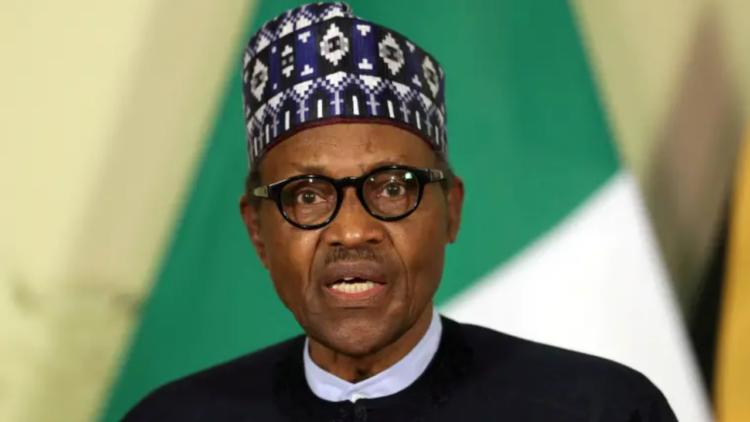
A lawyer and author, Charles Omole, has alleged that powerful figures within the administration of the late former President, Muhammadu Buhari, deliberately planted stories in newspapers to shape what the former leader read and possibly how he perceived issues of governance.
Omole made the claim during an interview on Channels Television while speaking on his newly released biography, From Soldier to Statesman: The Legacy of Muhammadu Buhari, which examines the former president’s leadership style and years in office between 2015 and 2023.
According to Omole, Buhari’s well-known fondness for reading newspapers was exploited by influential actors within his government, whom he described as a dominant cabal.
“One of the things about Buhari is that he loved reading newspapers. Everybody knows that, right from his early days, he was a newspaper man,” Omole said.
He added, “There were reports that the cabals went to the extent of creating his own newspaper. They would plant stories that they want him to read.”
The author argued that the existence of a cabal around political leaders was not unique to Buhari, stressing that every Nigerian president since the return to democracy in 1999 had governed with the influence of close power circles.
“Like I said in the book, every president, since 1999, had his own cabal,” Omole stated. “Cabal is not necessarily a bad thing. The cabals can become a force multiplier. If they share the intention of the leaders, they can help magnify his programmes and help achieve much better things.
“But the problem comes when cabals have their own agenda.”
Omole described the Buhari administration as one dominated by a single, overarching cabal that wielded enormous influence over decision-making, in contrast to what he said is obtainable under the current administration of President Bola Tinubu.
According to him, Tinubu’s government is shaped by multiple power blocs, which makes the structure more complex.
“The current one is slightly more complicated. He has more than one cabal. Every president has their own cabal,” Omole said.
He went further to identify what he described as five distinct cabals within the present government, linking them to key figures such as the Chief of Staff to the President, Femi Gbajabiamila; the President’s son, Seyi Tinubu; the First Lady, Senator Oluremi Tinubu; the President’s Principal Private Secretary; and another group led directly by President Tinubu himself.
Omole noted that while the presence of multiple cabals could serve as a system of checks and balances, it could also slow decision-making.
“The challenge, of course, with someone like Buhari is that there was one overarching cabal, but in this current government, there are multiple cabals. I think this has its plus and minus,” he said.
The author also disclosed that some sensitive details about power dynamics within past administrations were deliberately excluded from his book.
“There are things I couldn’t write because they are too sensitive,” Omole said, adding that his analysis was largely based on his observations of how power has operated across successive Nigerian governments.
His comments have reignited debate over the role of unelected power brokers in Nigeria’s presidential system and the extent to which they shape governance behind the scenes.
 '
' '
'Do you want to share a story with us? Do you want to advertise with us? Do you need publicity for a product, service, or event? Contact us on WhatsApp +2348183319097 Email: platformtimes@gmail.com
We are committed to impactful investigative journalism for human interest and social justice. Your donation will help us tell more stories. Kindly donate any amount HERE
