

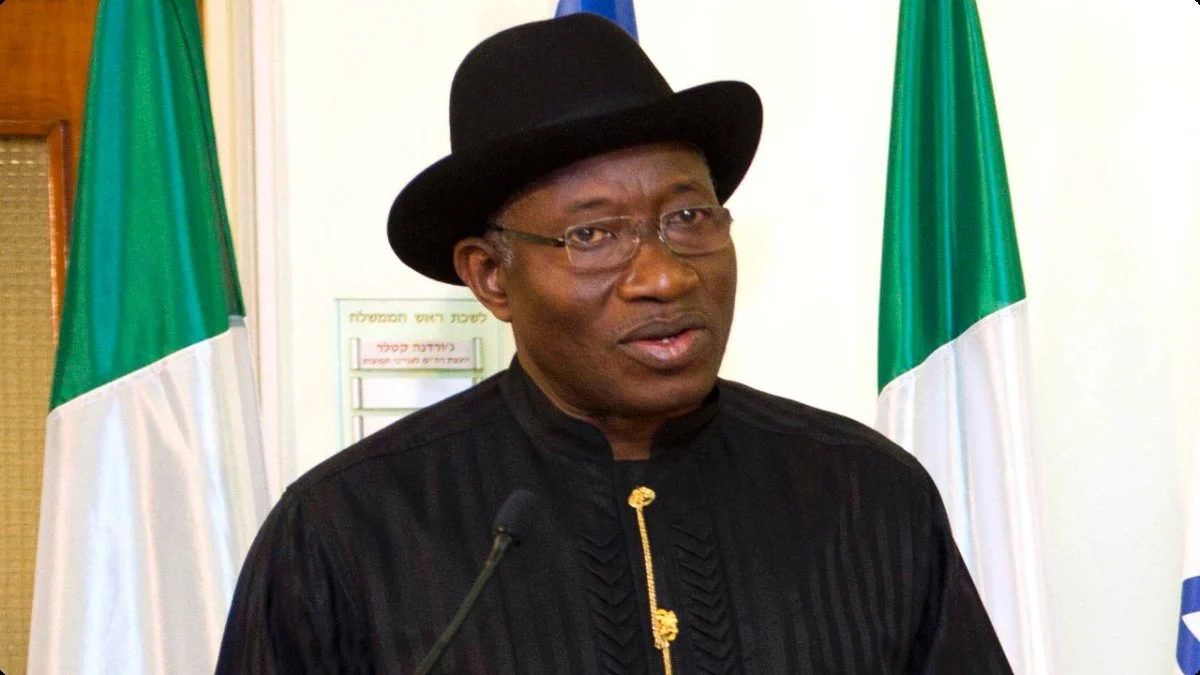
Former President Goodluck Jonathan has warned that democracy in Nigeria and across the world must be judged not only by elections and political participation but by its ability to deliver tangible economic development, warning that failure to do so could erode public confidence in democratic governance.
Jonathan made the remarks on Thursday in Abuja at the public presentation of a research report organised by the Goodluck Jonathan Foundation titled “Strengthening the Nexus between Democracy and Economic Growth in Nigeria.”
He stressed that while democracy remains globally attractive for its principles of freedom, justice and human dignity, it must go beyond periodic elections to the establishment of strong institutions capable of driving innovation, productivity and inclusive growth.
According to him, growing global economic hardship, insecurity and declining trust in public institutions have intensified debates on whether democratic systems automatically produce better governance outcomes than alternative models.
Jonathan questioned what he described as the “assumed superiority” of democratic systems in delivering development, pointing to countries with different governance structures that have recorded significant economic progress.
He cited examples of global economic hubs such as the Dubai, noting that despite not operating a democratic system, the city has continued to attract massive foreign investment, tourism and international education interest.
“Many people travel to Dubai, which has become a global centre. I know some Americans who even send their children there for schooling, yet it is not a democracy,” he said.
The former president also referenced the development model of China, where he said leadership selection involves rigorous processes designed to filter and promote competence within the system.
“In China, before anyone becomes a mayor, there is a rigorous filtering process to ensure only the most capable individuals emerge,” he noted, questioning whether democratic systems such as Nigeria’s are achieving similar standards of leadership quality.
Jonathan, however, maintained that his observations were not an endorsement of authoritarian systems but a call for reflection on governance effectiveness and results.
He argued that the sustainability of democracy in Nigeria would depend largely on its capacity to improve citizens’ welfare, reduce poverty, and expand economic opportunities.
“If democracy does not translate into better living conditions, stronger institutions and economic progress, citizens will continue to question its value,” he warned.
Despite his concerns, Jonathan reaffirmed that democracy remains the most acceptable system globally because of its emphasis on freedom of expression, rule of law and accountability.
He urged African leaders and policymakers to focus on reforms that strengthen governance institutions, enhance transparency and ensure that democratic governance produces measurable development outcomes.
The former president added that the future of democracy would be determined not by rhetoric, but by its ability to respond effectively to the economic and social needs of the people.
 '
' '
'Do you want to share a story with us? Do you want to advertise with us? Do you need publicity for a product, service, or event? Contact us on WhatsApp +2348183319097 Email: platformtimes@gmail.com
We are committed to impactful investigative journalism for human interest and social justice. Your donation will help us tell more stories. Kindly donate any amount HERE
