

Fawaz Adebisi
The Senior Advocate of Nigeria and Professor of Law at the University of Lagos, Prof. Yemi Oke, has warned that internal divisions within the engineering profession could weaken its statutory authority and diminish its influence in Nigeria’s energy and electricity governance.
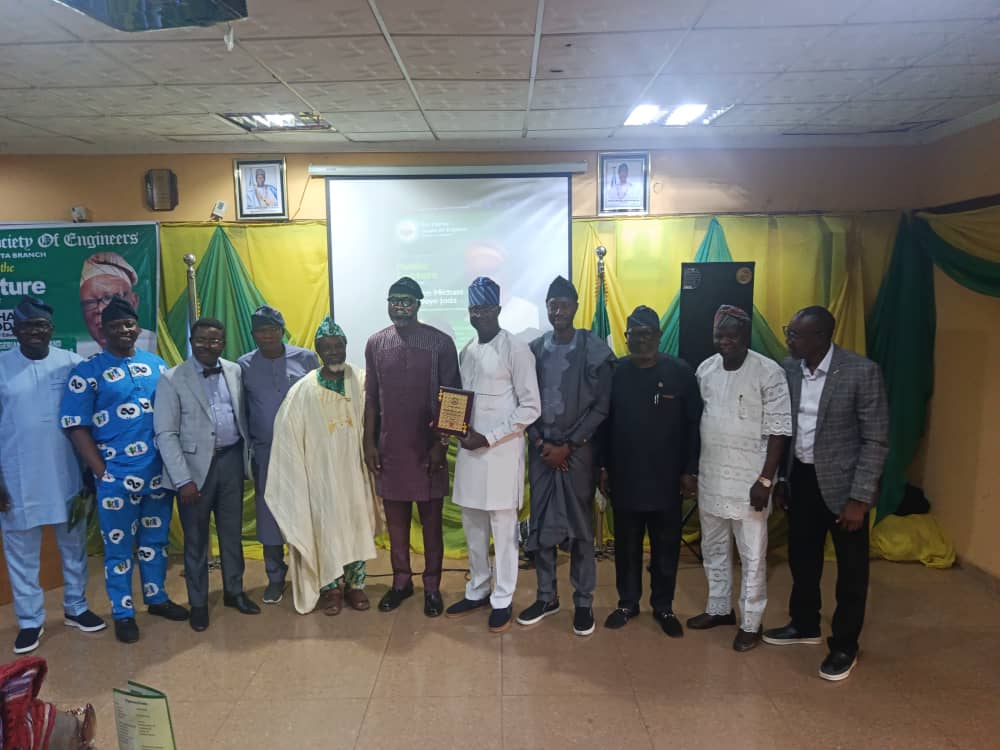
Oke made the call while delivering a memorial lecture in honour of the late Engr. Venerable Michael Bamigboye Joda during the 2026 Engineering Week organised by the Abeokuta Branch of the Nigerian Society of Engineers.
Speaking on the theme, “Engineering Standards under the Nigerian Energy and Electricity Laws: Imperatives for Engineering Professionals,” Oke cautioned specialised engineering groups against seeking separate statutory recognition outside the umbrella of the NSE.
“Engineering profession is one, just like the legal profession,” he declared.
“In law, we have constitutional lawyers, energy lawyers and administrative lawyers, but they do not break away from the Nigerian Bar Association. The NBA remains one body. The same must apply to the Nigerian Society of Engineers.”
He described the agitation by some engineering specialisations for distinct legislative recognition as a “red flag,” stressing that existing laws recognise the NSE as the authoritative professional body.
According to him, attempts by sub-groups to be independently mentioned in legislation, including discussions at the National Council on Power, could erode the profession’s collective bargaining power and undermine its regulatory standing.
“The law will only recognise the NSE, not specialisations. Engineers must avoid actions that divide their ranks,” he warned.
Oke emphasised that Nigeria’s energy and electricity sector is fundamentally engineering-driven and must be anchored on enforceable technical standards developed and safeguarded by professionals.
“It is imperative for the Nigerian Society of Engineers and related bodies to rise to the occasion in sustaining and enforcing engineering and technical standards in the Nigerian energy and electricity law, in the overall interest of Nigerians,” he said.
Drawing comparisons with the legal and medical professions, the legal luminary challenged engineers to strategically position themselves within governance and public policy structures.
“In the executive, legislature and judiciary, lawyers are strategically positioned. The Ministry of Justice is populated by lawyers; the judiciary is 100 per cent lawyers. That is strategic positioning,” he said, questioning why engineers have not asserted similar influence in technically driven sectors such as oil, gas and power.
He lamented what he termed professional marginalisation, noting that engineers often allow other professionals to dominate major projects and regulatory frameworks in sectors where technical expertise is paramount.
Oke further referenced provisions in electricity regulatory laws mandating that projects be handled by qualified and competent engineers, warning that certification does not absolve practitioners of liability for negligence.
“Even if you are certified, the job must be done by a qualified engineer. The law recognises the role of a ‘competent engineer.’ Engineers must ensure that such statutory protections are not diluted,” he added.
Linking Nigeria’s protracted power crisis to weak enforcement of technical standards and governance gaps, he maintained that stronger engineering input in regulatory and policy processes is critical to resolving the nation’s electricity challenges.
“It is no coincidence that Nigeria’s energy and electricity challenges are tied to inadequate engineering provisions and governance gaps that have persisted for decades,” he said.
In his remarks, the National President of the NSE, Engr. Ali Alimasuya Rabiu, urged engineers to expand their relevance beyond technical practice into leadership and governance.
“We must advocate for the Nigerian engineer not only in building infrastructure but also in shaping the policies that drive economic development,” he said, adding that capacity-building for young engineers remains central to the society’s vision.
Earlier, Chairman of the NSE Abeokuta Branch, Engr. Olumayowa Ayodeji Idowu, described the memorial lecture as both solemn and strategic, noting that the late Engr. Joda embodied professionalism and public service.
He disclosed that the branch contributed professional input to the development of Ogun State’s electricity framework, culminating in the passage of the Energy Law Bill No. 017/OG/2024 signed by Governor Dapo Abiodun to strengthen electricity generation, transmission, distribution and consumer protection within the state.
Idowu called for sustained collaboration between the NSE and the Ogun State Government to ensure effective implementation of the law, stressing strict adherence to engineering standards and ethics.
Dignitaries at the event, including a former Speaker of the Ogun State House of Assembly and other top government officials, commended the NSE for sustaining the legacy of the late Engr. Joda, describing him as a disciplined and principled professional whose contributions to engineering and public service earned him enduring respect.
In an emotional tribute, Dr. Morayo Jimoh, daughter of the late engineer, thanked the society for honouring her father’s memory, saying he believed in excellence, diligence and leaving a positive mark on society.
The event drew engineers, policymakers, academics and other stakeholders, with a renewed call for unity within the profession, stricter enforcement of regulatory standards and stronger engineering leadership in shaping Nigeria’s evolving energy and electricity landscape.
 '
' '
'Do you want to share a story with us? Do you want to advertise with us? Do you need publicity for a product, service, or event? Contact us on WhatsApp +2348183319097 Email: platformtimes@gmail.com
We are committed to impactful investigative journalism for human interest and social justice. Your donation will help us tell more stories. Kindly donate any amount HERE
