

...Minister Says Mother-Tongue Instruction ‘Destroyed Education In Some Regions’
… New Teacher Training Plan To Boost Literacy, Numeracy In Early Classes
By Daud Olatunji
The Federal Government has officially scrapped the National Language Policy that mandated the use of indigenous languages as the medium of instruction in Nigerian schools, declaring English as the sole language of teaching from pre-primary to tertiary level.
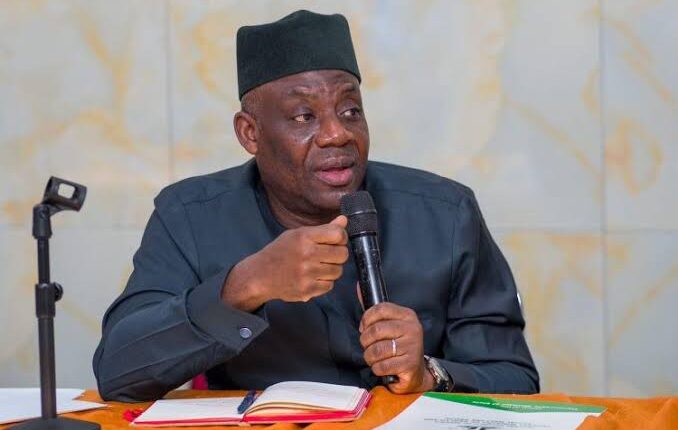
The announcement was made on Wednesday by the Minister of Education, Dr. Morufu-Tunji Alausa, at the 2025 Language in Education International Conference organised by the British Council in Abuja.
The now-suspended policy, introduced in 2022, required teaching from Early Child Care Education to Primary Six to be conducted in a child’s mother tongue or the language of the immediate environment.
The policy aimed to promote indigenous languages and improve comprehension in pupils’ formative years.
But Alausa said the government’s review revealed that the policy had produced “more harm than good.”
He cited data showing that students taught primarily in local languages recorded higher failure rates in national examinations and performed poorly in English comprehension tests.
“We have seen a mass failure rate in WAEC, NECO, and JAMB in certain geo-political zones of the country, and those are the ones that adopted this mother tongue in an over-subscribed manner,” Alausa said.
He described the policy as responsible for “destroying education in certain regions” over the past 15 years and defended the government’s decision as one based on evidence, not sentiment.
“English now stands as the medium of instruction from pre-primary, primary, junior secondary, senior secondary, and up to the tertiary level,” the minister declared.
Alausa challenged proponents of the indigenous language model to provide verifiable data to support its continued use, reiterating that the government’s decision was guided by empirical findings.
The Minister of State for Education, Prof. Suwaiba Ahmed, added that the government had introduced a new teacher training programme aimed at boosting literacy and numeracy among pupils at the foundation level.
“We are designing a training package for teachers that focuses on literacy and numeracy — specifically for those teaching from pre-primary to primary three,” she said.
The Country Director of the British Council, Donna McGowan, praised the move, stating that the council would continue to support teacher professional development, school leadership, and language proficiency initiatives in Nigeria.
The cancellation of the mother-tongue policy is expected to spark renewed debate among educators, with some arguing that early learning in a child’s native language improves comprehension and cultural identity.
However, Alausa insisted that the government’s decision prioritises educational outcomes and the reversal of declining performance in national examinations.
 '
' '
'Do you want to share a story with us? Do you want to advertise with us? Do you need publicity for a product, service, or event? Contact us on WhatsApp +2348183319097 Email: platformtimes@gmail.com
We are committed to impactful investigative journalism for human interest and social justice. Your donation will help us tell more stories. Kindly donate any amount HERE
