

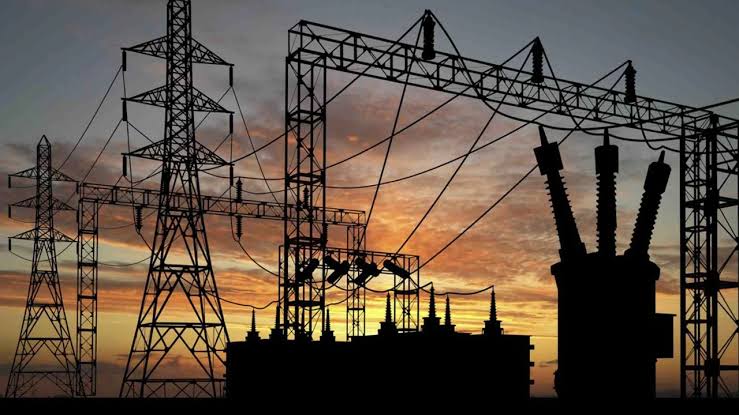
President Bola Tinubu has approved a ₦3.3 trillion payment plan to clear longstanding debts in Nigeria’s power sector, in a move the Federal Government says is aimed at stabilising electricity supply and restoring investor confidence in the industry.
The approval follows the conclusion of a comprehensive review under the Presidential Power Sector Financial Reforms Programme, which assessed outstanding liabilities accumulated over a decade, between February 2015 and March 2025.
In a statement on Sunday, the Special Adviser to the President on Information and Strategy, Bayo Onanuga, said the Federal Government and key stakeholders had reached a “full and final settlement” of ₦3.3 trillion after verification of claims.
According to the statement, implementation of the payment plan has already commenced, with 15 power generation companies (GenCos) signing settlement agreements totalling ₦2.3 trillion.
The Federal Government has also raised ₦501 billion to back the initiative, out of which ₦223 billion has so far been disbursed to beneficiaries, with additional payments ongoing.
Onanuga said the intervention is expected to have a direct impact on power generation and supply across the country.
“With payments reaching the power value chain, generation will be more stable. With power plants supported, electricity reliability will improve,” the statement read.
The government added that clearing the debts would ease financial pressure on gas suppliers and power plants, many of which have struggled with liquidity challenges that have hampered operations in recent years.
Special Adviser on Energy to the President, Olu Arowolo-Verheijen, said the initiative goes beyond debt settlement, describing it as a major step toward rebuilding trust in the sector.
According to her, the programme is designed to ensure that gas suppliers are paid on time, power plants remain operational, and the electricity market functions more efficiently.
“This programme is not just about settling legacy debts. It is about restoring confidence across the power sector — ensuring gas suppliers are paid, power plants can keep running, and the system begins to work more reliably,” she said.
She explained that the reforms are part of a broader agenda, which includes improved metering systems and the introduction of service-based tariffs, linking electricity charges to the quality of service delivered.
The administration also reiterated its focus on prioritising electricity supply to critical sectors such as businesses, industries, and small and medium-scale enterprises, noting that reliable power remains essential for job creation and economic growth.
“The goal is simple: more reliable power for homes, stronger support for businesses, and a system that works better for all Nigerians,” the statement added.
The President commended stakeholders across the power value chain for supporting efforts to resolve the long-standing financial challenges in the sector.
The government also disclosed that a second phase of the payment programme, referred to as “Series II,” will commence within the current quarter as part of continued efforts to stabilise the sector.
Nigeria’s power sector has for years grappled with liquidity constraints, fuel supply challenges, and infrastructure deficits, often resulting in erratic electricity supply despite multiple reforms and interventions by successive administrations.
 '
' '
'Do you want to share a story with us? Do you want to advertise with us? Do you need publicity for a product, service, or event? Contact us on WhatsApp +2348183319097 Email: platformtimes@gmail.com
We are committed to impactful investigative journalism for human interest and social justice. Your donation will help us tell more stories. Kindly donate any amount HERE
