

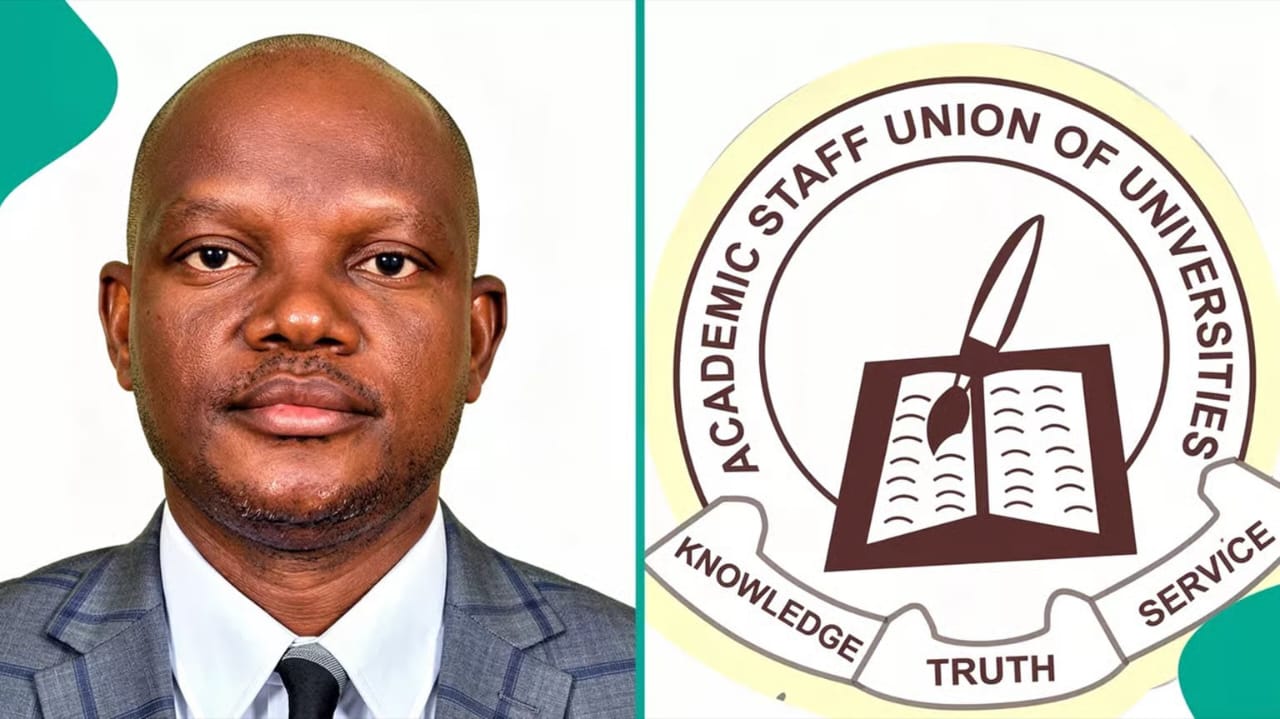
The Federal Government on Sunday disclosed that Nigeria’s public university system lost nearly five academic years to industrial actions by the Academic Staff Union of Universities in the decade preceding 2023, highlighting the deep-rooted instability that has plagued the sector.
Minister of Education, Tunji Alausa, who made the disclosure in Abuja, said the country recorded about 52 strike actions within the period, translating to roughly 1,700 lost academic days.
He spoke at the launch of the Entrepreneurship, Innovation and Business Incubation Certification programme, where he blamed the frequent shutdowns for prolonged academic calendars, delayed graduations, and declining global competitiveness of Nigerian graduates.
According to him, the trend has, however, been halted under the administration of Bola Tinubu, with improved engagement between government and ASUU preventing prolonged disruptions.
“In the last 10 years, we had almost 52 ASUU strikes, amounting to nearly five years of lost academic time. Since May 2023, that has been reduced to zero,” Alausa said.
He added that the current administration had restored stability to the system, noting that students who enrolled in 2023 are on track to complete their programmes within the stipulated four-year period — a feat he described as unprecedented in three decades.
Despite the government’s optimism, findings indicate that tensions are again mounting across federal universities over delays in implementing a renegotiated agreement with ASUU.
The agreement, expected to take effect from January 1, 2026, includes a 40 per cent salary increase for lecturers, improved pension packages, and enhanced earned academic allowances.
However, checks across several institutions, including the University of Lagos, University of Abuja, and University of Calabar, revealed that full implementation is yet to commence, with lecturers in some schools decrying irregular and reduced salary payments.
At UNILAG, some lecturers described their January and February salaries as “amputated,” warning that failure to address the situation could trigger another strike.
President of ASUU, Chris Piwuna, had earlier warned that the union might embark on fresh industrial action if the government fails to show concrete progress.
“If by the end of March there is no progress, the union will take a position,” he said, citing delays in budget approvals as a major impediment to implementing the agreement.
He had also issued a four-day ultimatum to the government, demanding immediate action or risk a “strong response” from the union.
Meanwhile, education stakeholders have expressed concerns that recurring disruptions continue to undermine the global ranking of Nigerian universities.
Recent rankings by Times Higher Education placed only two Nigerian institutions — the University of Ibadan and the University of Lagos — within the 801–1000 bracket globally, underscoring the sector’s struggles.
Reacting, the Education Rights Campaign faulted the Federal Government’s claims, describing them as misleading and overly simplistic.
Its National Mobilisation Officer, Michael Adaramoye, argued that focusing solely on the number of years lost to strikes ignores the deeper structural challenges facing the education sector, including chronic underfunding, poor infrastructure, and deteriorating working conditions.
He warned that students remain the worst hit, grappling with rising tuition costs and declining learning environments.
 '
' '
'Do you want to share a story with us? Do you want to advertise with us? Do you need publicity for a product, service, or event? Contact us on WhatsApp +2348183319097 Email: platformtimes@gmail.com
We are committed to impactful investigative journalism for human interest and social justice. Your donation will help us tell more stories. Kindly donate any amount HERE
