

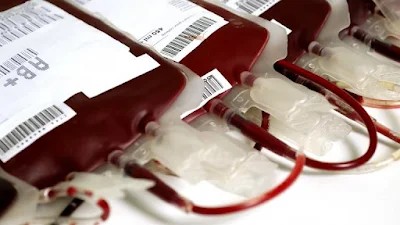
Jehovah’s Witnesses have announced a significant clarification to their long-standing doctrine on blood transfusion, granting members the discretion to decide whether their own blood can be used during medical procedures.
The religious group, however, reaffirmed its prohibition against transfusions involving blood from another person.
The new position was disclosed in a video statement released on Friday by a member of the organisation’s Governing Body, Gerrit Lösch, who said the clarification was aimed at allowing adherents to make personal, faith-based decisions regarding medical treatment.
He explained that while the doctrine requires Christians to abstain from blood, the Bible does not explicitly address the use of an individual’s own blood in medical settings.
“Each Christian must decide for himself how his own blood will be handled in the course of a surgical procedure, medical test, or current therapy,” Lösch said.
According to him, members may now choose whether their blood can be removed, stored, and later returned to their bodies during surgery—a practice known in medical circles as autologous transfusion.
He added that while some adherents may permit such procedures, others may decline, stressing that the decision remains a personal one.
Lösch noted that many Jehovah’s Witnesses already accept certain medical procedures involving their own blood, including blood tests, use of heart-lung machines, cell salvage techniques, and kidney dialysis.
The clarification comes amid renewed public interest in Nigeria following the death of a cancer patient and social media personality, Mensah Omolola, popularly known as Auntie Esther, in December 2025.
Omolola had rejected a doctor-recommended blood transfusion on religious grounds and opted for alternative treatments, a decision that sparked widespread debate on the intersection of faith and modern medicine.
Her case drew national attention after Nigerians donated over ₦30 million to support her treatment.
Despite reported warnings of possible disciplinary measures from her religious community, she maintained her stance until her death.
Jehovah’s Witnesses have historically based their rejection of blood transfusions on biblical teachings, citing passages such as Genesis 9:4, Leviticus 17:10, Deuteronomy 12:23, and Acts 15:28–29, which instruct adherents to abstain from blood.
The group has consistently maintained that its position is rooted in religious conviction rather than medical concerns, while emphasising that members do not reject healthcare.
In previous statements, the organisation noted that it embraces modern medical advancements and supports “bloodless” treatment options, including techniques that minimise or avoid the use of donor blood.
 '
' '
'Do you want to share a story with us? Do you want to advertise with us? Do you need publicity for a product, service, or event? Contact us on WhatsApp +2348183319097 Email: platformtimes@gmail.com
We are committed to impactful investigative journalism for human interest and social justice. Your donation will help us tell more stories. Kindly donate any amount HERE
