

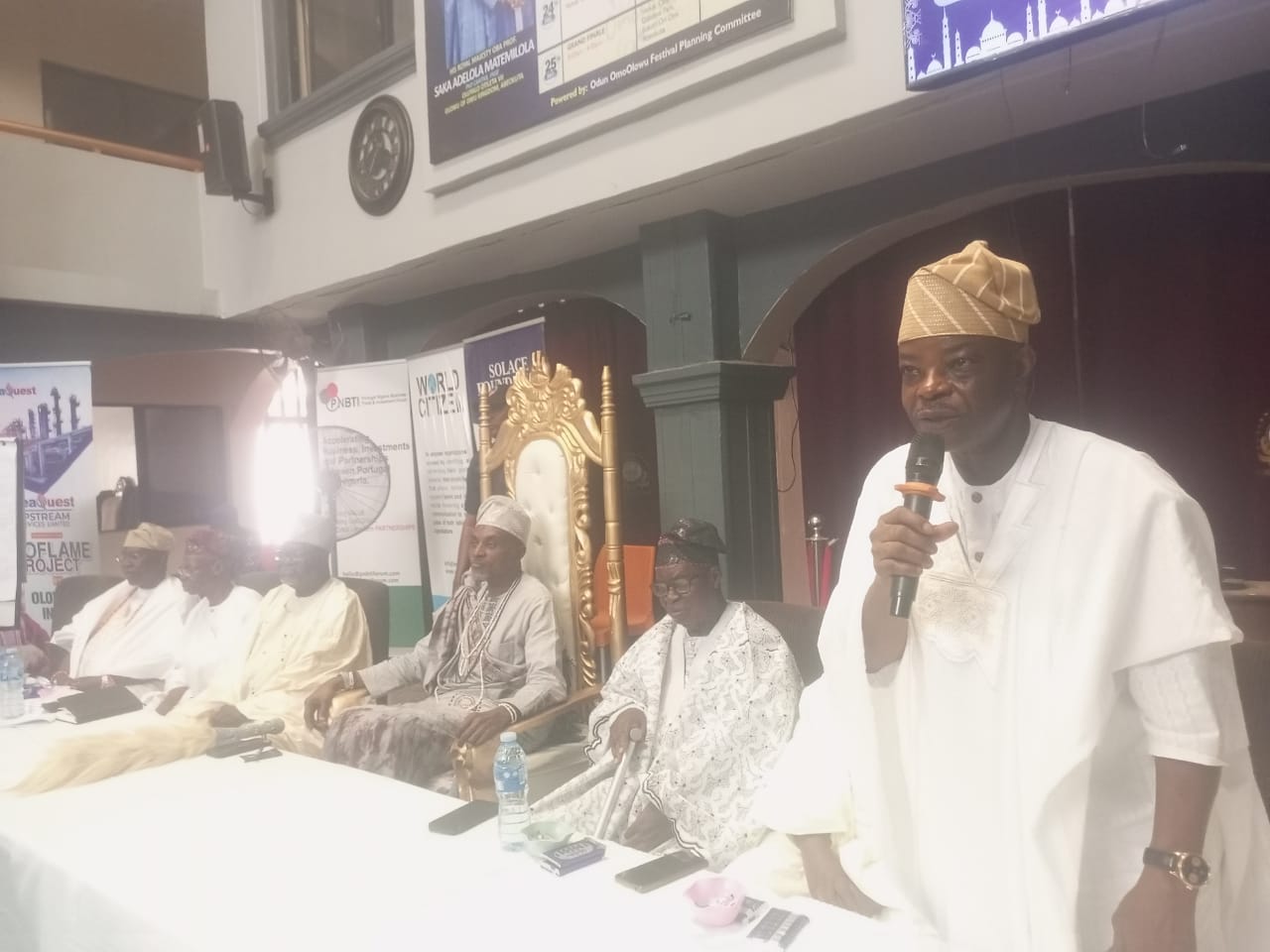
Muslim leaders and stakeholders in Ogun State have adopted a far-reaching 30-year Strategic Blueprint aimed at strengthening Islamic institutions, promoting unity and addressing longstanding socio-economic challenges confronting Muslims across the state.
The resolution was reached at a high-level retreat organised by the Ogun State Muslim Council (OMC) on Sunday at the Olowu of Owu’s Palace, Abeokuta, where over 200 delegates representing more than 30 Islamic organisations from Egba, Ijebu, Remo and Yewa divisions converged to chart a new direction for the Council.
The retreat, which marked a critical reflection on OMC’s three decades of existence, was convened to review a comprehensive strategic document designed to transform the umbrella Muslim body into a world-class Islamic institution with relevance beyond religious affairs.
In his welcome address, the Olowu of Owu, Oba Saka Adelola Matemilola, who is also the President-General of OMC, said the initiative was born out of a deliberate effort to adopt research-driven and evidence-based solutions to challenges facing Muslims in Ogun.
The monarch expressed concern over persistent complaints of marginalisation of Muslims in governance, education, employment and other spheres, assuring participants that the new blueprint would provide a roadmap for reversing the trend.
“Muslims must not be reactionary. We must be united, strategic and purposeful in our engagements. The Ogun State Muslim Council must become the platform through which the objectives of Islam and the welfare of the Ummah are pursued effectively,” Oba Matemilola said.
He added that his vision was to build a “unified, vibrant and sustainable” Muslim institution that commands respect locally and nationally.
Presenting the strategic document, a member of the Retreat Steering Committee, Dr. Akintoye Akindele, said the blueprint provides a 30-year implementation framework to reposition OMC institutionally and operationally.
“As the umbrella body for Muslim associations in Ogun State, we have a historic opportunity to redefine our identity, strengthen our structures and amplify our impact for the benefit of the Ummah and society at large,” Akindele said.
He explained that the retreat focused on five core objectives: clarifying and reaffirming OMC’s identity, mission, vision and values; defining programme priorities; establishing effective planning, management and reporting systems; designing a sustainable governance and financial model; and expanding the Council’s relevance to national development.
According to him, the retreat was conceived as a “laboratory of ideas” where scholars, professionals and community leaders collectively shaped a coherent and forward-looking agenda for the Muslim community in Ogun State.
Also speaking, the Secretary-General of OMC, Asiwaju Kamaldeen Akintunde, said the ratification of the strategic document would define the Council’s trajectory for the next three decades.
He added that the long-term plan would be translated into five-year roadmaps and further broken down into annual, quarterly and weekly implementation strategies to ensure measurable impact.
A member of the Steering Committee, Engr. Femi Omotayo, said the new framework would enable OMC to benchmark itself against leading Islamic organisations globally, noting that mechanisms had already been put in place to study international best practices in governance and administration.
In his goodwill message, former Nigerian High Commissioner to the United Kingdom, Alhaji Sarafa Tunji Isola, urged Muslims to become more active in politics and civic engagement, stressing that meaningful reform could only be achieved through strategic participation in governance.
He commended Oba Matemilola’s leadership and charged participants to use the retreat to build stronger bonds and interrogate the structural challenges confronting Muslims in the state.
Similarly, the Vice President-General of OMC from Ijebu Division, Engr. Arowolo, and his Remo counterpart, Prof. Habeeb Oduye, called for collective commitment to institutional growth and sustained development of the Council.
In a major boost to the initiative, a prominent Ogun lawyer, Chief Mustapha Oyefeso, announced a donation of N1 million to support the development of a central database system for the OMC, aimed at enhancing planning, coordination and service delivery.
.
Oyefeso also advocated the adoption of an evidence-based governance model, urging the Council to integrate recommendations of its Public Affairs Committee, particularly in collecting reliable data on Muslims and Islamic institutions across the state.
He further offered the pro bono services of his law firm to assist in the incorporation of OMC and its subsidiary non-governmental organisations to strengthen accountability and institutional sustainability.
Other dignitaries at the retreat included former Ogun State Commissioner for Forestry, Alhaji Ali Ajibode; Aare Musulumi of Ijebuland, Barrister Musa Oyefeso; Mogaji Adeen of Owu, Prof. Adenekan, among several Islamic scholars, professionals and community leaders.
Participants resolved to work collectively towards the full implementation of the strategic blueprint, describing it as a turning point in repositioning the Ogun State Muslim Council as a modern, impactful and development-driven institution.

 '
' '
'Do you want to share a story with us? Do you want to advertise with us? Do you need publicity for a product, service, or event? Contact us on WhatsApp +2348183319097 Email: platformtimes@gmail.com
We are committed to impactful investigative journalism for human interest and social justice. Your donation will help us tell more stories. Kindly donate any amount HERE
