

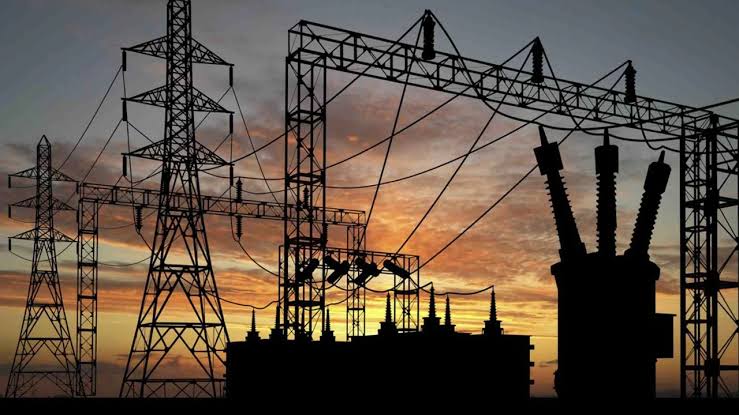
Electricity generation companies under the aegis of the Association of Power Generation Companies have warned that the Federal Government’s N501bn power sector bond is insufficient to settle the mounting N6.6tn legacy debt in the industry, cautioning that the liquidity crisis could trigger a nationwide blackout if left unresolved.
The Chief Executive Officer of the association, Dr Joy Ogaji, disclosed this on Thursday during an interview on Arise Television, where she painted a grim picture of the sector’s worsening financial strain.
Ogaji said the industry’s legacy debt, which stood at N4tn as of December 2024, has continued to rise by about N200bn monthly, pushing the figure above N6tn and projected to hit N6.6tn by the end of February 2026.
“As of December 2024, it was N4tn. If you calculate N200bn times 12, you know the figure for 2025. And now we are currently in February. So currently it’s above N6tn. We’re looking at about N6.6tn by the end of this month. So that is the figure,” she said.
She stressed that the N501bn bond recently floated by the Federal Government — which was reportedly fully subscribed in January 2026 — represents only a fraction of the outstanding obligations to generation companies.
According to her, the persistent shortfall in payments to GenCos has deepened liquidity challenges across the electricity value chain, threatening gas supply, plant maintenance, and overall generation capacity.
Ogaji warned that unless urgent and comprehensive measures are taken to clear the backlog and establish a sustainable funding framework, the sector could slide towards total collapse.
She recalled that President Bola Tinubu had earlier pledged to clear the N4tn legacy debt but said the commitment was later scaled down to the N501bn bond intervention.
Nigeria’s power sector has continued to grapple with chronic underperformance despite the 2013 privatisation of generation and distribution assets.
Although the country has an installed capacity of about 15,000 megawatts, actual generation has fluctuated between 2,000MW and 4,000MW in recent years, leaving households and businesses battling erratic supply.
Industry stakeholders have repeatedly blamed the crisis on inadequate cost-reflective tariffs, poor remittances within the value chain, and mounting legacy debts owed to generation companies.
Ogaji urged the Federal Government to implement a “permanent, practical and sustainable” solution to stabilise the sector, warning that piecemeal interventions would only prolong the crisis.
“The sector needs a decisive resolution of the legacy debt and a structure that guarantees liquidity going forward,” she added.
The latest warning comes amid growing concerns over the country’s fragile electricity supply and its implications for economic productivity, small businesses, and investor confidence.
 '
' '
'Do you want to share a story with us? Do you want to advertise with us? Do you need publicity for a product, service, or event? Contact us on WhatsApp +2348183319097 Email: platformtimes@gmail.com
We are committed to impactful investigative journalism for human interest and social justice. Your donation will help us tell more stories. Kindly donate any amount HERE
