

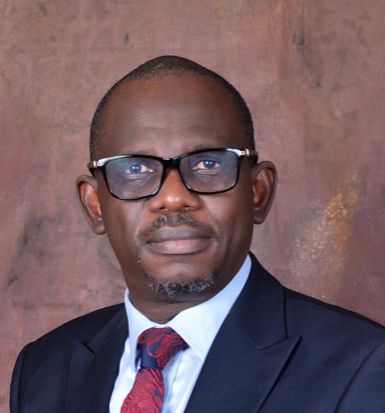
The Ogun State Government has begun a comprehensive review of inmates on death row, declaring that while it will tread cautiously on capital punishment, there will be no leniency for convicts involved in ritual killings, kidnapping and sexual offences.
The Attorney General and Commissioner for Justice, Oluwasina Ogungbade (SAN), disclosed this during an interview on Frontline, a current affairs programme on Eagle 102.5 FM, Ilese-Ijebu, on Friday.
Ogungbade said the state was carefully scrutinising death penalty cases to determine which sentences must be executed strictly in accordance with court pronouncements, stressing that the irreversible nature of capital punishment demands caution.
“Because of the finality of the death penalty, we want to isolate cases where the sentence must be carried out as pronounced by the court of law. We do not want to rush the process,” he said.
He noted that executions have not been carried out in Ogun State since 2002, resulting in a growing population of condemned inmates.
The justice commissioner clarified that the review does not involve reopening cases or seeking fresh evidence, as the convictions were delivered by competent courts. Rather, he said the government is assessing the severity, circumstances and premeditation behind each crime.
According to him, offences such as planned ritual killings and child abductions leave little or no room for mercy, while cases involving deaths committed in the heat of passion may require deeper evaluation.
Ogungbade disclosed that the State Prerogative of Mercy Board has not approved pardons for convicts found guilty of ritual killings, kidnapping or sexual crimes.
“We do not want to send conflicting signals. Recognising these crimes as prevalent means we cannot grant pardon to those who have committed them,” he said.
In a related development, the Attorney General revealed that a bill specifically criminalising ritual killings has been finalised and would be transmitted to the Ogun State House of Assembly within three weeks.
He explained that suspects are currently prosecuted under general murder or related laws, which he described as inadequate to address the peculiar and growing menace of ritual killings.
“This new bill, which is the first of its kind in Nigeria, will strengthen deterrence and close existing legal gaps,” he added.
Ogungbade also raised concerns over what he described as the increasing misuse of law enforcement agencies in civil disputes, including tenancy, domestic and land matters.
Citing a recent incident in Mowe where a tenant was allegedly arrested at the instance of a landlord, he warned against criminalising purely civil issues.
“We are overburdening law enforcement agencies with matters that should ordinarily be resolved in civil courts. If there is a contract dispute or property disagreement, the proper step is to approach the court, not the police or the army,” he said.
While acknowledging that some civil disputes may escalate into criminal conduct, he stressed that clear distinctions must be maintained, warning that officers who overstep their authority could face disciplinary action.
On land-related conflicts, Ogungbade attributed the rising cases to Ogun State’s proximity to Lagos and increasing property values, noting that disputes now range from unlawful occupation to intra-family battles over inheritance.
He said the government had prosecuted offenders, including traditional rulers, to reinforce the message that no individual is above the law.
“Nobody will be spared when it comes to illegal occupation or land grabbing,” he said.
The Attorney General further underscored the need to strengthen judicial infrastructure to enhance efficient justice delivery, stressing that increasing the number of judges must be matched with adequate courtrooms and operational facilities.
He expressed optimism that before the expiration of the tenure of Governor Dapo Abiodun, the state would significantly improve its judicial capacity to reduce case backlogs and enhance public confidence.
On security reforms, Ogungbade reiterated the state government’s support for the establishment of state police, arguing that locally based policing would improve rapid response and deepen community trust.
“Policing has to be locally based. It is difficult for a force headquartered in Abuja to effectively police every nook and cranny of the country,” he said, adding that state police would complement, not replace, federal security agencies while upholding professionalism and respect for human rights.
 '
' '
'Do you want to share a story with us? Do you want to advertise with us? Do you need publicity for a product, service, or event? Contact us on WhatsApp +2348183319097 Email: platformtimes@gmail.com
We are committed to impactful investigative journalism for human interest and social justice. Your donation will help us tell more stories. Kindly donate any amount HERE
