

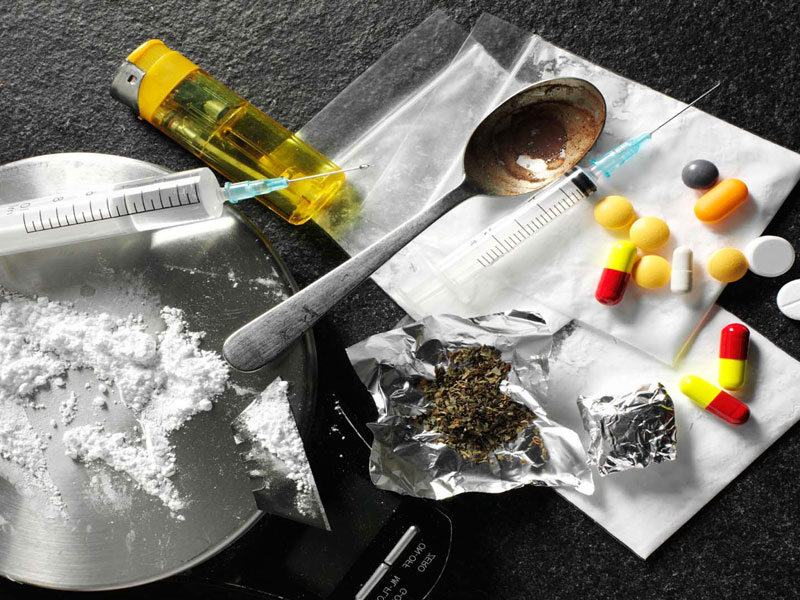
The United Nations Office on Drugs and Crime (UNODC) has disclosed that women account for one in every four Nigerians involved in drug and substance abuse, even as they make up only one in 20 persons accessing rehabilitation and treatment services in the country.
The agency raised the alarm in a memorandum submitted to the House of Representatives ad hoc Committee investigating the rising cases of drug and substance abuse in Nigeria, warning that stigma and other barriers were keeping women and girls away from care.
According to the UNODC, Nigeria’s drug-use prevalence is nearly three times higher than the global average, posing grave risks to public health and national security.
The committee is chaired by Oluwatimehin Adelegbe, an All Progressives Congress lawmaker from Ondo State.
The UN body further revealed that an estimated 244 million people worldwide engaged in drug and substance abuse in 2025, adding that drug use across Africa is projected to rise by 40 per cent by 2030 if current trends persist.
In Nigeria alone, it warned, this trajectory could push the number of drug users beyond 20 million.
“Although women constitute about 25 per cent of people who use drugs in Nigeria, they are grossly underrepresented in treatment facilities, where only one in 20 patients is female,” the agency stated, noting that the disparity underscores deep-rooted stigma, discrimination and access challenges.
Findings from the UNODC’s 2025 World Drug Report, cited in the submission, showed that about 144 million people used cannabis in 2023—representing 4.6 per cent of the global population aged 15 to 24.
Cannabis use has increased by 34 per cent over the past decade and remains the primary drug of concern for 32 per cent of people receiving treatment in Africa.
Globally, cannabis was reportedly used by 2.3 per cent of women aged 15 to 64, while the substance accounts for about 42 per cent of drug-use disorder cases worldwide.
The report also noted that 41 per cent of countries identified cannabis as the main drug of concern among people in treatment.
On opioids, the UNODC estimated that 61 million people used the drugs in 2023, including about 30 million heroin users—amounting to 0.57 per cent of the global population aged 15 to 64.
As part of its recommendations, the agency urged Nigeria to consider decriminalising possession of drugs for personal use within defined thresholds, arguing that such a move would shift people who use drugs from the criminal justice system to health services and enable law enforcement to focus on trafficking networks.
It also called for the institutionalisation of harm-reduction strategies in national laws and policies, stronger asset forfeiture and financial investigations, and legal backing for initiatives such as needle and syringe programmes, Naloxone distribution, medication-assisted treatment and community outreach.
In a separate submission, the National Drug Law Enforcement Agency told the committee that traffickers were adopting new methods, including courier services, luggage concealment and digital ordering systems.
The agency also flagged the growing involvement of transnational criminal networks exploiting porous borders, the emergence of clandestine methamphetamine laboratories in urban fringes and rural areas, and a rise in poly-drug trafficking to reduce detection risks.
 '
' '
'Do you want to share a story with us? Do you want to advertise with us? Do you need publicity for a product, service, or event? Contact us on WhatsApp +2348183319097 Email: platformtimes@gmail.com
We are committed to impactful investigative journalism for human interest and social justice. Your donation will help us tell more stories. Kindly donate any amount HERE
