

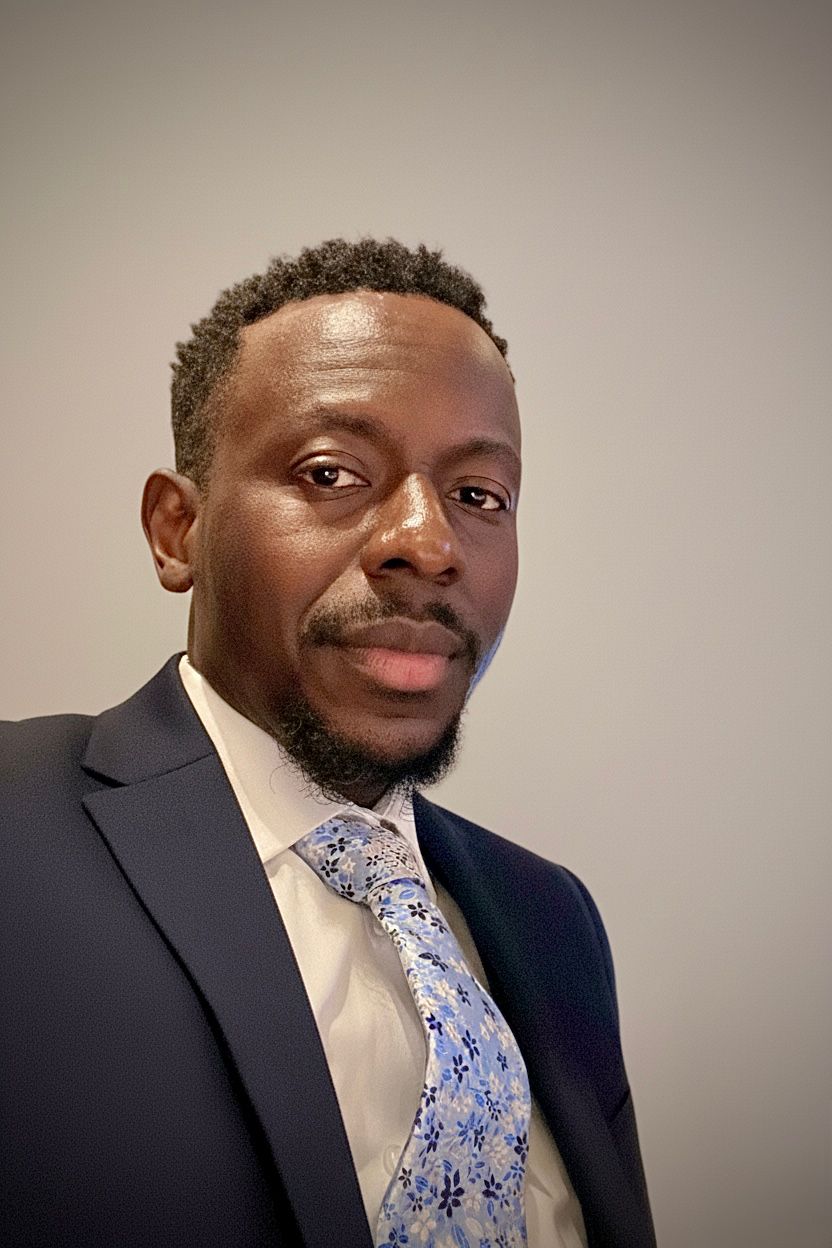
By: Folorunso Fatai Adisa
It has been excruciatingly harrowing to read through a number of commentaries on social media, particularly from individuals who should know better, media-literate political actors and self-styled analysts. What is striking in many of these reactions is not only disagreement but a troubling mix of intellectual arrogance and informational poverty. For some, any analysis that does not flatter their political preference must automatically be labelled unprofessional, biased, or sponsored. That reflex alone says much about the poverty of our public discourse.
From all indications, I have encountered at least two commentators from my very own home State, whose critiques strongly suggest they neither know who Mehdi Hasan is nor have they meaningfully watched his body of work. Hasan is not an obscure media personality. He built his reputation through hard-edged interrogative journalism across platforms such as BBC, Sky News, Al Jazeera English, and later MSNBC.
His interviews, many of which routinely attract millions of views online, are studied in journalism schools precisely because of their forensic structure and evidentiary discipline. His 2023 book, Win Every Argument: The Art of Debating, Persuading, and Public Speaking, quickly became a widely discussed manual on modern argumentative strategy.
What some critics are reacting to is not misconduct but unfamiliarity. They are accustomed to the mushroom-style and kangaroo-court interviewing culture that is regrettably ubiquitous on many Nigerian television platforms—formats where questions are either timidly deferential or theatrically partisan.
According to the 2024 Reuters Institute Digital News Report, audiences in several emerging media markets increasingly distrust partisan broadcasting precisely because it blurs the line between journalism and political advocacy. However, in Nigeria, segments of the media ecosystem still operate within this binary: a journalist is either for a party or against it. Nuance is treated as betrayal.
Consequently, when audiences encounter an interviewer who practices the craft as it is taught in advanced media systems (evidence-driven, archive-backed, and rhetorically surgical) they misinterpret professionalism as hostility. A neutral interrogator becomes, in their imagination, an enemy operative.
Hence the predictable chorus: the interview was sponsored, the host is biased, the programme is a setup. This is precisely the intellectual reflex that has greeted the exchange between Hasan and Daniel Bwala.
Journalism has evolved far beyond the crude “all-comers” model that still dominates parts of Nigeria’s broadcast culture. Around the world, the craft now relies on rigorous fact-checking, archival recall, and disciplined questioning designed to test the credibility of public officials. Hasan’s interviewing method belongs squarely within that professional tradition.
Therefore the challenge is straightforward. Those who have written balderdash in an attempt to diminish Mehdi Hasan should present, with evidence rather than sentiment, a currently active Nigerian television host whose interviewing pedigree, global reach, and evidentiary command surpass his. Until that demonstration is made, the wiser course would be intellectual humility rather than loud certainty.
Given the number of poppycock pieces I have seen written about Mehdi Hasan, as though he were acting as an opposition figure, the reaction is quite galling. The programme is called Head-to-Head for a reason. It is designed to be probing, direct, and adversarial in the professional sense.
Pro-Bwala supporters should relax. There was no calculated attempt by the host to bring him down. At the same time, anti-Bwala critics should also temper their conclusions. Daniel Bwala did not expressly perform woefully either. It was, quite simply, a tough interview conducted within the normal conventions of rigorous broadcast journalism.
Daniel did his best. Yet at no point did Mehdi Hasan exhibit hostility toward him. What many interpreted as aggression was, in reality, the disciplined sharpness of professional interviewing.
Our problem is deeper. We are an overly sentimental people. Too often, we mistake rigorous questioning for personal attack. That reflex may be common within our local media culture, but exporting such habits into global conversations does us no credit. Journalism, everywhere in the world, is built on scrutiny, evidence, and accountability. When we meet that standard, we should engage it intellectually rather than dismiss it emotionally. Hard questions hurt feelings, and rigour is never hostility!
Folorunso Fatai Adisa is a communication strategist and columnist. He holds a Master’s degree in Media and Communication from the University of Strathclyde, Glasgow, and writes from the United Kingdom.
 '
' '
'Do you want to share a story with us? Do you want to advertise with us? Do you need publicity for a product, service, or event? Contact us on WhatsApp +2348183319097 Email: platformtimes@gmail.com
We are committed to impactful investigative journalism for human interest and social justice. Your donation will help us tell more stories. Kindly donate any amount HERE
