

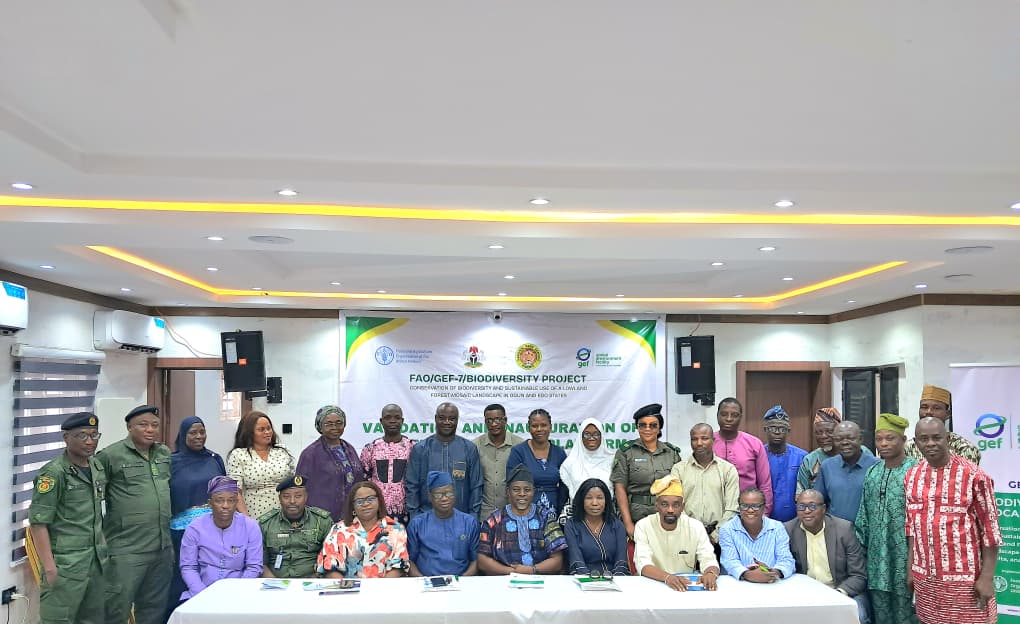
Environmental experts have called on federal and state authorities to prioritise the preservation of Nigeria’s biodiversity and ecosystems, warning that continued degradation could undermine food security, tourism, public health and economic development.
The call was made in Abeokuta, Ogun State, during the validation and inauguration of Multi-Stakeholder Platforms and Biodiversity Needs Assessment Study on the Conservation of Biodiversity and Sustainable Use of Lowland Forest Mosaic Landscape in Ogun and Edo states.
The event was organised by the Nigeria National Park Service in collaboration with the Food and Agriculture Organisation and the Global Environment Facility under the GEF-7 Biodiversity Project.
The programme formally launched a GEF-7 initiative aimed at conserving Nigeria’s lowland forests while improving local livelihoods.
Nigeria’s rich but threatened biodiversity
Presenting an overview of the project, the Chief Technical Adviser for GEF-7, Prof. Segun Oladoye, described Nigeria’s biodiversity as critical to global environmental health and key sectors such as agriculture, water resources, tourism and industrial development.
Citing the National Strategy to Combat Wildlife and Forest Crime in Nigeria (2022–2026), Oladoye said Nigeria possesses one of the richest biodiversities in Africa, with ecosystems ranging from semi-arid savannah in the North to lowland rainforests in the Niger Delta.
According to him, the country is home to over 864 bird species, 117 amphibian species, 203 reptile species, more than 775 fish species, 285 mammals and over 4,715 plant species.
However, he warned that at least 309 species are currently threatened due to habitat loss, unsustainable exploitation, pollution and climate change.
“The GEF-7 Biodiversity Project will focus on integrated planning, conservation, sustainable practices and knowledge management to protect biodiversity and support communities,” he said.
Oladoye explained that the project would be implemented through four key components: integrated landscape planning and management; biodiversity conservation and restoration; sustainable practices and livelihoods in productive areas; and knowledge management, monitoring and evaluation.
He added that the programme would promote biodiversity for food and agriculture, alongside conservation and restoration of marine, terrestrial and freshwater ecosystems through targeted policies and practices.
The GEF-7 National Programme Coordinator, Mr Lawrence Osaze, said the gathering reflected a shared commitment to strengthen collaboration and ensure inclusive participation in biodiversity management.
He noted that the validation process would help refine strategies to align with national priorities and community needs.
Osaze disclosed that the event also inaugurated a Multi-Stakeholder Platform to facilitate dialogue, knowledge sharing and collective action among government agencies, communities, civil society groups and the private sector.
“Through this platform, we aim to promote transparency, enhance ownership and foster partnerships that will drive effective implementation and long-term sustainability of project outcomes,” he said.
In a paper titled, Best Practices for Biodiversity-Friendly Production: The Significance of Sustainable Production Practices and Alternative Livelihoods, Prof. Tayo Oyelowo of the Forestry Research Institute of Nigeria defined biodiversity-friendly production as systems and practices that protect and restore life at genetic, species and ecosystem levels while producing food, fibre and timber.
“These methods harmonise production with natural systems rather than working against them,” he said.
Oyelowo stressed that sustainable environmental practices would enhance environmental protection, economic stability, climate change mitigation and community development.
He advocated agroforestry-based systems, noting that they improve soil fertility, enhance carbon sequestration, boost feed supply for livestock and increase on-farm tree diversity.
He identified land and sea-use changes, pollution, over-exploitation of species, climate change, invasive species and diseases as major threats to biodiversity.
Also speaking, a gender expert, Mrs Lydia Ameh, who presented a paper on integrating gender and inclusion into multi-stakeholder platforms, said women’s participation was critical to the sustainability of biodiversity projects.
According to her, women possess indigenous ecological knowledge and play central roles in natural resource management.
She said gender inclusion would ensure equitable distribution of benefits, improve decision-making quality, strengthen community ownership and boost commitment to development initiatives.
Ameh listed opportunities for gender mainstreaming to include support for women-led enterprises in non-timber forest products and agroforestry, expanded access to markets and finance, adult literacy programmes and the strengthening of women’s cooperatives.
“A gender-responsive and inclusive platform ensures equal voice in decision-making, fair access to resources and stronger policy and evaluation processes,” she added.
On integrated land management, Dr Ralph Adewoye urged Ogun State to adopt a unified landscape coordination framework to strengthen sustainable forest governance.
He described Integrated Land Management as a development strategy rather than a conservation tool alone, calling for mandatory data sharing and integration of ILM into state development planning.
“Ogun is among states with significant remaining moist forest blocks, covering about nine to 10 million hectares of Nigeria’s forest area,” he said, urging the state to harmonise its land use and land cover baseline.
In her goodwill message, the Ogun State Commissioner for Women Affairs, Motunrayo Adeleye, represented by the Director of Administration and Supply, Mrs Olayemi Osilaja, stressed the need for grassroots sensitisation, particularly among women.
“If you train the women, you indirectly train the children. Monitoring is key to the success of this project,” she said.
Other dignitaries at the event included the Permanent Secretary, Ministry of Budget and Planning, Ogun State, as well as representatives from the Ministries of Forestry and Physical Planning.
 '
' '
'Do you want to share a story with us? Do you want to advertise with us? Do you need publicity for a product, service, or event? Contact us on WhatsApp +2348183319097 Email: platformtimes@gmail.com
We are committed to impactful investigative journalism for human interest and social justice. Your donation will help us tell more stories. Kindly donate any amount HERE
