

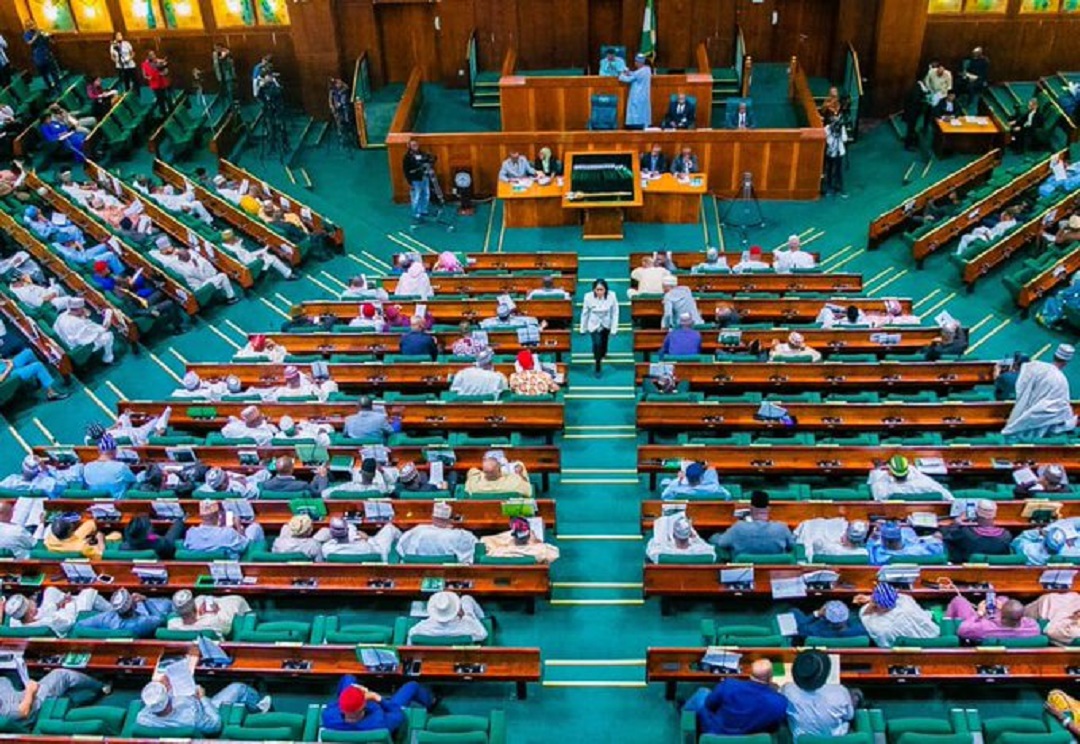
The House of Representatives has directed the Offices of the Accountant-General of the Federation and the Auditor-General for the Federation to prepare and submit the consolidated financial statements and audited accounts of the Federal Government for 2023, 2024 and 2025 on or before October 2026.
The directive was issued on Monday by the House Committee on Public Accounts following an investigative hearing at the National Assembly, where lawmakers scrutinised persistent delays in financial reporting and raised concerns over weaknesses in the country’s public financial management system.
Chairman of the committee, Mr Bamidele Salam, expressed displeasure over what he described as repeated non-compliance with statutory reporting obligations by the Accountant-General’s office.
He cited the Fiscal Responsibility Act, which mandates the Federal Government to publish audited, consolidated financial statements not later than six months after the end of each financial year.
Salam warned that the continued delay in publishing audited accounts was unacceptable, stressing that such lapses undermine fiscal discipline, weaken institutional credibility and erode investor confidence.
According to him, the slow pace of financial reporting in Nigeria’s public sector limits the country’s ability to attract foreign investment and secure support from international development partners who depend on current and credible financial information.
The committee also queried the payment of N9.8bn to vendors of the Government Integrated Financial Management Information System in 2024, noting that the platform had yet to substantially deliver on its core mandate of ensuring accurate reconciliation of government accounts and timely financial reporting.
Lawmakers demanded detailed explanations on how the funds were utilised, observing that despite renewed contracts aimed at improving system efficiency, the last comprehensive reconciliation of government accounts was conducted in 2022.
Representing the Accountant-General of the Federation, the Acting Director of Consolidated Accounts, Shuaibu Sikiru, attributed the delays to operational and institutional challenges.
He blamed the failure of the Central Bank of Nigeria to provide complete bank statements for Ministries, Departments and Agencies, as well as technical and operational limitations of the GIFMIS platform.
Sikiru further disclosed that the engagement of Remita as a payment gateway under the Treasury Single Account framework was undertaken without sufficient coordination with the Office of the Accountant-General, resulting in operational complications and fragmented financial data management across MDAs.
In his presentation, the Auditor-General for the Federation, Mr Shaakaa Chira, pointed to structural gaps in the legal framework governing financial reporting timelines.
He noted that the Constitution of the Federal Republic of Nigeria does not expressly specify a timeline within which the Accountant-General must submit financial statements for audit, a development he said has hampered timely auditing of the Federation’s accounts.
Chira, however, assured lawmakers that audit reports covering internal control weaknesses and compliance issues for the years 2022 to 2025 were being finalised for submission to the National Assembly.
Financial reporting delays have remained a recurring challenge across successive administrations.
By law, the Accountant-General prepares the Federation’s financial statements, which are audited by the Auditor-General before transmission to the legislature for consideration by the Public Accounts Committees of both chambers.
However, the gap between the end of each financial year and the eventual submission of audited accounts has often exceeded the six-month window prescribed by the Fiscal Responsibility Act.
Analysts say the backlog reflects weak inter-agency coordination, incomplete financial data from MDAs, capacity constraints within audit institutions and ambiguities in constitutional provisions on submission deadlines.
The delay has significant implications for governance. Without up-to-date audited accounts, the National Assembly’s oversight function is weakened, while budget deliberations risk proceeding without a clear picture of the government’s true financial position.
Ruling after the hearing, the committee directed both the Accountant-General and the Auditor-General to clear all outstanding financial statements and audit reports before October 2026, warning that failure to comply would attract legislative sanctions.
The Salam-led panel reiterated its resolve to strengthen transparency and accountability in the management of public funds, insisting that timely and credible financial reporting is central to restoring public trust in government finances.
 '
' '
'Do you want to share a story with us? Do you want to advertise with us? Do you need publicity for a product, service, or event? Contact us on WhatsApp +2348183319097 Email: platformtimes@gmail.com
We are committed to impactful investigative journalism for human interest and social justice. Your donation will help us tell more stories. Kindly donate any amount HERE
