

CSOs Warn Decision May Revive ‘Manual Miracles’, Erode Public Trust
INEC Cautions Delays Could Disrupt 2027 Polls Timetable
Daud Olatunji
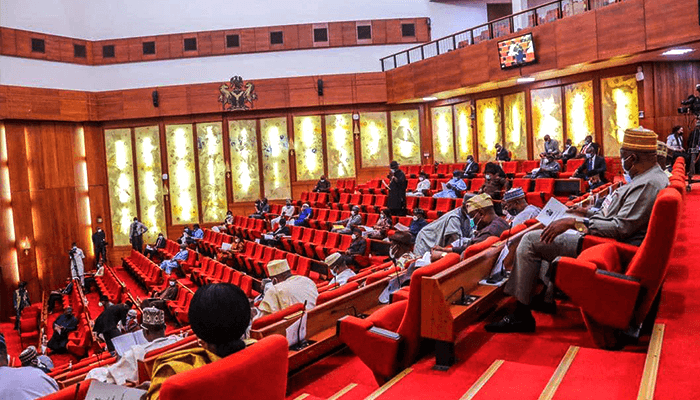
The Senate on Wednesday rejected a proposal to make the electronic transmission of election results compulsory, a move that has drawn sharp criticism from civil society groups and electoral reform advocates who say it could undermine the credibility of future polls.
The amendment sought to alter Clause 60(3) of the Electoral Act Amendment Bill to remove the Independent National Electoral Commission’s (INEC) discretion over how results are transmitted.
Had it passed, presiding officers would have been mandated to upload polling unit results directly to INEC’s Result Viewing Portal (IReV) immediately after completing and endorsing Form EC8A.
Instead, lawmakers voted to retain the existing provision that allows INEC to determine whether results are transmitted electronically or manually a flexibility critics say created loopholes during the 2023 general elections, when technical glitches, delays and inconsistencies triggered nationwide outrage and legal disputes.
Political analyst Gerald Ede described the Senate’s decision as a setback for Nigeria’s democratic consolidation.
“We expected the National Assembly to learn from the failures of 2023 when the IReV portal became a source of national embarrassment. By rejecting mandatory transmission, the Senate has reopened the door to ‘manual miracles’ and result manipulation,” he said.
Civil society organisations also expressed deep disappointment, warning that real-time electronic transmission remains the most effective safeguard against human interference at collation centres and post-election disputes.
They argued that leaving the process at INEC’s discretion weakens transparency and public confidence in the electoral system.
The development came as INEC raised fresh concerns over delays in amending the Electoral Act, warning that prolonged legislative uncertainty could affect aspects of the timetable for the 2027 general elections.
INEC Chairman, Prof. Joash Amupitan (SAN), speaking on Wednesday at the commission’s first quarterly consultative meeting with civil society organisations in Abuja, said the commission had already concluded its election timetable based on the existing legal framework but noted that amendments could necessitate adjustments.
“While we have made our submissions to the National Assembly, the passage of the amendment may have implications for certain items in our timetable,” Amupitan said.
“For now, the commission has no choice but to operate within the framework of the subsisting Electoral Act.”
He urged lawmakers to expedite action on the amendment process, adding, “We seek your support in urging the National Assembly to speed up work on the amendment of the Electoral Act.”
Despite the uncertainty, the INEC chairman assured Nigerians of the commission’s readiness for the 2027 polls and announced plans for a nationwide voter revalidation exercise.
“A credible register of voters remains the bedrock of free, fair and transparent elections. Accordingly, the commission will embark on a nationwide voter revalidation exercise ahead of the 2027 general election,” he said.
Amupitan also called on civil society organisations to intensify mobilisation in the Federal Capital Territory ahead of the Area Council elections scheduled for Saturday, February 21, 2026, urging residents to collect their Permanent Voter Cards before the February 10 deadline to avoid disenfranchisement.
Providing an update, he said 1,680,315 registered voters would cast ballots across 2,822 polling units in the six area councils of Abaji, AMAC, Bwari, Gwagwalada, Kuje and Kwali, with 570 candidates contesting chairmanship, vice-chairmanship and councillorship positions.
He added that INEC had concluded recruitment and training of ad hoc staff and was configuring BVAS devices for accreditation and result upload to IReV.
He further confirmed that bye-elections would hold the same day in Ahoada East II and Khana II state constituencies in Rivers State, as well as Kano Municipal and Ungogo constituencies in Kano State.
Meanwhile, the House of Representatives on Tuesday dismissed allegations that the National Assembly was deliberately stalling the Electoral Act Amendment Bill, saying the proposed legislation was likely to be harmonised next week.
For reform advocates, however, the Senate’s decision to block mandatory e-transmission has intensified fears that critical loopholes remain unaddressed — raising fresh questions about transparency, credibility and public trust ahead of Nigeria’s next general elections.
 '
' '
'Do you want to share a story with us? Do you want to advertise with us? Do you need publicity for a product, service, or event? Contact us on WhatsApp +2348183319097 Email: platformtimes@gmail.com
We are committed to impactful investigative journalism for human interest and social justice. Your donation will help us tell more stories. Kindly donate any amount HERE
