

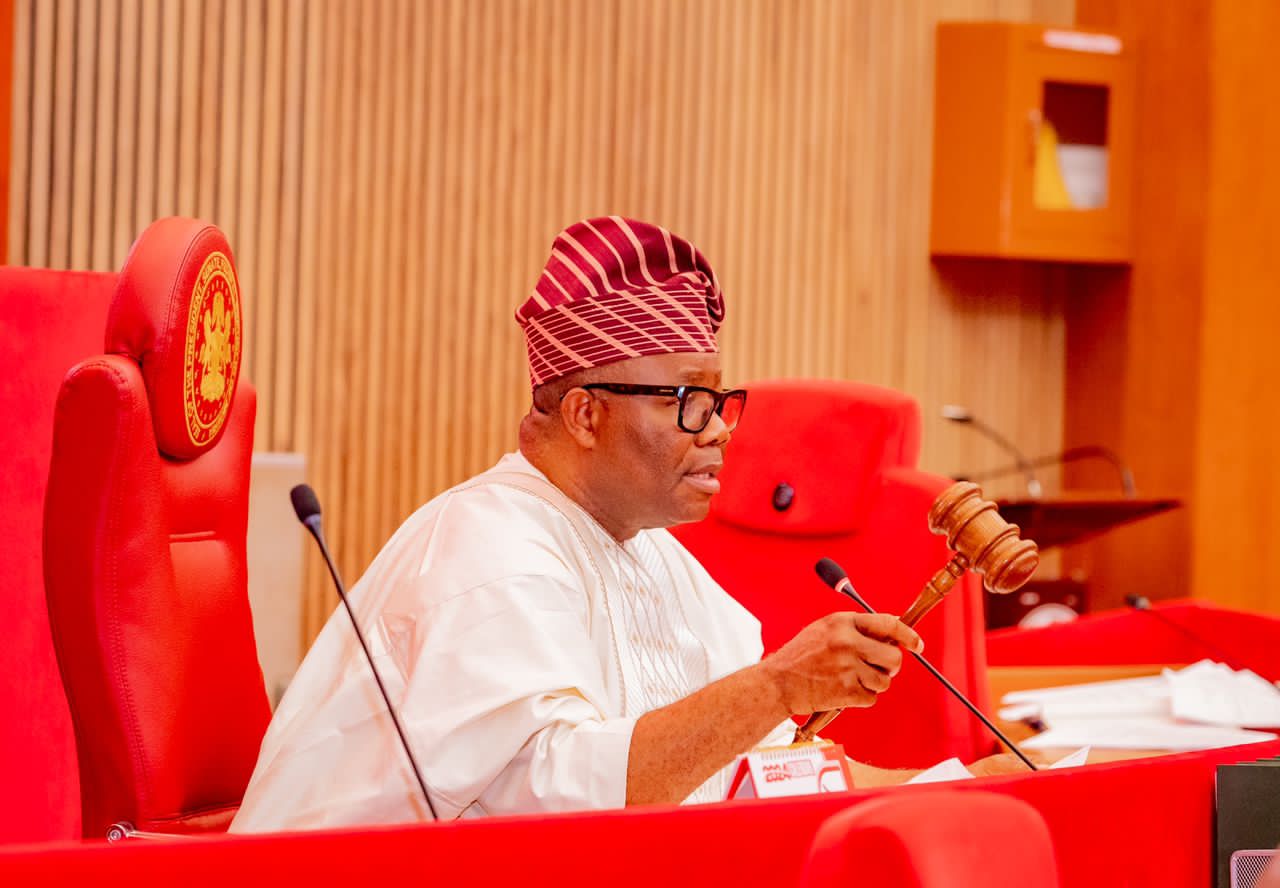
The Senate on Tuesday amended Clause 28 of the Electoral Act (Repeal and Re-enactment) Bill, 2026, reducing the statutory notice period for general elections from 360 days to 300 days, in a move aimed at preventing the 2027 polls from coinciding with the Muslim holy month of Ramadan.
The decision followed a motion for rescission moved by the Senate Leader, Opeyemi Bamidele, who cited Orders 1(b) and 52(6) of the Senate Standing Orders.
Bamidele said a critical review of the earlier version of the bill revealed that the 360-day notice requirement could compel the Independent National Electoral Commission to fix the 2027 presidential and National Assembly elections during Ramadan.
“Upon critical review of the passed bill, the 360-day notice requirement prescribed in Clause 28 could result in the scheduling of the 2027 presidential and National Assembly elections during the Ramadan period,” he said.
The Senate subsequently rescinded its earlier passage of the clause and recommitted the bill to the Committee of the Whole, where it adopted a revised provision mandating INEC to publish election notices not later than 300 days before the date appointed for an election.
The amended clause reads in part: “The commission shall, not later than 300 days before the day appointed for holding of an election under this bill, publish a notice in each state of the Federation and the Federal Capital Territory stating the date of the election and appointing the place at which nomination papers are to be delivered.”
Bamidele warned that conducting elections during Ramadan could adversely affect voter turnout, logistical coordination, stakeholders’ participation, and the overall inclusiveness and credibility of the electoral process.
The amendment comes amid earlier consultations between the leadership of the National Assembly and INEC.
The electoral body had fixed February 20, 2027, for the presidential and National Assembly elections, and March 6, 2027, for governorship and state assembly polls.
Chairman of the Senate Committee on Electoral Matters, Simon Lalong, clarified that the current INEC leadership did not deliberately fix the election dates to clash with Ramadan.
According to him, the template for election dates from 2019 to 2031 was established by the immediate past INEC Chairman, Mahmood Yakubu.
The upper chamber also retained a contentious proviso in Clause 60 allowing manual transmission of election results in the event of electronic transmission failure due to network challenges.
Senator Enyinnaya Abaribe raised a point of order and called for a division on Clause 60(3), objecting to the retention of the proviso permitting manual transmission.
Describing the process as “democracy in action,” Senate President Godswill Akpabio directed senators to indicate their positions through a voice vote and physical count.
At the end of the exercise, 55 senators voted in favour of retaining the proviso, while 15 opposed it.
Akpabio declared that those who supported the clause “had just saved Nigeria’s democracy.”
With the decision, the Senate reaffirmed that while electronic transmission of results remains permissible, the duly signed Form EC8A shall serve as the primary source of results where network failures occur.
The chamber thereafter passed the Electoral Act (Repeal and Re-enactment) Bill, 2026, as amended.
The latest development sets the stage for adjustments to the 2027 election timetable, subject to concurrence by the House of Representatives and presidential assent.
 '
' '
'Do you want to share a story with us? Do you want to advertise with us? Do you need publicity for a product, service, or event? Contact us on WhatsApp +2348183319097 Email: platformtimes@gmail.com
We are committed to impactful investigative journalism for human interest and social justice. Your donation will help us tell more stories. Kindly donate any amount HERE
