

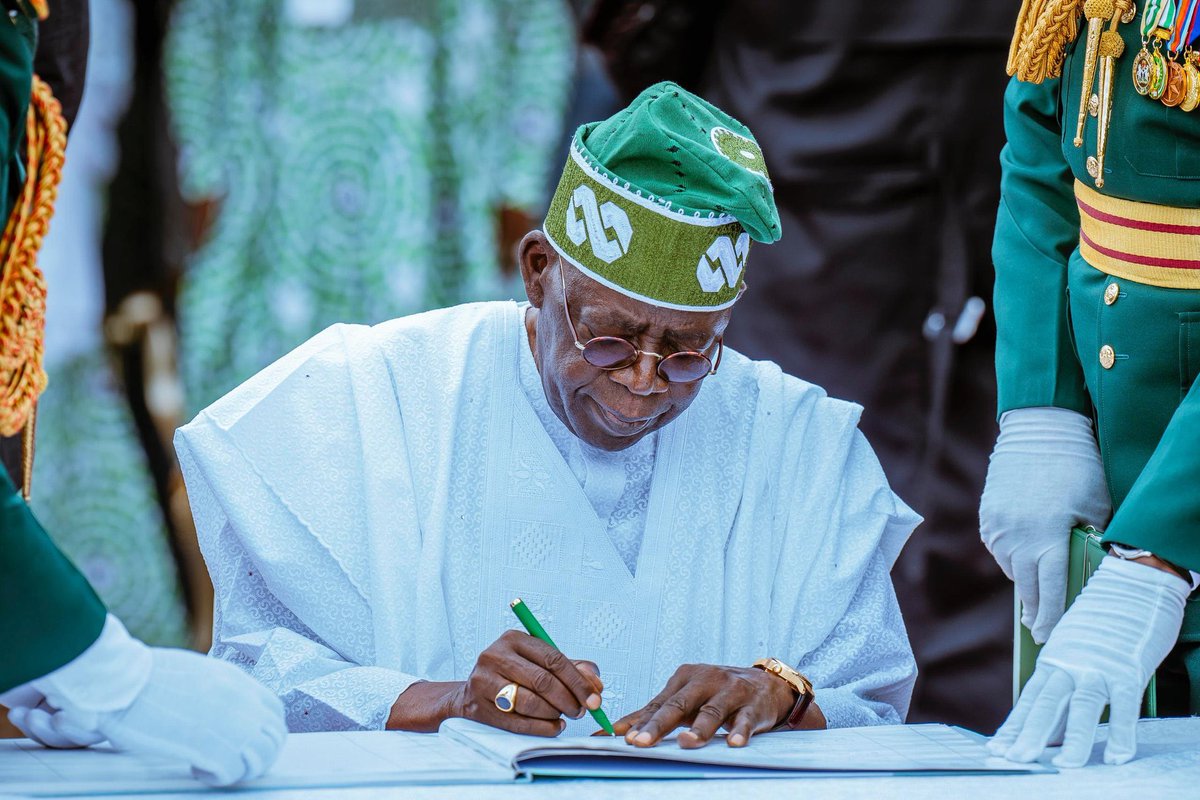
President Bola Tinubu has formally asked the National Assembly to approve the extension of the implementation of the 2025 Appropriation Act to March 31, 2026, in a move aimed at ending Nigeria’s long-standing problem of overlapping budget cycles and weak capital project execution.
The request was conveyed in a letter dated December 18, 2025, which was read on Friday during a special plenary of the House of Representatives by the Speaker, Tajudeen Abbas.
In the letter, the President explained that the new communication supersedes an earlier one sent on December 16, 2025, noting that the proposed extension forms part of broader fiscal reforms by his administration to strengthen budget planning, improve execution and enhance accountability in public spending.
Tinubu told lawmakers that extending the lifespan of the 2025 budget would enable the Federal Government to release “at least 30 per cent of capital allocations” to ministries, departments and agencies (MDAs), lamenting that persistent delays in fund releases have continued to undermine budget performance across sectors.
According to him, “the proposed adjustment will allow MDAs adequate time to plan, procure and execute capital projects efficiently, thereby delivering better value for money and tangible outcomes for Nigerians.”
The President further disclosed that the proposal includes the repeal and reenactment of both the 2024 and 2025 Appropriation Acts as part of efforts to align budget implementation with prevailing fiscal realities.
Under the proposed framework, the 2024 budget would be revised upward to N43.56tn, while the 2025 budget would be adjusted to N48.32tn and extended to run until March 31, 2026.
Tinubu said the amendments would also accommodate expenditure items that were not previously recognised, while ensuring that budget timelines are better synchronised with revenue flows and the country’s execution capacity.
He urged the lawmakers to give expedited consideration to the request, stressing that timely legislative action was critical to sustaining economic reforms and accelerating national development.
“Swift passage of these bills will support the government’s reform agenda and help address structural issues that have weakened budget implementation over the years,” the President appealed.
Nigeria has for years struggled with overlapping budget cycles, largely due to late passage of appropriation bills, revenue shortfalls and slow release of capital funds—challenges that have often stalled projects and limited the impact of public spending.
Since assuming office in May 2023, Tinubu’s administration has repeatedly acknowledged these constraints, pledging to restore a predictable January–December budget cycle.
Meanwhile, the President is expected to present the 2026 Appropriation Bill to the National Assembly on Friday, signalling another test of the government’s resolve to entrench fiscal discipline and timely budget execution.
 '
' '
'Do you want to share a story with us? Do you want to advertise with us? Do you need publicity for a product, service, or event? Contact us on WhatsApp +2348183319097 Email: platformtimes@gmail.com
We are committed to impactful investigative journalism for human interest and social justice. Your donation will help us tell more stories. Kindly donate any amount HERE
