

… US President Alleges Story Originated From ‘Fake’ Nigerian Website
… Nigerian Media Yet To Be Linked To Disputed Claim
Daud Olatunji
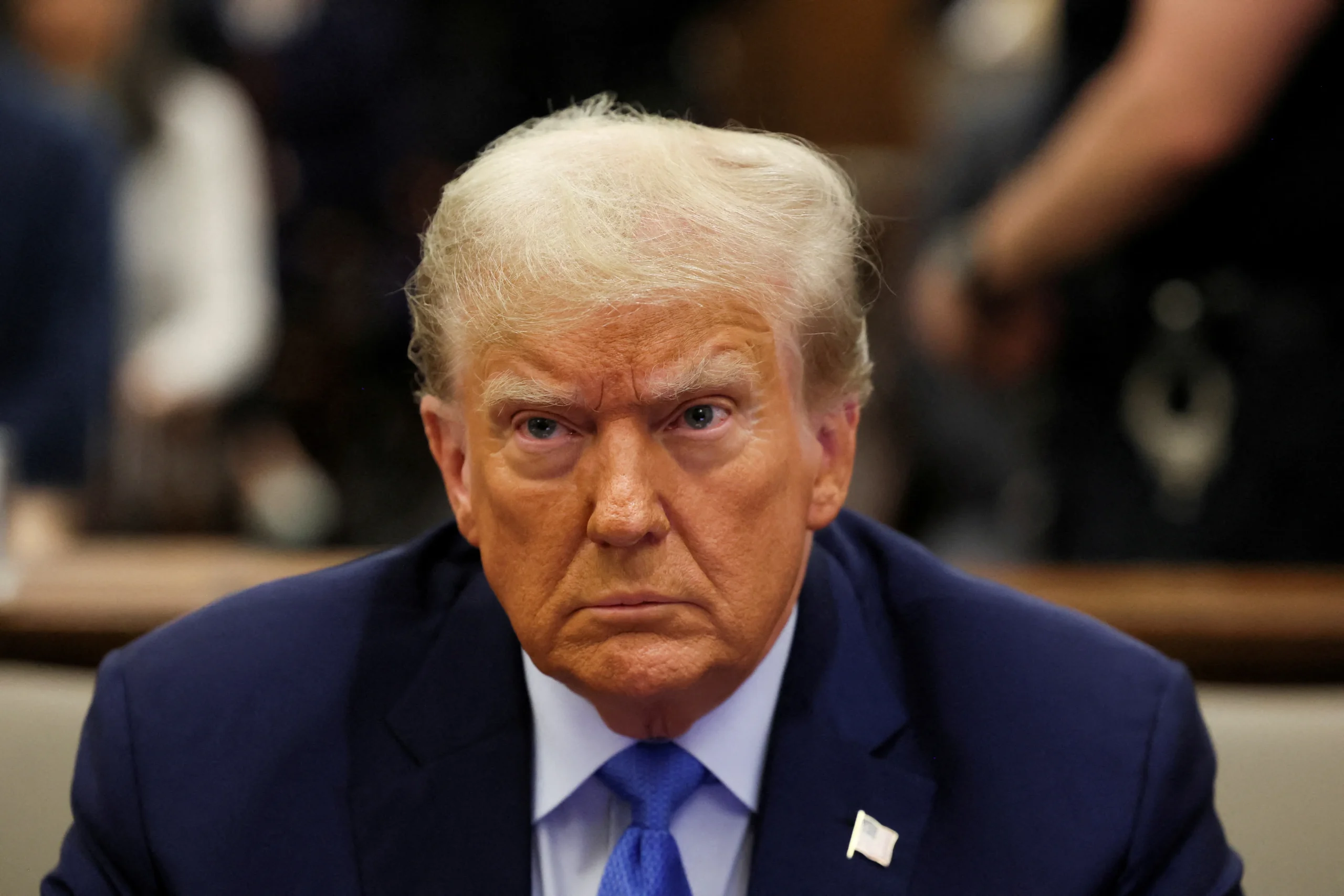
United States President, Donald Trump, has sparked fresh controversy in the ongoing US-Israel-Iran tensions after alleging that a disputed ceasefire report circulated by CNN originated from a “fake news” website in Nigeria.
Trump, who made the claim while reacting to CNN’s coverage of the ceasefire agreement announced late Tuesday, insisted that the report was fraudulent and based on unverified information traced to Nigeria.
The American leader had earlier issued a deadline for possible military action against Iran before news of the ceasefire broke.
CNN, in its report, cited a statement allegedly issued by Iran’s Supreme National Security Council, claiming that Tehran recorded a decisive victory in the conflict.
The statement read in part, “The enemy, in its unfair, unlawful, and criminal war against the Iranian nation, has suffered an undeniable, historic, and crushing defeat,” and further suggested that the United States agreed to a 10-point plan proposed by Iran.
But Trump dismissed the report outright.
“The alleged statement put out by CNN World News is a FRAUD, as CNN well knows,” he said.
“The false statement was linked to a fake news site (from Nigeria) and, of course, immediately picked up by CNN and blared out as a ‘legitimate’ headline.”
In a follow-up remark, Trump described the source as “a new, trouble-making site from Nigeria,” but failed to identify the platform or provide evidence to support the allegation.
He also called on CNN to retract the report, warning that authorities were examining whether the publication could constitute a legal violation.
Trump’s remarks have drawn Nigeria into an international media storm, placing the country’s digital information space under intense scrutiny.
As of the time of filing this report, no Nigerian media organisation has been named or linked to the controversial publication.
Media analysts say the development highlights the growing challenge of misinformation in a globalised digital ecosystem, where unverified content can spread rapidly across borders without clear attribution.
They warned that sweeping claims linking “fake news” to a particular country without evidence could undermine the credibility of legitimate media institutions.
Meanwhile, Iran’s Foreign Minister, Abbas Araghchi, issued a separate statement outlining Tehran’s stance following the ceasefire announcement.
He acknowledged diplomatic efforts and expressed appreciation to Pakistan for its mediation role, while signalling conditional de-escalation.
“If attacks against Iran are halted, our powerful armed forces will cease their defensive operations,” Araghchi said.
He added that safe passage through the Strait of Hormuz would be guaranteed for two weeks, subject to coordination with Iranian forces.
Similarly, Tasnim News Agency, affiliated with Iran’s Islamic Revolutionary Guard Corps, released a statement echoing claims that Iran had inflicted a “historic and crushing defeat” on its adversary.
The controversy underscores the complexities surrounding information flow during international conflicts, with competing narratives emerging from multiple actors.
While Trump maintains that the report originated from Nigeria and was falsely amplified, no independent verification has substantiated the claim or identified any Nigerian outlet involved.
The development leaves Nigeria at the centre of a high-profile geopolitical and media dispute, even as questions persist over the true origin of the contested ceasefire statement.
 '
' '
'Do you want to share a story with us? Do you want to advertise with us? Do you need publicity for a product, service, or event? Contact us on WhatsApp +2348183319097 Email: platformtimes@gmail.com
We are committed to impactful investigative journalism for human interest and social justice. Your donation will help us tell more stories. Kindly donate any amount HERE
