

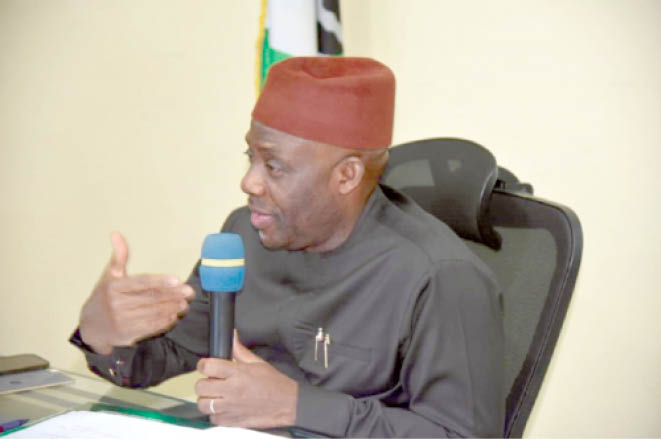
The Minister of Education, Tunji Alausa, has raised the alarm over a deficit of more than 3,500 teachers in federal unity colleges nationwide, warning that the shortage is undermining efforts to deliver quality education and threatening Nigeria’s human capital development.
Alausa disclosed this on Thursday while defending the 2026 budget proposal of the Federal Ministry of Education before the joint committee on education of the National Assembly.
He told lawmakers that the acute shortage of qualified teachers has placed enormous strain on existing staff and compromised learning outcomes across federal government colleges.
“The shortage of qualified teachers is crippling our efforts to deliver quality education and produce graduates who can compete on the global stage,” the minister said.
He stressed that urgent and sustained funding would be required to recruit, train and retain competent teachers, describing the manpower gap as a critical threat to the country’s long-term development.
Beyond the staffing crisis, Alausa painted a grim picture of deteriorating infrastructure and rising insecurity in schools, linking the challenges to years of underfunding in the education sector.
According to him, many federal schools remain unfenced and lack stable electricity, making it difficult to deploy surveillance systems and other protective measures, particularly in states battling kidnapping and banditry.
“Our children must learn in safe environments. Security is non-negotiable,” he said, adding that perimeter fencing, surveillance installations and other safety infrastructure require adequate financial backing.
The minister also highlighted shortages of classrooms, hostels, laboratories and libraries, noting that overcrowding, obsolete equipment and poor learning facilities are hampering effective teaching and practical learning.
He urged the National Assembly to adopt a benchmark of at least 20 per cent budgetary allocation to education in line with the recommendation of UNESCO.
“We aim to convince the National Assembly that a minimum of 20 per cent allocation to education should serve as the benchmark for future budgets,” Alausa said.
“Education is the backbone of national development. Without adequate funding, our schools cannot equip students with the knowledge and skills required to thrive in the 21st century.”
The minister further called for expanded investment in information and communication technology infrastructure, including computers, internet connectivity and digital learning tools, to prepare students for a knowledge-driven global economy.
On government-sponsored scholars abroad, he proposed the creation of a ring-fenced scholarship account to prevent funding delays and shield beneficiaries from exchange rate volatility by paying tuition and allowances in foreign currencies where necessary.
He noted that many beneficiaries are indigent but high-performing students whose academic pursuits are often disrupted by funding shortfalls.
Alausa said the 2026 education budget aligns with the Renewed Hope Agenda of President Bola Tinubu, focusing on tackling the out-of-school children crisis, strengthening teacher capacity and improving school safety nationwide.
Describing the budget proposal as a blueprint for transforming Nigeria’s education system, the minister appealed to lawmakers to prioritise education funding, warning that continued underinvestment would deepen the country’s learning crisis.
“Investing in education is investing in the future of Nigeria,” he said.
 '
' '
'Do you want to share a story with us? Do you want to advertise with us? Do you need publicity for a product, service, or event? Contact us on WhatsApp +2348183319097 Email: platformtimes@gmail.com
We are committed to impactful investigative journalism for human interest and social justice. Your donation will help us tell more stories. Kindly donate any amount HERE
