

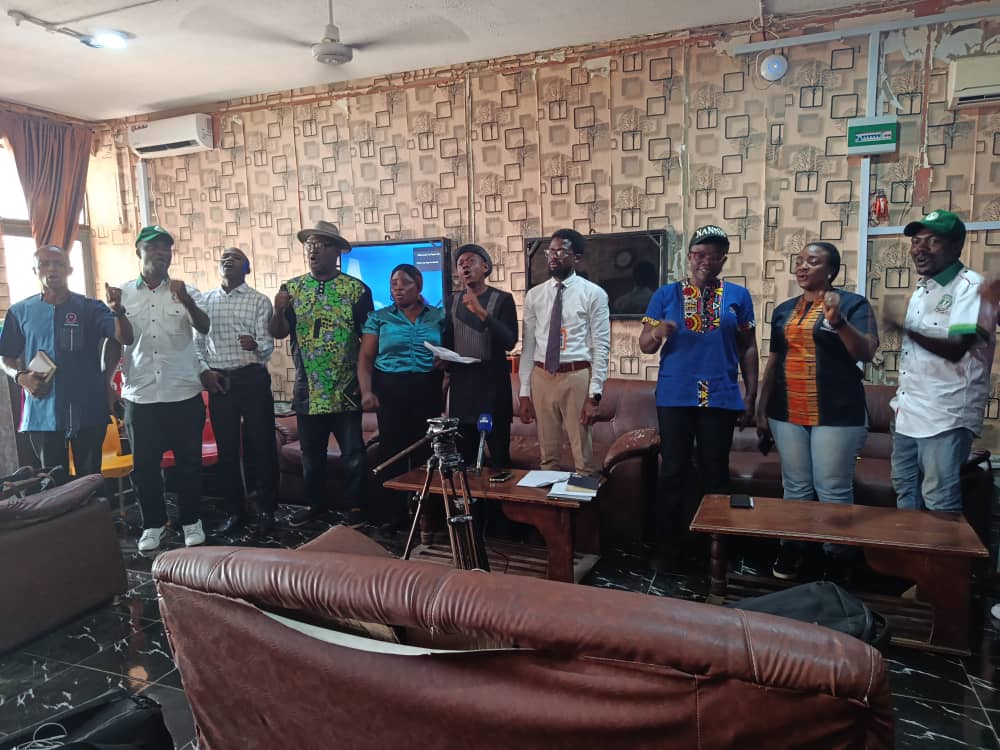
The University College Hospital, Ibadan, has suspended the admission of new patients as health workers commenced a five-day warning strike over what they described as persistent and crippling power shortages within the facility.
The industrial action, which began at 8 a.m. on Monday, is being spearheaded by unions under the umbrella of the Council of UCH Union Leaders.
The affected unions include the Association of Resident Doctors, the Medical and Health Workers Union of Nigeria, the National Association of Nigeria Nurses and Midwives, and the Nigerian Union of Allied Health Professionals, among others.
The unions alleged that internal electricity rationing by the hospital management had crippled service delivery and put patients’ lives at risk.
Speaking with journalists, the Co-Chairman of the council and President of the Association of Resident Doctors at UCH, Dr Uthman Adedeji, accused the management of deliberately restricting electricity supply to critical service areas and residential quarters.
He said the development had led to the cancellation of routine surgeries, disruption of theatre schedules and delays in laboratory investigations.
According to him, “Critical laboratory results are not available to clinicians when needed. Medications, reagents and vaccines are lost due to broken cold chains. Blood donors are bled under unconducive conditions, while research activities have been grounded.”
Adedeji lamented that life-saving equipment had remained idle, while some surgeries were conducted with the aid of headlamps due to poor lighting.
“Nurses use mobile phone torchlights in wards. Laboratories handle hazardous and aerosol-generating samples without functional fume cupboards.
“There is exposure to toxic fumes because extraction systems are inactive. These are not mere inconveniences but threats to life,” he said.
He further disclosed that water supply across the hospital had been severely affected as pumping machines could not function optimally without electricity, thereby increasing the risk of hospital-acquired infections.
The union leader also raised concerns over the welfare of staff residing in hospital quarters, alleging that they were subjected to Band A electricity tariffs in addition to extra charges imposed by the management.
Adedeji warned that the continued power crisis could endanger the financial stability of the foremost tertiary health institution, as several cases and procedures were now being rejected or referred elsewhere.
He said medical students were being deprived of critical clinical exposure, while essential procedures were diverted to other centres due to inadequate internal power distribution.
The unions demanded the immediate cessation of electricity rationing and the full transmission of power supplied by the Ibadan Electricity Distribution Company to all service areas and residential quarters.
They also called for the restoration of water supply across hospital facilities and hostels, repair or replacement of faulty prepaid meters and an end to what they described as arbitrary estimated billing.
The workers appealed to the Federal Ministry of Health, the Federal Ministry of Power and the Federal Government to urgently intervene to avert further deterioration of services at the hospital.
Another Co-Chairman of the council, Mr Oladayo Olabampe, said the strike would continue until Saturday at 8 a.m., warning that the unions might escalate the action if their demands were not met.
“If nothing changes, we will reconvene to review the situation. We may be forced to embark on an indefinite strike,” he said.
Efforts to obtain an official response from the hospital management as of the time of filing this report were unsuccessful.
The development adds to growing concerns over infrastructural challenges confronting tertiary health institutions across the country.
 '
' '
'Do you want to share a story with us? Do you want to advertise with us? Do you need publicity for a product, service, or event? Contact us on WhatsApp +2348183319097 Email: platformtimes@gmail.com
We are committed to impactful investigative journalism for human interest and social justice. Your donation will help us tell more stories. Kindly donate any amount HERE
