

Daud Olatunji
About 3.5 million children under the age of one in Nigeria’s South-West remain without birth registration, putting them at risk of becoming invisible in government planning and limiting their access to essential services, the United Nations Children’s Fund has warned.
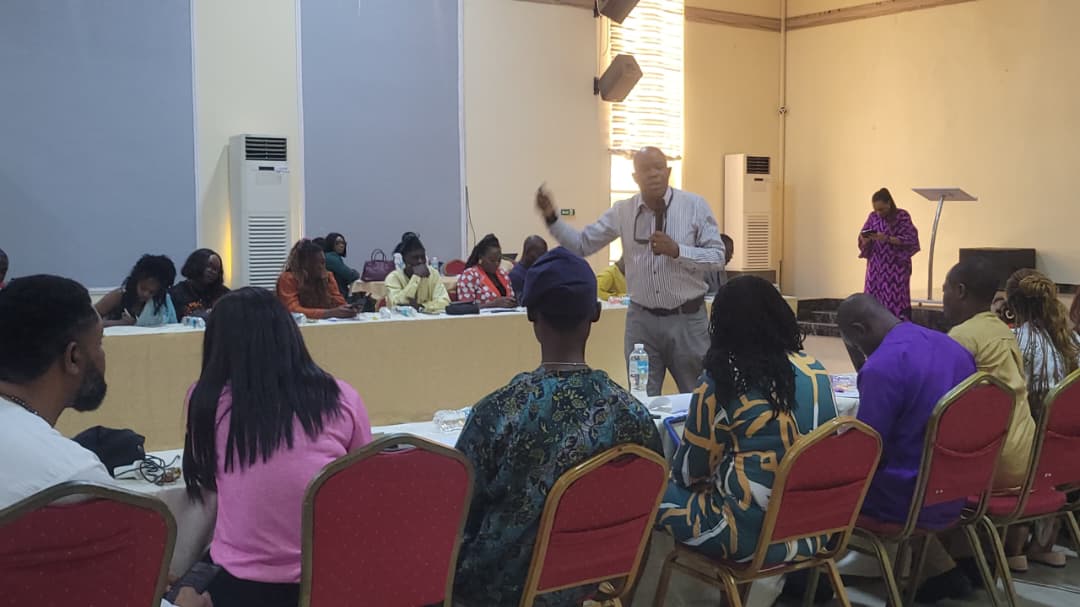
The UNICEF Chief of Lagos Field Office, Céline Lafoucrière, disclosed this on Monday during a two-day media dialogue on birth registration organised by the National Population Commission in collaboration with UNICEF.
Lafoucrière said the absence of birth registration could have consequences far beyond childhood, warning that children without legal identity could encounter difficulties accessing education, healthcare and social protection, while also facing challenges later in life in areas such as voting and inheritance.
She described birth registration as the “foundational first right” of every Nigerian child and called for concerted action by government agencies, health workers, communities, civil society and the media to ensure that no child was left unregistered.
According to her, the problem was particularly serious because government social protection programmes and other public interventions rely on accurate population data to determine the number of people requiring assistance.
She said children missing from the civil register could consequently be excluded from government planning and funding.
“If 3.5 million children are still not registered, they will go unnoticed and there will be no government funding to support them simply because they are invisible,” Lafoucrière warned.
The UNICEF official said the organisation was supporting the Nigerian government to strengthen and digitalise birth registration, while also working to bring registration services closer to families, particularly vulnerable households and those living in geographically isolated communities.
She, however, acknowledged that challenges remained, including inadequate awareness among parents, geographical barriers and gaps in the functionality of the digital registration system.
Lafoucrière said some parents were willing to register their children but were unable to do so easily because registration points could still be difficult to reach in some communities.

She said digital registration facilities were being deployed at primary healthcare centres and ward levels to make the process more accessible.
The UNICEF official also urged journalists to make birth registration a recurring issue in their reporting rather than treating it as a one-off campaign.
“You are the closest to the families. You are the ones who tell the stories the way they are,” she told journalists, urging them to use their platforms to explain the importance of legal identity to parents and caregivers.
She said the media had a critical role to play in changing public attitudes and ensuring that families understood that registering a child was not merely an administrative requirement but a means of securing the child’s rights throughout life.
Also speaking, the Lagos State Director of the National Population Commission, Abiola Kekere-Ekun, said the commission had moved significantly from the era of manual registration to digital processes.
He said birth and death registration services were increasingly being delivered digitally and appealed to journalists to intensify public enlightenment on the importance of obtaining birth certificates.
According to him, every child must be counted and captured in the national civil registration system to enable government to plan effectively.
“A child that does not have a birth certificate is deemed to be invisible. It is not known to government and, as such, cannot be accounted for or planned for,” Kekere-Ekun said.
He disclosed that birth registration coverage in Nigeria was estimated at about 54 per cent based on the commission’s 2024 projection, although UNICEF had earlier placed the figure at 43 per cent.
Kekere-Ekun said the commission expected the digitalisation of the registration system to accelerate coverage in the coming years.
He expressed optimism that Nigeria could achieve universal birth registration in line with the Sustainable Development Goals by 2030.
He appealed to the media to support the commission by taking information about registration services to communities and encouraging parents to register their children.
A UNICEF Child Protection Specialist, Dennis Onoise, identified legal reform, digitalisation, decentralisation, improved data systems and community mobilisation as critical to addressing Nigeria’s birth registration gap.
Onoise said the shift from manual to digital registration could improve efficiency and make it easier for families to register their children.
He also advocated stronger collaboration between the NPC and primary healthcare facilities, noting that health facilities were strategically positioned to support birth registration because they interact with families during pregnancy, childbirth and early childhood.
He said decentralising registration services would reduce the burden on parents who might otherwise have to travel long distances to access registration facilities.
Onoise further urged the media to sustain public education on birth registration and make it part of routine reporting on maternal, newborn and child health.
The concerns raised by UNICEF and the NPC highlight a wider governance challenge: children who are not registered at birth are not adequately reflected in the country’s official population records.
Such gaps can affect the accuracy of planning for schools, hospitals, immunisation, social protection and other public services.
The problem could also become more complicated as children grow older, particularly where proof of identity is required to access government programmes or exercise certain civic and legal rights.
UNICEF therefore called for stronger coordination among government institutions, health workers, community leaders, development partners and the media to close the registration gap.
Lafoucrière stressed that although the South-West was performing relatively better than some other parts of the country, the progress would not be sufficient until every child was captured.
“The South-West is doing slightly better than other regions, but we cannot leave a single child unregistered,” she said.
The two-day media dialogue is expected to strengthen journalists’ understanding of civil registration and equip them to drive sustained public awareness on the need for parents and caregivers to register children immediately after birth.
 '
' '
'Do you want to share a story with us? Do you want to advertise with us? Do you need publicity for a product, service, or event? Contact us on WhatsApp +2348183319097 Email: platformtimes@gmail.com
We are committed to impactful investigative journalism for human interest and social justice. Your donation will help us tell more stories. Kindly donate any amount HERE
