

Daud Olatunji
The 66th Independence anniversary of Nigeria on Thursday triggered fresh criticism of the Federal Government’s economic record, with the Tanimu Turaki-led faction of the Peoples Democratic Party describing President Bola Tinubu as a “Pharaoh” while former Anambra State governor, Peter Obi, lamented persistent poverty, hunger and insecurity across the country.
The two opposition voices spoke separately as President Tinubu, in his Independence Day address, declared that Nigeria had passed through its own “Red Sea” of economic reforms and was entering what he described as an “age of prosperity.”
Tinubu acknowledged that millions of Nigerians were still struggling with food, school fees, medical bills and transportation, but maintained that the hardship predated his administration and was the cumulative result of decades of low productivity, inadequate infrastructure and institutional weaknesses.
However, the Turaki-led PDP rejected the President’s assessment, arguing that the economic realities confronting households contradicted the administration’s narrative of a country moving from hardship to prosperity.
In a statement signed by its National Publicity Secretary of the Interim National Working Committee, Ini Ememobong, the party said the biblical analogy used by the Presidency was inappropriate given the conditions faced by Nigerians.
According to the opposition party, the President’s message appeared to cast Tinubu and his administration as “Moses” leading Nigerians from economic hardship to prosperity.
But the PDP said Nigerians were instead “travelling through a Red Sea of economic pain,” which it attributed to the policies of the APC-led government.
The party further argued that Nigerians were worse off than they were when Tinubu assumed office on May 29, 2023.
The PDP acknowledged the Presidency’s admission that poverty was rising and hope was low before Tinubu took office, but said many citizens now felt that their circumstances had deteriorated further.
The party pointed to the cost of food, rent, transportation and education as evidence of the pressure confronting households.
It also cited the National Bureau of Statistics’ August 2026 food inflation figure of 19.57 per cent, arguing that a slowdown in the rate of price increases did not mean that food had become affordable.
The opposition party said the economic figures had to be considered alongside the lived experiences of families struggling to provide basic necessities.
The PDP also challenged the administration’s claim of supporting businesses and enterprise, saying the cost of credit remained a major obstacle despite the recent reduction in the Central Bank of Nigeria’s Monetary Policy Rate.
The CBN reduced the benchmark rate from 26.5 per cent to 23 per cent at its September 21–22, 2026 Monetary Policy Committee meeting.
The party maintained that the reduction had not eliminated the difficulty businesses faced in accessing affordable credit.
It accused the government of presenting what it described as “skewed narratives” instead of confronting the economic challenges experienced by households and businesses.
The PDP consequently turned Tinubu’s biblical analogy against him, saying the President and the APC were “the Pharaoh who is chasing Nigerians.”
It also linked its criticism to the 2027 general election, arguing that Nigerians would have an opportunity to determine the political direction of the country.
The party accused the administration of worsening economic hardship, political polarisation, insecurity and concerns over democratic consolidation.
The claims represent the position of the Turaki-led PDP faction and were not independently established by the party’s statement.
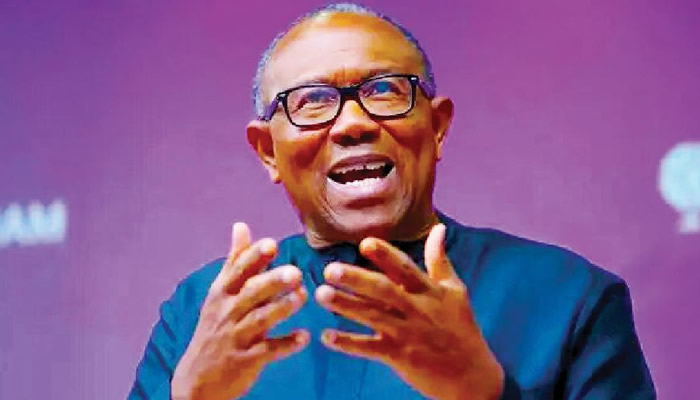
Meanwhile, Obi, presidential candidate of the Nigeria Democratic Congress, used the anniversary to call for sober reflection on Nigeria’s 66-year journey since independence.
In a message on Thursday, Obi said Nigeria’s enormous human and natural resources had not translated into the level of human development, security and prosperity expected by citizens.
He identified poverty, hunger, insecurity, unemployment, drug abuse and poor human-development indicators among the major challenges confronting the country.
Obi claimed that more than 140 million Nigerians were living in poverty or severe hardship and that more than 18 million children were out of school.
He also raised concerns over terrorism, banditry and kidnapping, saying insecurity continued to disrupt lives, livelihoods and communities.
According to him, more than 35 million Nigerians were affected by youth unemployment and underemployment, while he cited a life expectancy of 54 years against a global average of 74 years.
Obi argued that the country’s fundamental problem was not a lack of resources but the failure to convert its resources into improved human welfare.
“Our greatest problem is not a lack of resources; it is the failure to convert our enormous resources into human development, productivity, security and shared prosperity,” he said.
The former Anambra governor urged Nigerians to use the Independence anniversary to confront three questions: where the country is, where it wants to be and how it can move from its present condition to its desired destination.
He also questioned whether Nigeria’s difficulties were the result of an inherent national problem or decisions made by successive leaders.
“Are we cursed, or have we become the curse through the choices we have made and the failures we have tolerated?” he asked.
Obi said the answer could not be that Nigeria was cursed, stressing that the country remained richly endowed.
He illustrated his concerns with a recent visit to Sokoto State alongside Senator Rabiu Kwankwaso, where he said they assessed insecurity, poverty, unemployment, out-of-school children and drug abuse.
The delegation also visited an Internally Displaced Persons camp at Ramin Kura in Sokoto metropolis.
Obi said the conditions of women and children at the camp demonstrated the human consequences of insecurity, with displaced families unable to live in their communities, farm their land, attend school or conduct normal economic activities.
“These are Nigerians who should be living in their communities, going to school, farming their land, conducting their businesses and contributing to the economy. Instead, they live as displaced persons in their own country,” he said.
The criticisms came hours after Tinubu defended his administration’s economic reforms in his Independence Day broadcast.
The President said Nigeria had corrected its economic course and that the country was moving into a new phase focused on shared prosperity.
He said the next stage of his administration would prioritise reducing the cost of living, creating jobs, supporting businesses and expanding opportunities.
“Our priority is to bring down the cost of living,” Tinubu said, outlining measures including increased agricultural production, improved irrigation, better access to farm inputs, storage and transportation infrastructure.
He also said the government was strengthening social support programmes and expanding access to education financing and consumer credit.
Tinubu maintained that the economic reforms had confronted longstanding structural weaknesses rather than created them.
“Nigeria has corrected its course. We have passed through our own Red Sea. This is not the time to look back,” he said.
The President acknowledged, however, that millions of Nigerians could not afford to wait indefinitely for the benefits of economic reforms.
He said the government would focus on ensuring that economic growth translated into better living conditions, employment, affordable food and transportation and greater access to education and healthcare.
The contrasting messages from Tinubu, the PDP and Obi have placed the economic condition of Nigerians at the centre of the political debate as the country moves towards the 2027 general elections.
 '
' '
'Do you want to share a story with us? Do you want to advertise with us? Do you need publicity for a product, service, or event? Contact us on WhatsApp +2348183319097 Email: platformtimes@gmail.com
We are committed to impactful investigative journalism for human interest and social justice. Your donation will help us tell more stories. Kindly donate any amount HERE
 '
'