

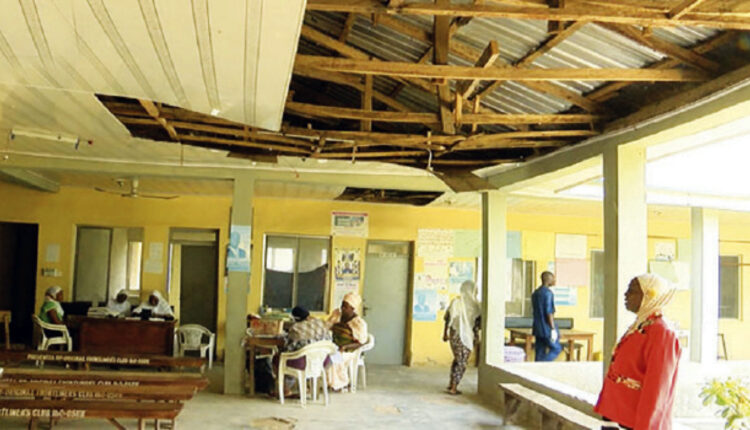
75% of facilities in rural areas, 38% without electricity, 39% rely on unsafe water
Daud Olatunji
A new assessment has exposed a major staffing crisis in Nigeria’s primary healthcare system, with 97 per cent of 1,480 Primary Healthcare Centres assessed across 16 states failing to meet the national minimum staffing standard.
The assessment, conducted by the nonprofit organisation, Orodata Science, also found widespread deficiencies in infrastructure, electricity, water supply, medical equipment and accessibility, raising concerns about the capacity of the facilities to deliver safe and reliable healthcare to millions of Nigerians.
The findings were contained in the organisation’s PHC Operational Capability Report, which assessed facilities across 277 Local Government Areas in the six geopolitical zones.
The assessment, conducted between October 2023 and June 2025, used the CheckMyPHC Digital Scorecard to examine staffing, infrastructure, equipment, electricity, water supply and accessibility.
According to the report, only three per cent of the facilities assessed met the national minimum staffing requirement, while 11 of the 16 states had no PHC that met the minimum staffing benchmark.
The report said the situation was particularly troubling because about 75 per cent of the assessed health facilities were located in rural communities, where access to alternative healthcare services is often limited.
Beyond staffing shortages, Orodata documented serious infrastructure and basic-service deficiencies across the facilities.
It found that 40 per cent of the PHCs had broken ceilings or leaking roofs, while 38 per cent operated without electricity.
Similarly, 39 per cent of the facilities relied on unsafe water sources, exposing patients and health workers to additional health risks.
The report also highlighted gaps in maternal and newborn healthcare, noting that 75 per cent of the assessed PHCs lacked essential neonatal resuscitation equipment needed for emergency interventions involving newborns experiencing complications during childbirth.
According to the assessment, 66 per cent of the facilities lacked provisions for persons with disabilities and people with mobility challenges, potentially excluding vulnerable members of the communities they were established to serve.
Orodata said the challenges were interconnected, stressing that poor infrastructure, inadequate staffing, unreliable electricity and water supply, inadequate equipment and accessibility barriers often occurred in the same facilities.
The combination, it said, increased risks for patients while placing additional pressure on the limited number of health workers available.
The report further revealed a troubling perception among service users, with 51 per cent of surveyed community members rating services at their local PHCs as poor.
The organisation said there were significant differences among states, with some facilities facing challenges considerably more severe than the overall assessment figures.
It specifically identified Kano and Sokoto as having particularly serious deficiencies involving unsafe water, inadequate electricity and shortages of essential newborn-care equipment.
In Gombe State, the report said 80 per cent of the assessed PHCs lacked accessibility provisions for persons with disabilities and people with mobility challenges.
Orodata argued that addressing the problems would require more than isolated renovation projects or one-off interventions.
The organisation called for coordinated, evidence-based interventions built around verified facility-level needs.
It recommended that state governments develop clear intervention plans identifying affected facilities, specific deficiencies, responsible institutions, required resources and implementation timelines.
It also urged authorities to establish measurable targets and strengthen regular monitoring and evaluation of interventions.
The report called for accessibility-compliant renovations and greater incorporation of community feedback into the monitoring of PHC services.
On infrastructure, Orodata recommended urgent repairs of damaged roofs and ceilings, provision of safe water and improved electricity supply to affected facilities.
For PHCs without reliable electricity from the national grid, it recommended the deployment of solar or hybrid power systems.
The organisation also urged the National Primary Health Care Development Agency and state PHC agencies to address frontline health-worker shortages through recruitment, effective deployment and retention, particularly in underserved communities.
It further called on authorities to ensure that PHCs offering delivery services were equipped with essential neonatal resuscitation equipment.
Orodata said its assessment was based on physical visits to facilities, direct observation, interviews with health workers and community members, photographs, GPS coordinates and facility records.
It explained that the CheckMyPHC Digital Scorecard was developed with reference to NPHCDA minimum standards and relevant inclusion requirements.
According to the organisation, the exercise was designed not merely to document deficiencies but to generate facility-level evidence that could guide implementation, resource allocation, monitoring and evaluation.
Orodata stressed that investment decisions should be linked to verified needs rather than assumptions, adding that the ultimate measure of progress should be whether PHCs become safer, adequately staffed, properly equipped, functional and trusted by the communities they serve.
The findings add to concerns over the effectiveness of Nigeria’s primary healthcare system, particularly in rural communities where PHCs remain the first point of contact for many residents.
 '
' '
'Do you want to share a story with us? Do you want to advertise with us? Do you need publicity for a product, service, or event? Contact us on WhatsApp +2348183319097 Email: platformtimes@gmail.com
We are committed to impactful investigative journalism for human interest and social justice. Your donation will help us tell more stories. Kindly donate any amount HERE
 '
'