

The Federal Government has unveiled an ambitious plan to close Nigeria’s $134bn health financing gap and fast-track progress towards achieving Sustainable Development Goal 3 (SDG 3) by 2030, with a major focus on reducing under-five mortality and preventable childhood deaths.
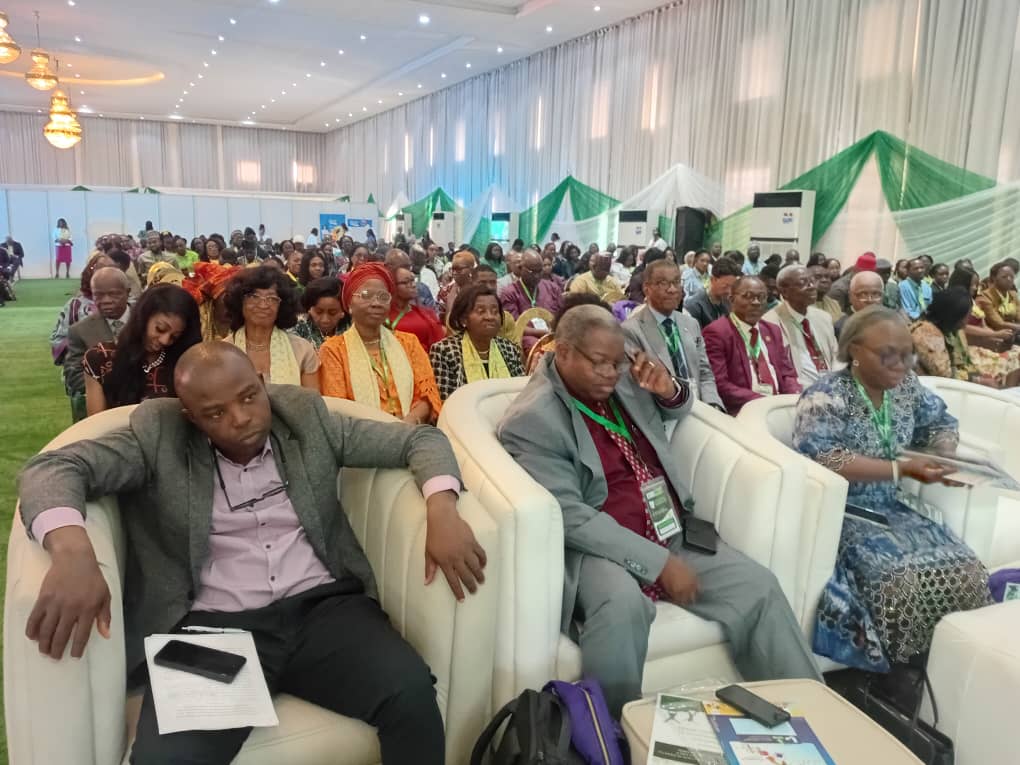
The Minister of State for Health, Dr Ishiaq Salako, disclosed this on Wednesday at the 57th Annual General Meeting and Scientific Conference of the Paediatric Association of Nigeria (PAN), tagged PANCOF Gateway 2025.
Represented by the Deputy Director of Child Health, Dr Omokore Oluseyi, Salako said Nigeria would require about $103bn alone to tackle under-five mortality, stressing that child survival has become a top priority under the Health Sector Investment Plan.
He said the Federal Ministry of Health had finalised the National Child Survival Action Plan, which targets evidence-based interventions including newborn resuscitation, integrated nutrition services and community-based management of childhood illnesses.
“To drive these initiatives, we are leveraging technology by digitalising the integrated community case management platform to improve real-time diagnosis, referral and data capture,” Salako said.
He noted that Nigeria accounts for over 17 per cent of global under-five deaths, with prematurity, pneumonia, malaria and malnutrition identified as the leading causes of preventable child mortality.
Salako urged stakeholders across the health sector to support the implementation of the reforms by addressing operational bottlenecks in newborn care, child nutrition and digital health systems.
“We urge Nigerians and development partners to identify operational and implementation constraints across the country. Your feedback will continue to guide policy formulation and accelerate our collective efforts to end preventable deaths in Nigeria,” he added.
In his keynote address, a Professor of Paediatrics at the University of Ilorin and Strategic Adviser to the Ministry of Health on Malaria Elimination, Prof. Olugbenga Mokolu, emphasised that innovative financing and technology deployment were critical to meeting SDG health targets.
Speaking on the theme, ‘Achieving SDG-3 and Child Healthcare through Innovative Funding Models and Technology-Driven Solutions’, Mokolu said Nigeria must strengthen domestic resource mobilisation, expand social health insurance coverage and deploy digital tools to bridge funding and service delivery gaps.
“The sustainable development agenda seeks to promote wellbeing for all, especially children, through reduced mortality and improved healthcare outcomes. Innovation, financing and technology deployment are central to achieving these goals,” he said.
He added, “Government resources may be tight, but we can explore ways to boost domestic financing, expand social insurance schemes and leverage technologies such as mobile platforms, point-of-care devices and electronic medical records.”
Also speaking at the event, the Ogun State Commissioner for Health, Dr Tomi Coker, said the Basic Health Care Provision Fund was strengthening primary healthcare delivery across states, including Ogun.
Represented by the Special Adviser to the Governor on Health, Dr Tayo Lawal, Coker said innovative financing models and technology integration were improving access to maternal and child healthcare services, particularly for vulnerable mothers and infants.
“Financial barriers are being addressed through interventions like the Basic Health Care Provision Fund, while life-saving innovations are improving access to quality maternal and child health services,” she said.
She added that coordination and accountability mechanisms, including the Sector-Wide Approach and performance-based financing models, were ensuring effective utilisation of resources and data-driven decision-making.
In her remarks, the President of the Paediatric Association of Nigeria, Prof. Ekanem Ekure, urged the Federal Government to treat child health as a national development priority rather than a sectoral concern.
“Our plea to the government remains this: let there be visible evidence of strong political will to treat child health as a national development priority, not merely a sectoral issue,” she said.
Ekure also called on state governments to significantly increase health sector allocations, with clear prioritisation for child health.
“Strengthening immunisation, nutrition, primary healthcare, and maternal and child health services requires sustained financing. Adequate investment in child health is a cost-effective strategy for improving health outcomes and accelerating social and economic development,” she added
 '
' '
'Do you want to share a story with us? Do you want to advertise with us? Do you need publicity for a product, service, or event? Contact us on WhatsApp +2348183319097 Email: platformtimes@gmail.com
We are committed to impactful investigative journalism for human interest and social justice. Your donation will help us tell more stories. Kindly donate any amount HERE
