

… Most Nigerian Children Leave School Without Essential Skills
… Reading proficiency at 12.7%, math at 6.3% for primary pupils
…Health, Nutrition Linked To Learning Outcomes
Daud Olatunji
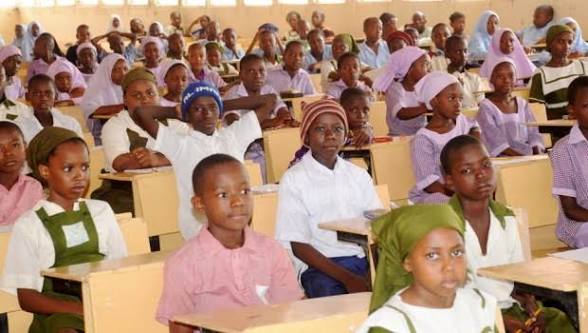
Nigeria’s primary school pupils are struggling to acquire basic reading and mathematics skills, with only 1 in 10 children meeting minimum learning standards, a new report has revealed.
The National Primary-Level Learning Proficiency Statistics from Africa, compiled by education researcher Martin Gustafsson, shows that just 9.5 per cent of Nigerian pupils reach the required level of proficiency by the end of primary school.
The study analysed harmonised assessment data from 47 African countries, exposing a persistent learning crisis despite policy efforts across the continent.
Across Africa, only 13.4 per cent of enrolled pupils meet the Sustainable Development Goals (SDGs) benchmarks. When children who are not enrolled in school are included, the continent-wide proficiency rate falls further to 10.8 per cent, highlighting the enormous scale of the problem.
The report places Nigeria among the lowest-performing countries in Africa for foundational learning. Reading proficiency in Nigerian primary schools is just 12.7 per cent, while mathematics lags at a dismal 6.3 per cent.
Pupils show slow learning gains between ages 7 and 14, raising serious concerns about teaching quality and the effectiveness of the education system.
The learning crisis is not uniform across the continent. Kenya, for example, recorded a proficiency rate of 31.1 per cent, with 25.2 per cent of pupils proficient in reading and 36.9 per cent in mathematics.
South Africa performs better overall, though deep inequalities still affect outcomes. Rwanda reported 91 per cent of Grade 6 pupils as proficient in mathematics, though experts caution that misalignment with international standards may inflate this figure.
The report stresses that early-grade learning strongly predicts later success.
Pupils who start school without strong foundational skills often fall behind, while non-educational factors, such as childhood stunting in Ethiopia, reduce performance in mathematics.
Experts say that improving early childhood education and health could be vital in closing learning gaps across Africa.
Despite improvements in learning assessments, the report warns that data gaps and limited transparency hinder effective policy-making.
Regional programmes like PASEC and SACMEQ are critical for tracking learning outcomes, but restricted access to datasets limits independent analysis and policy evaluation.
The study urges African governments to move beyond school enrolment targets and focus on measurable improvements in learning, especially in early grades.
Source : Premium Times
 '
' '
'Do you want to share a story with us? Do you want to advertise with us? Do you need publicity for a product, service, or event? Contact us on WhatsApp +2348183319097 Email: platformtimes@gmail.com
We are committed to impactful investigative journalism for human interest and social justice. Your donation will help us tell more stories. Kindly donate any amount HERE
