

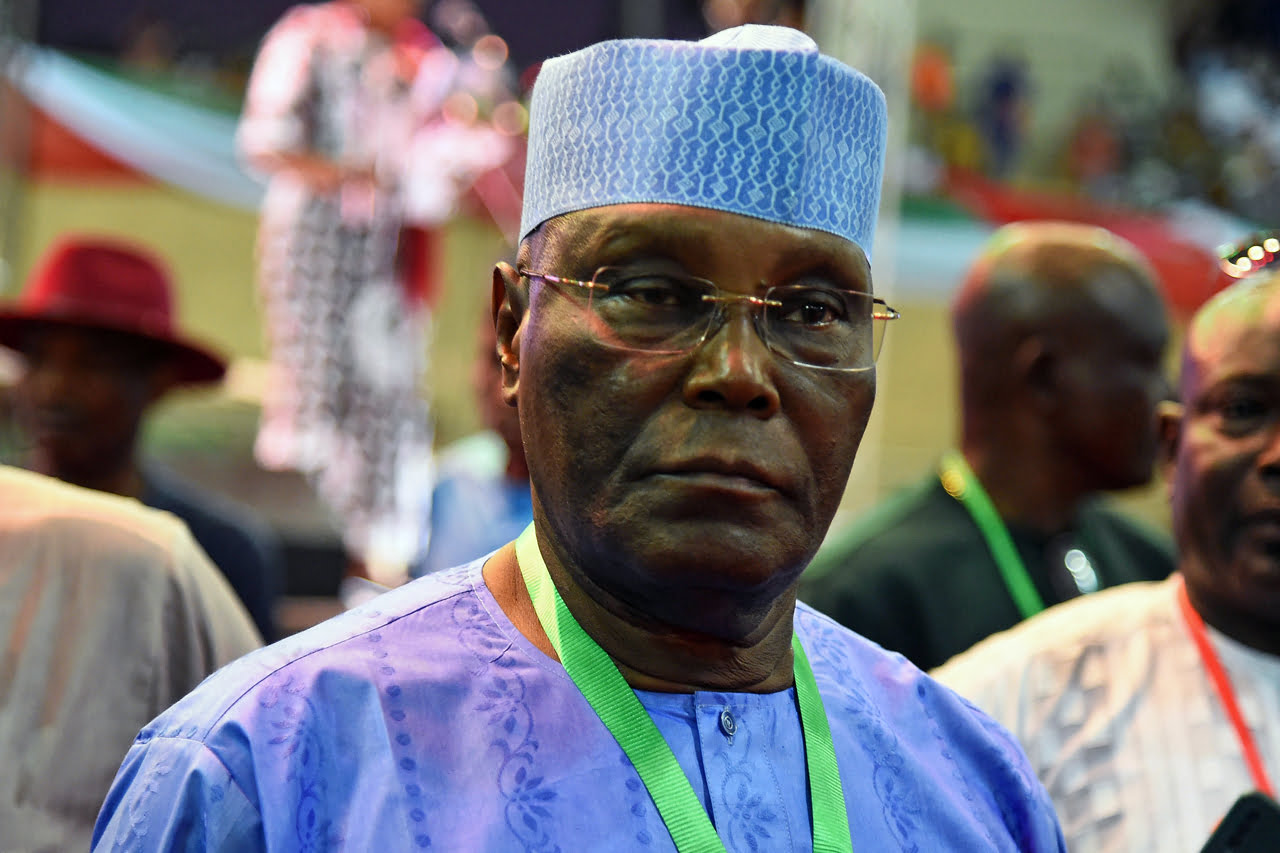
Former Vice-President Atiku Abubakar has challenged the Federal Government to disclose how it intends to spend the $5bn financing facility secured from First Abu Dhabi Bank, warning that Nigerians and future generations will bear the cost of the loan.
Atiku’s demand followed comments by the Minister of Finance and Coordinating Minister of the Economy, Taiwo Oyedele, that the government would not publish details of how the facility would be deployed.
Oyedele had said the transaction was not different from other government financing arrangements and that it had already passed through the required approval processes, including consideration by the National Assembly.
But reacting in a statement issued on Sunday by his media office, Atiku accused the administration of lacking transparency in its borrowing programme and questioned the justification for keeping details of the facility from the public.
The former vice-president argued that every loan contracted by the government on behalf of Nigerians must be subjected to public scrutiny because taxpayers would ultimately repay the debts.
He said, “The government is obliged to explain every loan taken on behalf of Nigerians.
“Every kobo borrowed matters because citizens — both living and unborn — will bear the burden of repayment. Yet these loans have failed to improve their material wellbeing.”
The $5bn First Abu Dhabi Bank facility is part of a broader $6bn external borrowing package approved by the National Assembly in March.
The Federal Government has since accessed about $1.5bn as the first tranche of the Abu Dhabi financing arrangement.
Atiku expressed concern over the scale of fresh borrowing under the President Bola Tinubu administration, citing figures attributed to the Debt Management Office.
According to him, the administration had accumulated about N72tn in additional debt since assuming office in May 2023, pushing Nigeria’s total indebtedness to N159.35tn as of early 2026.
He further argued that the rising debt burden had not translated into a significant improvement in the living conditions or security of Nigerians.
Atiku claimed that poverty had increased from about 56 per cent in 2023 to between 61 and 63 per cent under the present administration, leaving more than 140 million Nigerians in multidimensional poverty.
The former vice-president also raised concerns over the collateral arrangement attached to the Abu Dhabi facility, alleging that the Federal Government was required to pledge securities worth about 133 per cent of the loan amount.
He said such an arrangement made transparency over the borrowing and its utilisation even more important.
Atiku also cited concerns reportedly raised by international financial institutions and credit-rating agencies over the financing structure, transparency and Nigeria’s debt sustainability.
He consequently urged Nigerians to demand accountability from the Federal Government, arguing that borrowing without clear evidence of economic benefits could weaken public confidence and further expose the country to financial risks.
The controversy comes amid growing public scrutiny of the Tinubu administration’s borrowing strategy as the government seeks additional financing to fund infrastructure, budget deficits and other national priorities.
Atiku maintained that the government must go beyond securing loans and demonstrate clearly how borrowed funds are being deployed, the projects they are financing and the benefits expected to accrue to Nigerians.
He warned that without such disclosure, the country risked accumulating more liabilities without corresponding improvements in the welfare of its citizens.
 '
' '
'Do you want to share a story with us? Do you want to advertise with us? Do you need publicity for a product, service, or event? Contact us on WhatsApp +2348183319097 Email: platformtimes@gmail.com
We are committed to impactful investigative journalism for human interest and social justice. Your donation will help us tell more stories. Kindly donate any amount HERE
