

….NAPTIP, ICMPD, security agencies, community leaders, others demand stronger border vigilance
Daud Olatunji
Stakeholders in Idiroko, a major border community in Ogun State, have adopted a 25-point communique aimed at strengthening the fight against human trafficking and violence against persons along the state’s border corridors.
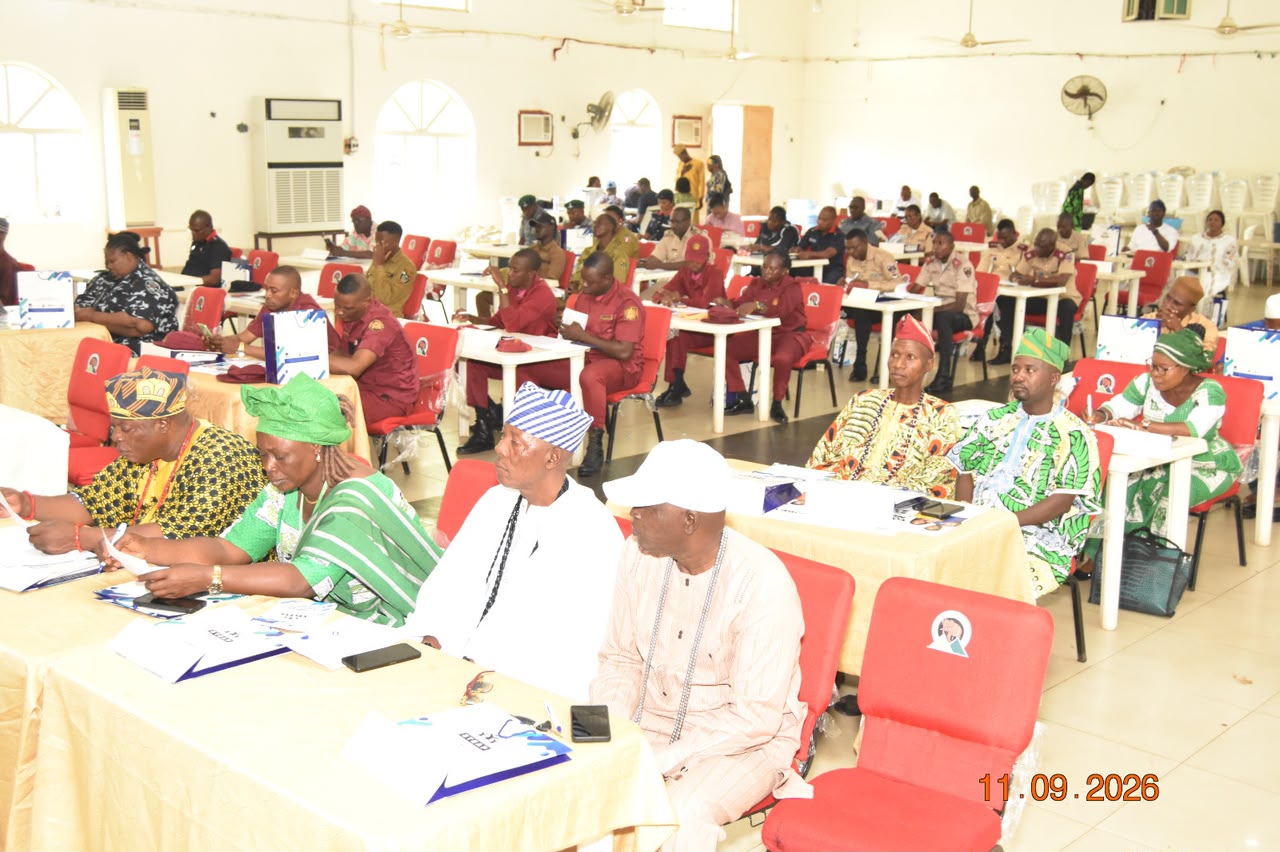
The communique was issued at the end of a two-day community engagement and town hall meeting organised in Idiroko on September 10 and 11, 2026, by the International Centre for Migration Policy Development under its Building an Environment Free of Human Trafficking and Violence Against Persons (TIPVAP) and School Anti-Trafficking Education and Advocacy Project (STEAP).
The engagement brought together community leaders, security agencies, government institutions, civil society organisations and other stakeholders to develop practical measures for preventing trafficking, identifying vulnerable persons, improving reporting and strengthening referral and protection mechanisms.
The development comes amid renewed efforts by anti-trafficking authorities and their partners to deepen community-based responses to trafficking and violence in high-risk and border communities.
The TIPVAP project, according to ICMPD, is designed to strengthen Nigeria’s national and sub-national responses to trafficking in persons and violence against persons, including investigations, prosecutions, referral mechanisms and public awareness. Ogun is among the states targeted by the project.
Similarly, the STEAP project focuses on preventing trafficking among school-age children through education and community advocacy in Ogun and four other states.
ICMPD says STEAP is being implemented in partnership with the National Agency for the Prohibition of Trafficking in Persons and civil society organisations, with the project targeting more than 100,000 students across 250 schools.
The Idiroko engagement was supported by the Ogun State Task Force on Human Trafficking and NAPTIP, while Gender Development Initiative, a co-implementing partner with ICMPD on STEAP, mobilised key community stakeholders for the programme.
Those mobilised included traditional and religious leaders, market leaders, parent forums and representatives of the National Union of Road Transport Workers.
Other participants included personnel of the Nigeria Police Force, Nigeria Immigration Service, Federal Road Safety Corps, Amotekun Corps and Nigeria Security and Civil Defence Corps, as well as women and youth groups and other community actors.
The broad representation was aimed at ensuring that the response to trafficking and violence was not left solely to law enforcement agencies but became a shared responsibility involving institutions and residents.
Participants deliberated on the roles of community and institutional stakeholders in preventing trafficking and violence, identifying vulnerable persons and emerging risks, creating awareness, encouraging safe reporting and facilitating referrals for victims and survivors.
They were also urged to use their respective platforms to sustain anti-trafficking messages within the community.
Religious institutions, traditional councils, markets, transport networks, youth and women groups and other community platforms were identified as important channels for reaching residents with information on trafficking risks and available reporting and support mechanisms.
The engagement further sought to strengthen collaboration between community leaders, government agencies, security institutions, civil society organisations and other stakeholders operating in the border community.
At the end of the meeting, participants renewed their commitment to confronting human trafficking and violence against persons collectively.
The 25-point communique subsequently adopted by the stakeholders provides a community action plan and roadmap for relevant actors in Ogun State, with particular attention to trafficking and violence along transit corridors.
The development is significant for Idiroko, given its location along the Nigeria-Benin border and its role as a major movement corridor.
Speaking during a related community engagement in Idiroko, the Ogun State Commander of NAPTIP, Bose Jimoh, warned residents about different forms of trafficking, including online recruitment, sexual exploitation, organ harvesting, baby factories, sextortion and child trafficking.
Jimoh said Idiroko was critical to anti-trafficking efforts because of its status as an international border and urged residents to promptly report suspected cases to the appropriate authorities.
Also speaking at the engagement, ICMPD Project Officer Samuel Okoroji said the initiative was intended to move beyond awareness creation towards concrete community action, including prevention, reporting and response mechanisms.
The stakeholders’ 25-point roadmap therefore places greater emphasis on sustained community vigilance, inter-agency collaboration and the ability of residents to identify and report trafficking risks before vulnerable persons are exploited.
The ICMPD has stressed that combating human trafficking requires an all-of-community approach involving schools, parents, community leaders, law enforcement agencies, civil society organisations and victim-support institutions.
 '
' '
'Do you want to share a story with us? Do you want to advertise with us? Do you need publicity for a product, service, or event? Contact us on WhatsApp +2348183319097 Email: platformtimes@gmail.com
We are committed to impactful investigative journalism for human interest and social justice. Your donation will help us tell more stories. Kindly donate any amount HERE
